
Protests Against Siang Dam: Indigenous Rights, State Action and the Troubling Targeting of Journalist Tongam Rina
Arunachal Pradesh Police have sought search warrants against four people, including Tongam Rina, deputy editor of The Arunachal Times, in connection with the violence that took place on 23 October 2026, following protests against the proposed Siang Upper Multipurpose Project (SUMP), a massive hydroelectric and water storage dam on the Siang river.
On 23 October, several organisations had gathered to protest the dam in Pasighat, a town in East Siang district. Police reportedly used tear gas to disperse the crowd. But the situation snowballed as mobs reportedly gathered, vandalising buildings and setting them on fire.
The application filed by the police over the 23 October violence, under Section 96 of the Bharatiya Nagarik Suraksha Sanhita, seeks permission to search the residences of Rina, as well as anti-dam activists Otul Jerang and Tajong Talom, and their lawyer, Sunny Tayeng. “Certain articles and materials connected with the commission of the alleged offences, including clothing worn during the incident, mobile phones, digital devices containing relevant photographs or video records, and other case-related articles may be found,” the Police stated in the application to the Chief Judicial Magistrate of East Siang District
The police did not elaborate on Rina’s involvement. This is the first time her name has been brought up in a police case related to the anti-dam protests. The move has drawn condemnation from the Press Club of India, the Arunachal Pradesh Union of Working Journalists, the Arunachal Press Club and the Network of Women in Media, India. Rina, who survived an assassination attempt in 2012, has herself said on X, “Please be reassured that I have seen enough intimidation in my life, so this isn’t something that will stop me from writing or my activism.”
It is extremely disturbing that a journalist who has been such a prominent voice from the region, and has spent years reporting and writing on issues affecting Arunachal Pradesh, is now facing police scrutiny in connection with public protests against an unpopular development project.
Seeking access to a journalist’s personal devices raises concerns about their own safety and the protection of their sources as well as data. A journalist’s job, by definition, includes questioning the government about its decisions and actions; journalists should be able to report on issues of public interest without facing official scrutiny simply for doing their legitimate work.
Tongam Rina and her team at The Arunachal Times are among the few who have been consistently reporting on the protests against the proposed 11,200 MW dam, which has been planned as India’s largest hydroelectric and water storage project.
Led by the National Hydroelectric Power Corporation (NHPC), the project is being presented by the government as strategically important, particularly in view of China’s proposed mega-dam on the Yarlung Tsangpo river in Tibet. The river enters Arunachal Pradesh as the Siang and eventually becomes the Brahmaputra in Assam.
For indigenous communities living along the river, the project raises several concerns. The Siang Indigenous Farmers’ Forum (SIFF) estimates that 27 villages in Siang and Upper Siang districts could be affected by SUMP. Locals fear losing their land, homes and agricultural fields, as well as the cultural and social ties that connect them to the river. There are also environmental concerns about the consequences of building a large dam in a seismically active area.
These worries extend beyond the villages that are likely to be directly affected. A 2019 peer-reviewed study of the Ranganadi hydel project in Arunachal Pradesh found that median annual flows in the Ranganadi river had decreased by 63 per cent, while flows in the receiving Dikrong river had increased by 138 per cent following the construction of the dam. Communities have reported unexpected water releases, flash floods and deposits of sand on agricultural land. Studies on the Lower Subansiri project in the state have also noted similar concerns about downstream flooding and erosion.
While residents have opposed SUMP for years, the recent protests erupted due to the pre-feasibility report (PFR) surveys being undertaken to assess the project’s viability. According to the government, these are preliminary technical and environmental studies. However, protesters argue that allowing the surveys to be done would be the first step towards a project they have opposed for a long time. They have also questioned how consent is being taken from villagers.
Instead of addressing these concerns, the government’s response has been police action, preventive detentions and the deployment of security forces. Four activists were detained on 9 October under the state’s draconian Arunachal Pradesh Unlawful Activities (Prevention) Act, which allows detention for up to six months. According to local reports, residents have alleged police brutality and intimidation, while the administration has defended its actions on grounds of law and order.
The Arunachal Times reported that 65-year-old Yalek Tair, an Adi woman protesting the project, was allegedly severely assaulted in police custody. A CT scan reportedly found two fractured ribs and injuries to her lung, requiring long-term medical care. Police have said an inquiry is underway.
The peaceful protests held in Pasighat on 23 October reportedly turned violent at one point. An NHPC office, a police station and other properties were attacked and set on fire, while several political leaders’ residences were vandalised. Chief Minister Pema Khandu condemned the violence and invited organisations opposing the project for talks. It is not clear who was responsible for starting the violence but young people who participated in the peaceful sit-in before it broke out have been quoted saying that violence is definitely not part of their movement’s ideology and objectives.
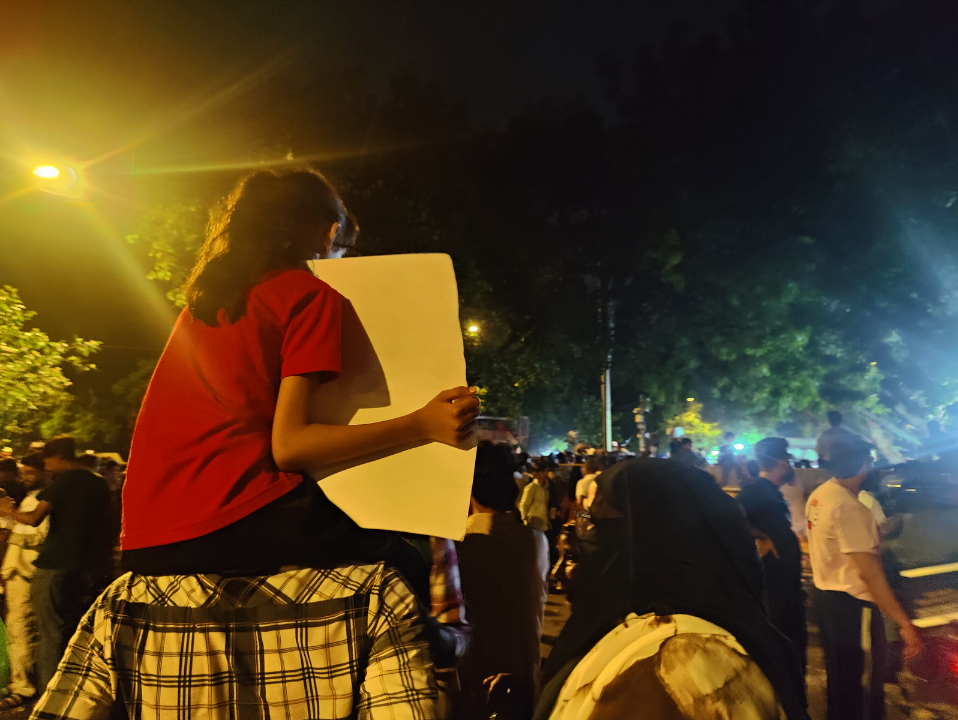
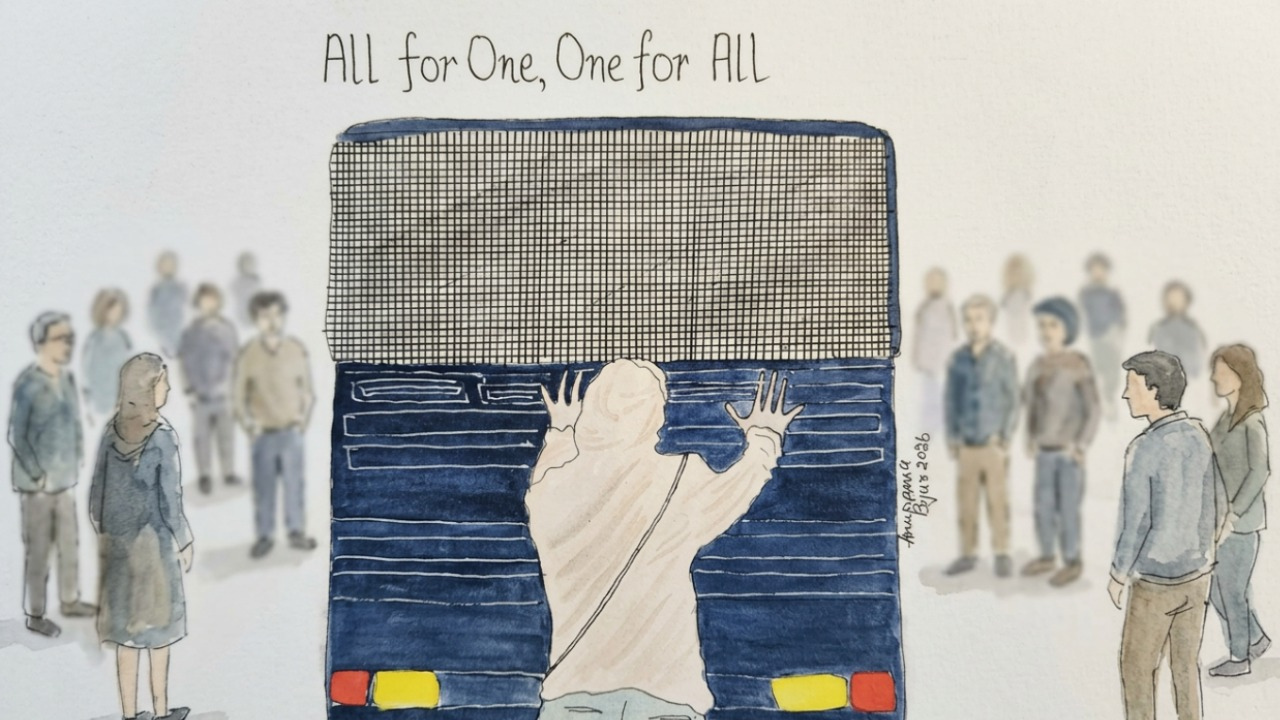
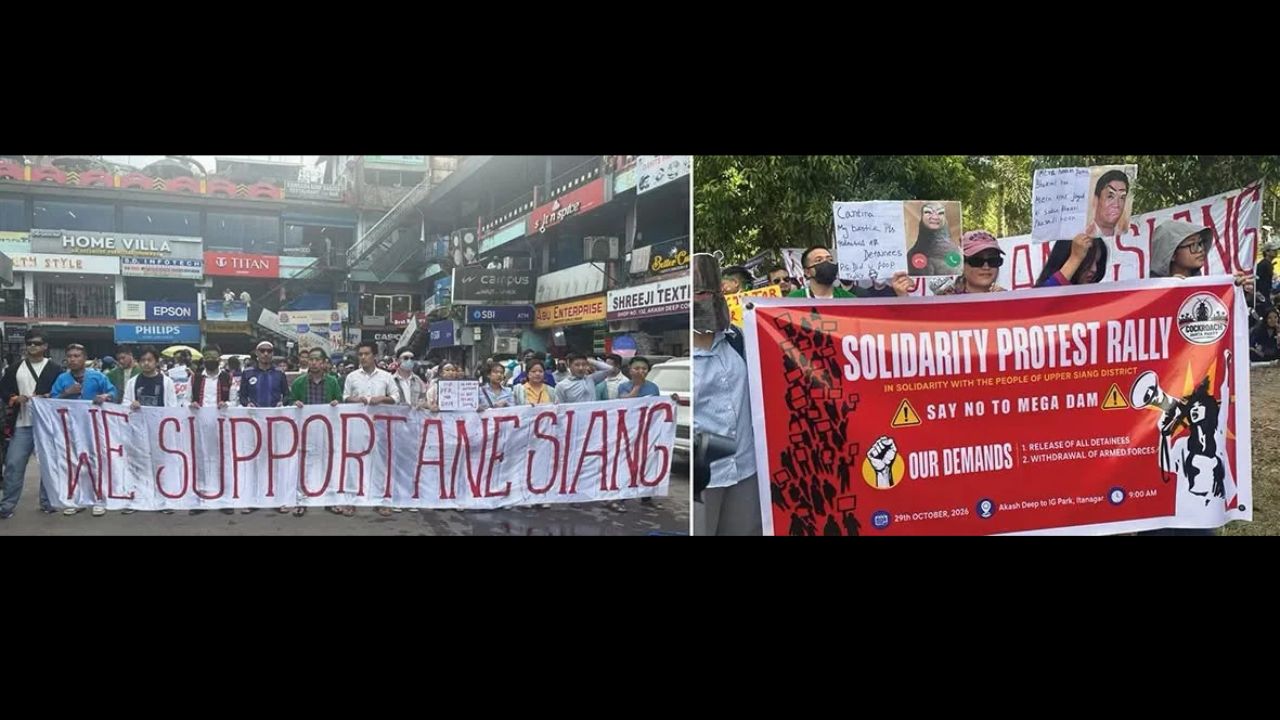
On 31 October hundreds of students and environmental activists protested against the dam outside Arunachal Bhawan in the national capital, demanding the release of those detained in connection with recent protests in the state. A large number of them were reportedly detained by the Delhi Police.
On 2 November an online emergency press conference was held, featuring Rina, Tagori Mize (Spokesperson of the Siang Indigenous Farmers’ Forum – SIFF) and Dubit Siram (General Secretary of SIFF’s Youth Wing), to explain to all those interested what was happening in Siang and why.
The legitimate public protests against a project widely perceived to be harmful to local residents as well as the environment will no doubt continue. Meanwhile, the police action against Tongam Rina and the lawyer representing those arrested is undoubtedly an attack on press freedom and people’s right to legal representation.
Sanskrita Bharadwaj is an independent journalist based in Assam.
Edited by Ammu Joseph and Angana Chakrabarti
Additional Reading:
NWMI Demands Justice for Journalist Tongam Rina and The Arunachal Times