

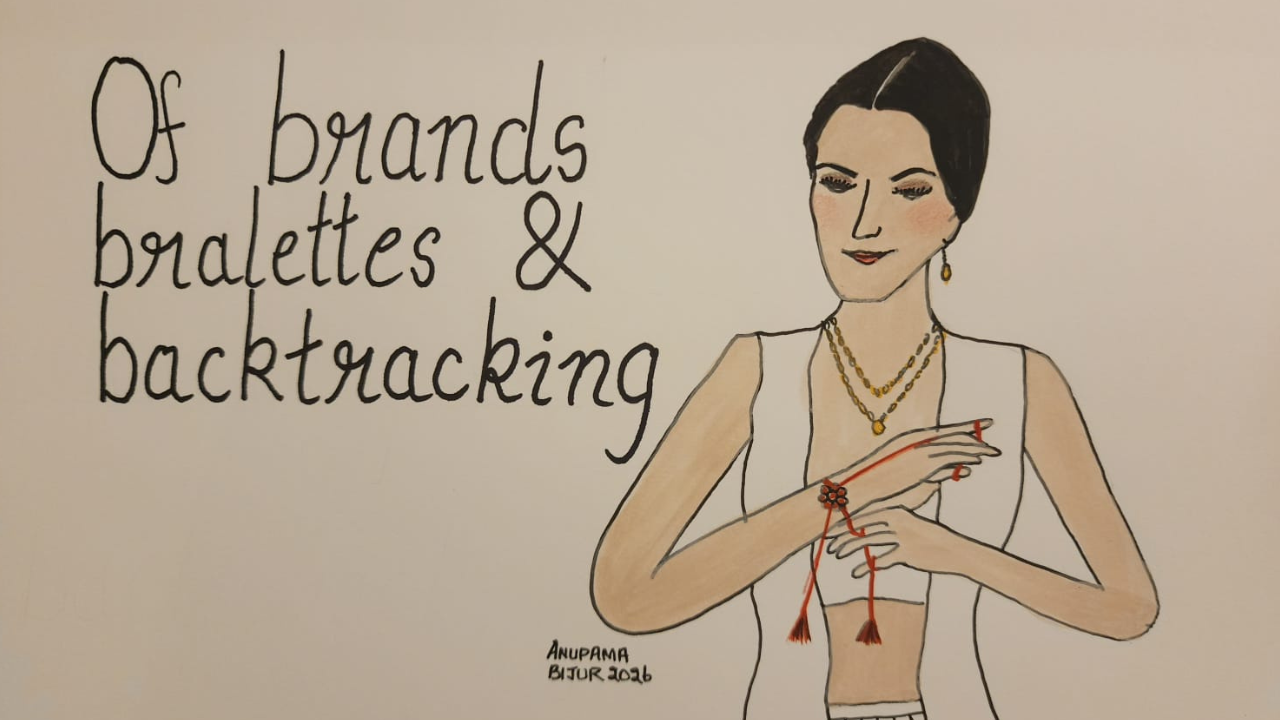
Of Brands, Bralettes and Backtracking
By:
In the last week of August, jewellery brand GIVA launched its Raksha Bandhan campaign featuring actor Kriti Sanon. The television commercial (TVC) showed Kriti tying a rakhi on her brother’s wrist while her golden retriever demanded to be included in the ceremony, too. It ended with a voice-over saying: “This Rakhi, celebrate your four-legged sibling, too, with GIVA’s new pet collection.”
What followed was outrage—mainly over the clothes Kriti was seen wearing: a bralette, sleeveless overlay and a skirt. A section of society deemed the outfit inappropriate for a traditional Indian festival celebrating the bond between a brother and sister. Some also objected to the inclusion of pets, seeing it as an unwanted intrusion into tradition.
The campaign even drew criticism from actor-politician Kangana Ranaut, who said the inappropriateness of the attire while tying rakhi to one’s brother made the TVC “intentionally creepy.” She later clarified that her statement was not directed at a person but aimed to be a larger comment on how traditions need to be portrayed keeping in mind cultural sensitivities.
On August 26, GIVA pulled the ad from all media, saying it did not wish to hurt people’s sentiments. The brand reiterated its respect for Indian culture and traditions, while explaining that its intention was to extend the idea of family to include pets.
But Kriti had already emerged as the unlikely hero of the controversy before GIVA’s decision. She stood by the campaign, its concept, narrative, clothes and inclusion of pets. “Culture and traditions are in a woman’s heart, not in her neckline,” she said, as part of a longer note posted on Instagram.
And that is why Kriti deserves praise. She did not have to defend the campaign, but she did. As the face of the campaign and GIVA’s brand ambassador, she took ownership of her decision to be a part of the commercial. While Kriti was singled out as the main target of the outrage, with her statement, she tied a metaphorical rakhi on her own wrist, perhaps proving that sometimes you are your own best friend and protector.
Yet the campaign was not hers alone. Behind it was an entire army of decision-makers—the founder, brand team, advertising agency, and the creative and production heads who had signed off on it.
Days after the ad was withdrawn, GIVA founder Ishendra Agarwal clarified that his belief in the campaign’s intent remained unchanged and that the brand stood aligned with Kriti “in message and spirit.” He explained that incidents around GIVA stores had created safety concerns for its employees, prompting the withdrawal of the ad.
A good leader takes responsibility for both bouquets and brickbats. Kriti deserves praise because she did it first. Her willingness to speak up with a short but powerful statement about the larger issue of women being policed for what they wear is rare, especially in Bollywood. Days later, at a press conference, Kareena Kapoor was asked to comment on women being policed for what they wear and she sidestepped the question.
Her silence was noticed just as Kriti’s willingness to speak out was noted. We may never know what really went on behind the scenes of the GIVA campaign but how it was handled from a communications perspective will be remembered for long.
InkSights is a monthly art series by NWMI member Anupama Bijur viewing current affairs through a gender and news lens.
TAGS
More From the Section

Of Brands, Bralettes and Backtracking
All for One, One for All

Climate Change Hits Her Hardest


Doxing, Deepfakes and Digital Harassment
