NWMI condemns Targeted Harassment and Intimidation of Women Journalists, Demands Accountability
The Network of Women in Media, India (NWMI) condemns the recent series of attacks against women journalists in different parts of the country and demands accountability. The escalation of verbal attacks, intimidation, threats and/or even physical assaults against women journalists is extremely worrisome and sets a dangerous precedent for the further curtailment of freedom of speech and reporting; it also threatens the safety and security of women in media.
While reports of press intimidation have become more commonplace over the last few years for all genders, the several attacks in quick succession over the past month have highlighted the perils increasingly faced by women in the media landscape.
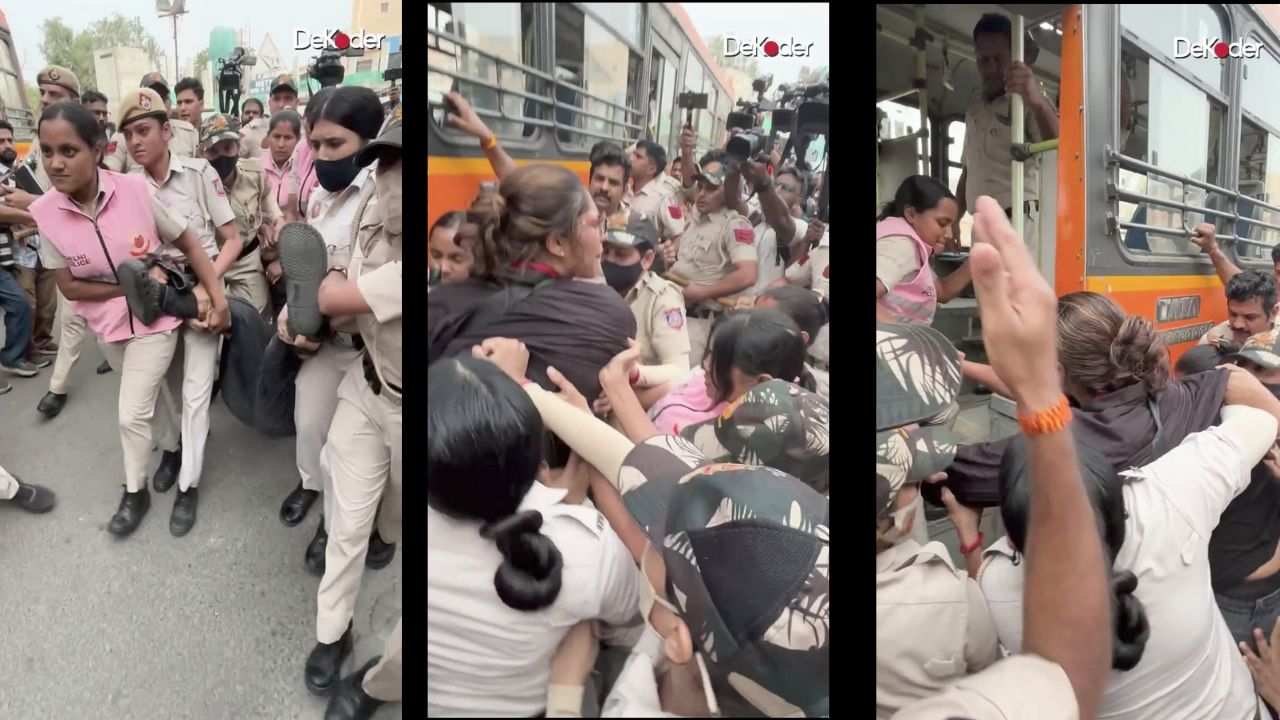
From the brutal assault on 3 September 2026 on Shaheen Khan and Nafisa Khan, both journalists with 4pm News, allegedly by the Delhi Police, to the vicious and deeply misogynistic social-media campaign in late August, targeting Ishani Datta Ray, senior journalist and editor of Anandabazar Patrika, ostensibly for ‘insulting’ gerua colour, the increasingly frequent attacks against women journalists are deeply troubling. (NWMI’s statements condemning these attacks are available here and here.)
While there was some outrage about these two instances in the initial days, they were soon forgotten, presumably because of the cyclic nature of the news industry. However, several similar attacks have followed and such aggressive, even violent, intolerance appears to be rapidly developing into the default attitude towards journalists, particularly women.
For example, on 11 September 2026, a woman journalist was cornered and intimidated when she tried to ask Uttar Pradesh Chief Minister Yogi Adityanath some questions at a press conference in Lucknow. The 25-year-old journalist, Divya Srivastava, released a video on the incident which soon went viral. Explaining what had happened, she said her questions on waterlogging in Lucknow, the condition of the Kanpur Expressway and the implementation of UGC reforms led to the CM abruptly walking out of the press conference. She did not back down and instead asked why journalists are called to a press conference if their questions are not going to be answered. In her view this was a violation of press freedom. According to her, when she tried to exit the venue a little later, she was surrounded by a group claiming to be BJP supporters and seeking to intimidate her. She was threatened with ‘bulldozer justice’ and other such harms.
Her ordeal didn’t end with physical threats at the venue: a toxic social media campaign was subsequently unleashed against her. Some posts called her a ‘dalal’ – stooge – of the Opposition, while others had more misogynistic nomenclature for her. Speaking to media organisations, she pointed out that she was just a journalist trying to do her job. In an interview with Maktoob Media, she alleged that “the online campaign escalated into threats, abuse and advertisements or posts targeting her”. She said she has been afraid to even leave the house and her family is deeply worried. The NWMI unequivocally condemns the targeted harassment of the young journalist.
Srivastava, as well as Shaheen Khan and Nafeesa Khan (mentioned earlier), were among the six women journalists who spoke out at a meeting in Delhi on 18 September focusing on the recent spate of attacks on media women, which was jointly organised by the Press Club of India, the Delhi Union of Journalists and the NWMI.
Among the other speakers were Pooja Mathur, who had been targeted by the UP government for her coverage of the bulldozing of a mosque in Saharanpur on 6 September. According to her, she was the first to report the demolition on her YouTube channel, Red Chili Live. She interviewed the Imam of the mosque and shot video footage of the rubble left by the demolition. When she refused to pay attention to messages demanding that she delete the videos, she was threatened. Subsequently an FIR was filed against her.
Like Srivastava, she pointed out that she was just doing her job. At the meeting she said, “I am not afraid. I will not cry – I will make them cry.” She also pointed out that women journalists like herself can serve as the voice and the inspiration of countless other women who currently dare not step out of their homes and raise their own voices against oppression.
Mathur made another important point to the assembled audience of media professionals: “Do not dismiss us as ‘just’ YouTubers. We are serious journalists, we are qualified, we do our research before we go online.”
Bindu Romi Gurjar and Monika Singh, both independent journalists based in Delhi, were among the other speakers. According to them, they and their colleague Lokbhadra Singh were the first to reach Balaghat in Madhya Pradesh after several Baiga tribal children died after falling ill in August 2026. The journalists’ (separate) reports, documenting 30 deaths, embarrassed the local administration, which claimed that there were only eight deaths. The reporters were shadowed for several days and later threatened. The Superintendent of Police wanted them to meet him. When they did not go to his office, two policemen turned up at their hotel room in the middle of the night: at 2 am. This made them fear for their lives and leave for Delhi. To make matters worse, the social media accounts of all three were suspended for a couple of days. “We are independent journalists,” Monika pointed out. “How will we earn and continue to work if our accounts are suspended?”
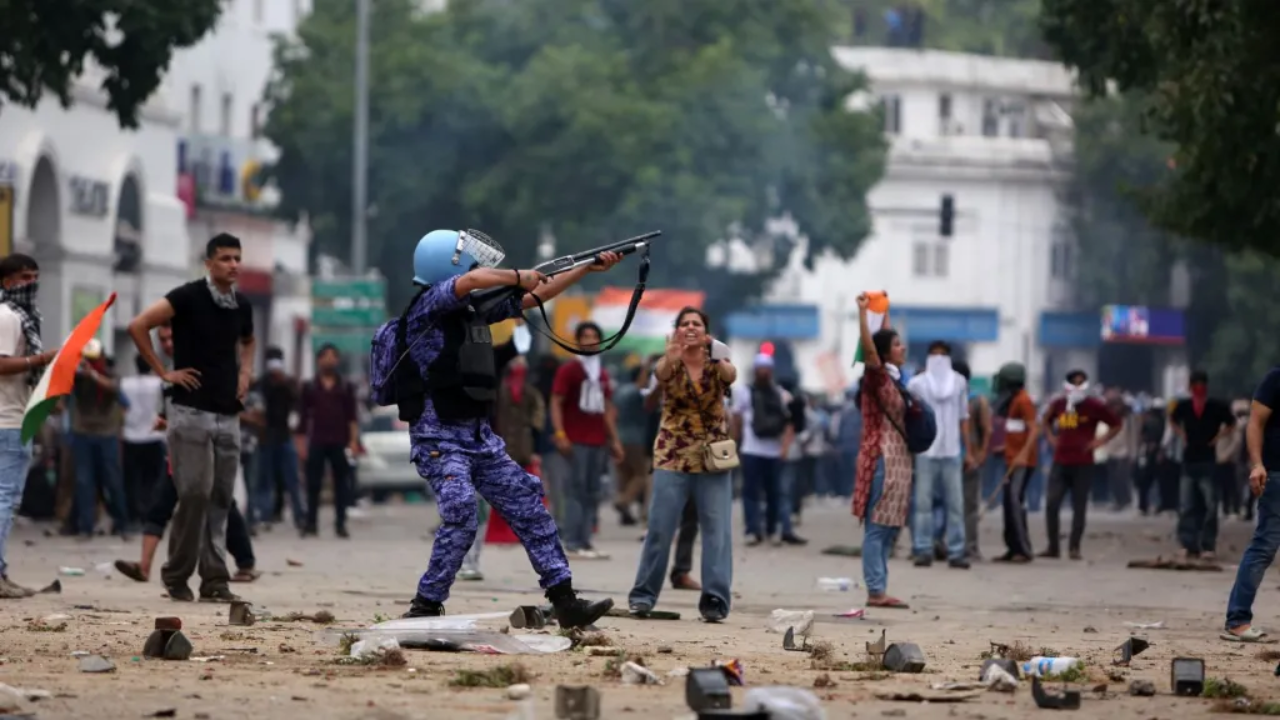
Such threats and attacks are not unknown in big cities either. On 16 September a young woman reporter, Kavita Bishnoi, was reportedly threatened in the Delhi University campus by an angry mob of Akhil Bharatiya Vidyarthi Parishad (ABVP) supporters. She was among several reporters covering the students’ union elections. She has recounted in a video how a goon came right up to her, yanked at her stole and accused her of being a leftist simply because the scarf she was wearing had a red border. She was later accosted again, with two girls demanding that she allow them to check her mobile phone. According to her, none of the reporters present who saw the mob of over a hundred people armed with sticks and stones were allowed to take photos or videos.
The police present on the spot were apparently passive spectators while anyone who dared take pictures was attacked.
In another recent instance in another part of the country, journalist Aparna Kurup faced police action for a television debate she had anchored. On 7 September the Kochi City Cyber Police registered a case against Kurup, senior coordinating editor of Malayalam news channel Big TV, following a complaint filed by Kasaragod resident Abdul Hakeem B.M. On 31 August, Kurup had anchored a panel discussion on Big TV to discuss the controversial circular issued by the Grand Mufti of India, Kanthapuram A.P. Aboobacker Musliar. In it the Islamic scholar had advised Muslim women to not share public spaces with unrelated men during religious celebrations. Musliar’s advisory had drawn swift condemnation from various quarters, including from Keralam Chief Minister V.D. Satheeshan, who said regressive thinking was out of sync with 21st Century progressive thought. However, she was singled out for online attacks, reportedly even receiving messages reminding her of the violence faced by TJ Joseph, the professor whose hand was chopped off by Popular Front of India extremists in 2010 after he had set an exam question they deemed sacrilegious.
She approached the police to complain about the sustained cyberbullying campaign against her – including death threats – which was possibly triggered by social media posts by Abdulla Basil C.P., Vice President of Wisdom Students, the student wing of the Wisdom Islamic Organisation in Keralam, who had participated in the TV debate. However, a counter-complaint filed by a different individual by BM Abdul Hakeem of Kasargod resulted in a case being registered against Kurup. The Kerala High Court had to ultimately issue a protection order for Kurup in view of the sustained death threats and online campaigns against her.
No action has been taken in the several cases mentioned above to protect the journalists from the multi-pronged attacks that threaten their lives, dignity and livelihoods.
The NWMI condemns the misogynistic and toxic campaigns both online and offline against journalists based on gender and profession.
We demand:
- Accountability from the heads of government of Uttar Pradesh, Madhya Pradesh, Delhi and Keralam to take appropriate steps to create a conducive environment for journalists to carry out their professional duties without fear of repercussions.
- Law enforcement agencies in these states take immediate action against perpetrators of the targeted harassment and intimidation of women journalists and drop any vindictive penal action against the journalists.
- Social media platforms like Meta desist from censoring posts by independent journalists and ensure total transparency and disclosure in take down demands made by the government or non-state actors.
The Network of Women in Media, India
21 September 2026