

Bihar SIR Weakens Women’s Participation in Democracy
The Special Intensive Revision (SIR) of the electoral rolls in the state of Bihar has sparked a heated debate across India in recent months. Among the many concerns raised is its potential impact on women voters.
Launched in Bihar in June 2025, the SIR was presented by the Election Commission of India (ECI) as a long-overdue administrative reform that would enable the revision of the electoral rolls – nationwide – in order to include all eligible voters and eliminate all ineligible voters from the voter list. Bihar was selected as the first state to undergo this exercise.
Recent, preliminary analyses of Bihar’s post-SIR draft electoral rolls, released on 1 August, suggest that more women than men have been deleted from the rolls; this is despite the fact that, typically, more men migrate out of the state. The apparent disparity raises critical questions about the potential weakening of women’s voices in a fundamental aspect of democracy – elections – when the need is for greater electoral inclusivity and empowerment of women voters.
The SIR experiment in Bihar
The ECI embarked on the SIR in Bihar just a few months ahead of the state Legislative Assembly elections due to be held in the last quarter of this year. The Commission announced its intention to conduct SIR of electoral rolls across the country, beginning with Bihar, on 24 June. The process has been marred by controversy ever since, with opposition parties accusing the government led by the Bharatiya Janata Party (BJP) of attempting ‘vote theft’ with the help of the ECI. Several Public Interest Litigations (PILs) have been filed in the Supreme Court challenging the legitimacy and transparency of the SIR. Investigative reports by journalists and data analysts have also revealed systemic and large-scale flaws in the SIR.
According to the ECI, the purpose of the SIR is to update electoral rolls by excluding dead, duplicate, untraceable and/or permanently migrated voters, as well as illegal immigrants. All registered voters in the state would have to complete the enumeration forms in order to be retained on the electoral rolls. The month-long process concluded on 25 July and the draft revised rolls were made available on 1 August.
At the end of this first phase of the 90-day SIR exercise, over 65 lakh voters were likely to be removed from the electoral rolls due to various reasons, including alleged insufficient documentation to prove Indian citizenship. The post-SIR draft electoral roll includes only around 7.24 voters, whereas the pre-SIR number was close to 7.90 crore.
According to the ECI, eligible voters whose names have been left out can still be added after they complete the prescribed forms during the next phase of the process between August 1 and September 1; and political parties can also file objections for the removal of ineligible voters.
Impact on women
According to data analysis in The Hindu, “A total of 3.82 crore male electors are part of the latest electoral rolls — about 25 lakh male electors fewer than the rolls prepared in January this year. A total of 3.41 crore female electors are part of the latest electoral rolls — about 31 lakh female electors fewer than the rolls prepared in January.” The deletion of such a large number of female voters’ names is no doubt a matter of grave concern in the context of women’s right to exercise their franchise as citizens of a democracy.
Voting patterns in the 2015 and 2020 Bihar Assembly Elections suggest that women, particularly those belonging to Scheduled Caste (SC) and Scheduled Tribe (ST) communities, have been steadily increasing their vote share in the state.
During the 2020 Bihar Assembly Elections, the total number of voters was 7,36,47,660. Of these, 3,87,89,388 were male and 3,48,55815 were female. Overall, a total of 2,08,04, 957 women cast their votes compared to 2,11,21,394 men. Amongst SC communities, more women (32,73,814) voted than men (32,53,738) in 2020. Similarly, among ST voters marginally more women voted (1,69,559) than men (1, 68, 761).
During the 2015 Bihar Assembly Elections, 1,87,04,786 women exercised their franchise, as compared to 1,88,43,467 men.
The exclusion of more female voters than their male counterparts raises serious questions about electoral inclusion and women’s right to participate in the democratic exercise of elections.
A report in Scroll suggests that women make up 55 per cent of voters excluded from Bihar’s post-SIR draft voter list and that in 43 of the state’s 243 Assembly constituencies 60 per cent or more of the voters excluded from the draft electoral rolls are women. According to the report, the highest exclusion rate for women is in the Rajpur constituency of Kaimur district, which is an Assembly seat reserved for SCs: 69 per cent of the names removed in this constituency are of women.
Overall, Kaimur district registered the highest exclusion rate for female voters across all districts in Bihar at 64 per cent, followed by Buxar district at 63 per cent, Kishanganj at 62 per cent, Gopalganj at 61 per cent, Arwal at 61 per cent, Bhagalpur at 60 per cent, Rohtas at 59 per cent, Siwan at 59 per cent, Darbhanga at 59 per cent and Supaul at 58 per cent.
It is noteworthy that the districts with the highest exclusion of overall voters – both male and female – also have the highest population of Muslims. In the top ten districts in Bihar with the highest percentage of excluded voters, five have the biggest share of Muslim population: Purnia, Kishanganj, Madhubani, Bhagalpur and Sitamarhi.
Earlier this week the ECI complied with the interim order of the Supreme Court of India directing it to publish the names of 65 lakh voters excluded from the draft electoral roll, along with reasons for their exclusion. According to preliminary analysis of the data, the information raises more questions than answers about the higher deletions among women. One revelation is that women electors significantly outnumbered men in the ‘permanently shifted’ category, with the trend more pronounced among younger voters below the age of 40. The analysis also found no correlation between illiteracy and exclusion rates.
Concerns raised by activists and scholars
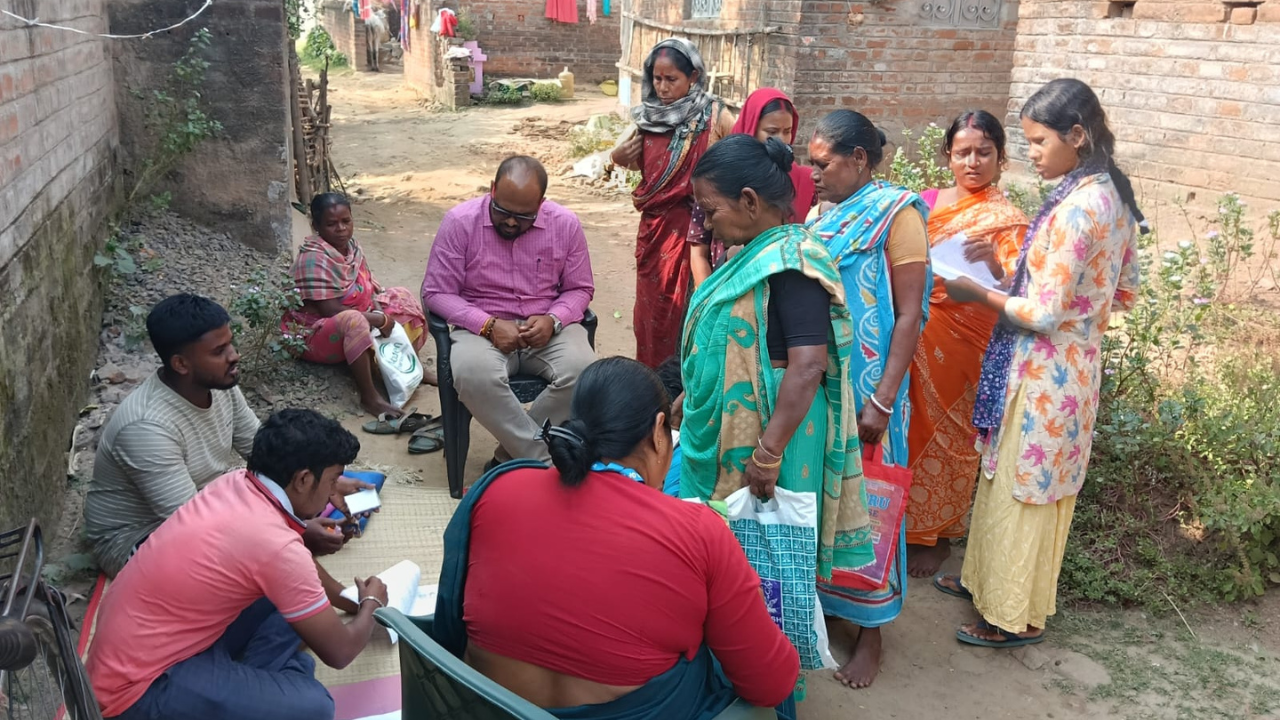
Dr. Sharad Kumari, a Patna-based social activist, points out that the SIR process overlooks the significant reality of women’s migration after marriage. They leave their maayka (parents’ house) and go to the sasural (husband’s place). The requirement that parents’ EPIC numbers have to be supplied along with the enumeration form poses a challenge for women voters, especially those whose parents are no longer alive or have been circular migrants or have permanently shifted location. Women without properties in their names also struggle to procure the necessary documents. Apart from these very real problems, the SIR process itself is really lengthy and burdensome for women in view of their workload and multiple responsibilities. She pointed out that these problems are obviously amplified with uneducated women who also find it difficult to understand the process. According to her, these could be some of the reasons why a large number of women voters’ names have been deleted from the rolls.
Dr. DM Diwakar, former Director of the AN Sinha Institute of Social Studies, Patna, highlighted the fact that Bihari men often migrate to other parts of the country for work, while women are primarily engaged in agriculture and domestic work in their home locations. Many women could not afford to lose the low wages they earn by taking time off during the peak agricultural season to go to BLOs’ offices to ensure that their names would be on the voter list after the SIR. He also pointed out that not only internet literacy but even general literacy rates are very low among women in Bihar, which makes it difficult for them to fill forms, locate and identify the necessary documents, and so on. According to him, such issues were among the key factors leading to the deletion of so many women’s names.
Amir Abbas, editor of Democratic Charkha, a Patna-based web portal, points out that the SIR designed by the ECI overlooks inclusivity. Women’s participation in the democratic process was already weak and the SIR has presented new challenges for them. He provided an example to illustrate the problem. Suppose a woman, originally from Nepal or even another Indian state, gets married to someone in Bihar. The Booth Level Officer (BLOs) responsible for the SIR process at the grassroots level would find it difficult, if not impossible, to validate her parents’ documents. This would result in her name being categorised under “address not found”. According to him, this scenario highlights the difficulties faced by women in ensuring that their rights as voters are protected under the current system.
Dr. Pushpendra Kumar Singh, former Professor and Chairperson at the Bihar Centre of the Tata Institute of Social Sciences (TISS), referred to a small household survey they had conducted in three slums of the Phulwari Sharif and Danapur Assembly constituencies in Patna district from 1 to 5 August 2025.
The survey team found that 71 out of 262 respondents had their names in the draft electoral roll but were asked to meet the BLO with additional documentation. Most of these individuals were women who confirmed that they had already submitted their documents. He said the most worrying matter is that such voters have not been contacted by any election official so far and they have no idea about the status of their application. According to him, such voters, mostly women, are at high risk of losing their right to vote.
The survey also found discrepancies in the draft rolls, including dead people and duplicate entries. He said the team found that, while checking with EPIC numbers, 21 respondents got the message that “it does not exist/not belong to the state.” The names of four people who were dead were found in the post-SIR draft rolls. One person had his name mentioned twice in the updated electoral rolls. Prof. Pushpendra pointed out that such discrepancies, revealed in their household survey, clearly serve to defeat the stated purpose of the SIR.
Impact beyond Bihar
Meanwhile, the ECI has announced its intention to conduct SIRs in other states, too, including in Bengal ahead of the State Assembly elections due in 2026. This has already sparked concerns, with three women attempting self-immolation in front of the Calcutta High Court on 12 August, allegedly because of the proposed SIR.
Police officers on security duty apprehended the women as they were pouring kerosene on themselves. According to sources, the three women – identified as Purnima Halder, Sutishna Sapui and Bandana Naskar (all residents of the Bishnupur police station area in South 24 Parganas district) – told the police that they took the extreme step due to fear of the SIR. Although the reasons for the self-immolation bid are still being investigated, it is clear that the likely impact of the SIR is taking a toll on women voters.
As the electoral process moves forward across the country, with several state elections scheduled over the coming months, it is crucial to address the concerns raised by various stakeholders about the SIR process and ensure that the rights of all citizens, particularly women, are protected and that all adult citizens are able to exercise their franchise.
Sumita Jaiswal is a senior journalist and media trainer with a career spanning over 22 years. She currently works at Dainik Jagran and has previously held positions at other notable publications.
Edited by Ammu Joseph