
Session 5: Environmental Reporting in Mainstream Media – Challenges, Ethics, and Opportunities
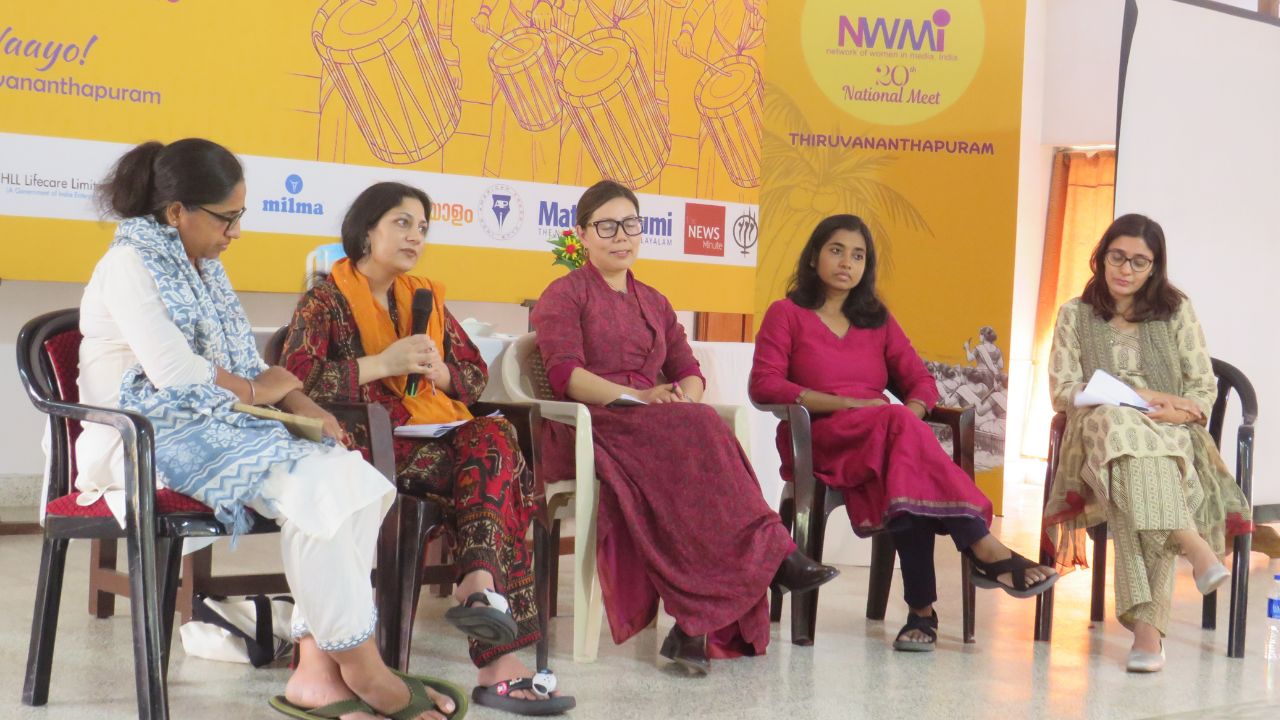
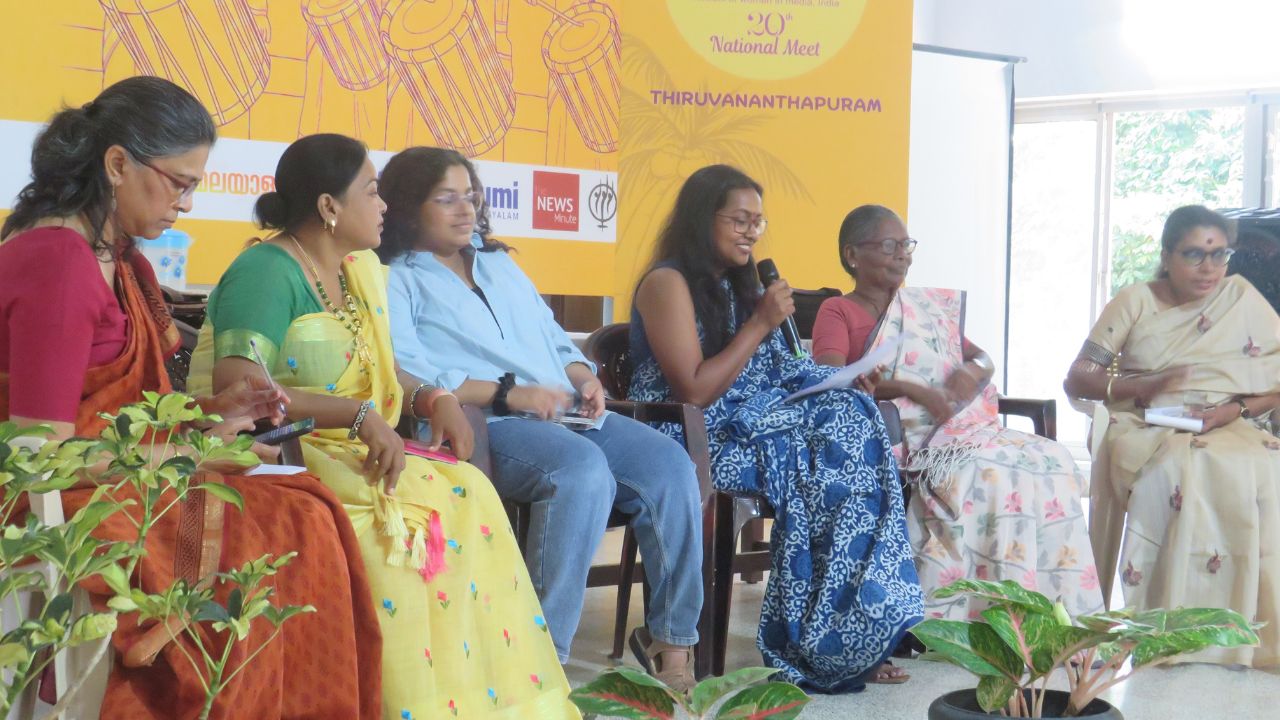
From left: Ravleen Kaur, Independent Journalist, Assam, Arjumand Shaheen, Independent Journalist, Jammu and Kashmir, Rinchen Angmo, Independent Journalist, Ladakh, Haritha John, Chief of Kerala Bureau, The News Minute, Shalini Umachandran, Editor, Mint Lounge
Moderator: Shalini Umachandran, Editor, Mint Lounge
Panelists:
Ravleen Kaur, Independent Journalist, Assam
Arjumand Shaheen, Independent Journalist, Jammu and Kashmir
Rinchen Angmo, Independent Journalist, Ladakh
Haritha John, Chief of Kerala Bureau, The News Minute
The panel brought together environmental journalists from diverse regions such as Ladakh, Kashmir, coastal India, and central India, to discuss the realities of reporting on climate and environmental issues within mainstream media.
A recurring theme was the tendency of newsrooms to prioritize dramatic, event-driven stories such as floods, landslides, and disasters, while neglecting slower, systemic processes such as climate change, biodiversity loss, environmental degradation, and livelihood impact. Panelists highlighted that environmental stories often gain visibility only when they become crises, leaving little room for reporting on the underlying causes or long-term consequences.
Speakers emphasized that environmental journalism intersects with nearly every beat, including gender, migration, public health, human rights, and livelihoods. However, mainstream media frequently overlooks these intersections. The discussions highlighted how climate impact is often experienced through water scarcity, migration, displacement, loss of livelihoods, and health challenges, particularly among women and marginalized communities, yet these dimensions rarely receive sustained attention.
The panel also examined editorial pressures and self-censorship. Journalists noted that while minor editorial changes are often acceptable, significant alterations can dilute the essence of a story. Reporters described challenges in covering issues related to caste, religion, tourism, militarization, and community conflicts, particularly in politically sensitive regions such as Kashmir. Space constraints, headline-driven journalism, and demands to shorten long-form reporting were identified as additional barriers to nuanced environmental coverage.
Another major concern was the lack of critical scrutiny around greenwashing and false climate solutions. Panelists discussed how media coverage often celebrates corporate sustainability initiatives without examining ongoing environmental damage. They also pointed to structural challenges in reporting on industries linked to major media owners and advertisers, making accountability in journalism increasingly difficult.
Journalists shared experiences of growing hostility toward environmental reporting, including threats, restricted access to sites, surveillance, and pressure from governments, industries, and local stakeholders. Several speakers noted that environmental reporting, once considered a niche beat, has become riskier as it increasingly challenges powerful interests. The discussion also explored the ethical dilemmas faced by environmental journalists. Reporting often requires balancing environmental protection with the rights and needs of vulnerable communities. Panelists stressed the importance of centering affected communities while also holding governments and institutions accountable for providing equitable and sustainable solutions. To reach wider audiences, journalists highlighted the importance of human-centered storytelling, strong visuals, social media experimentation, and locally relevant narratives.
Examples included reporting on climate-induced migration, sustainable practices in Ladakh, community adaptation efforts, and grassroots environmental innovations. The panel agreed that translating complex climate science into relatable, everyday experiences is essential for making environmental journalism more accessible and impactful.
The session concluded with a reflection that climate change is no longer a standalone issue but a lens through which many contemporary social, economic, and political challenges must be understood. The panel underscored the need for more inclusive, intersectional, and accountable environmental reporting that connects global climate conversations with the lived realities of communities on the ground.
Report by Dheeshma Puzhakkal
Edited by Saraswathy Nagarajan