
Session 2: Palliative Care in Kerala–Compassion as Policy
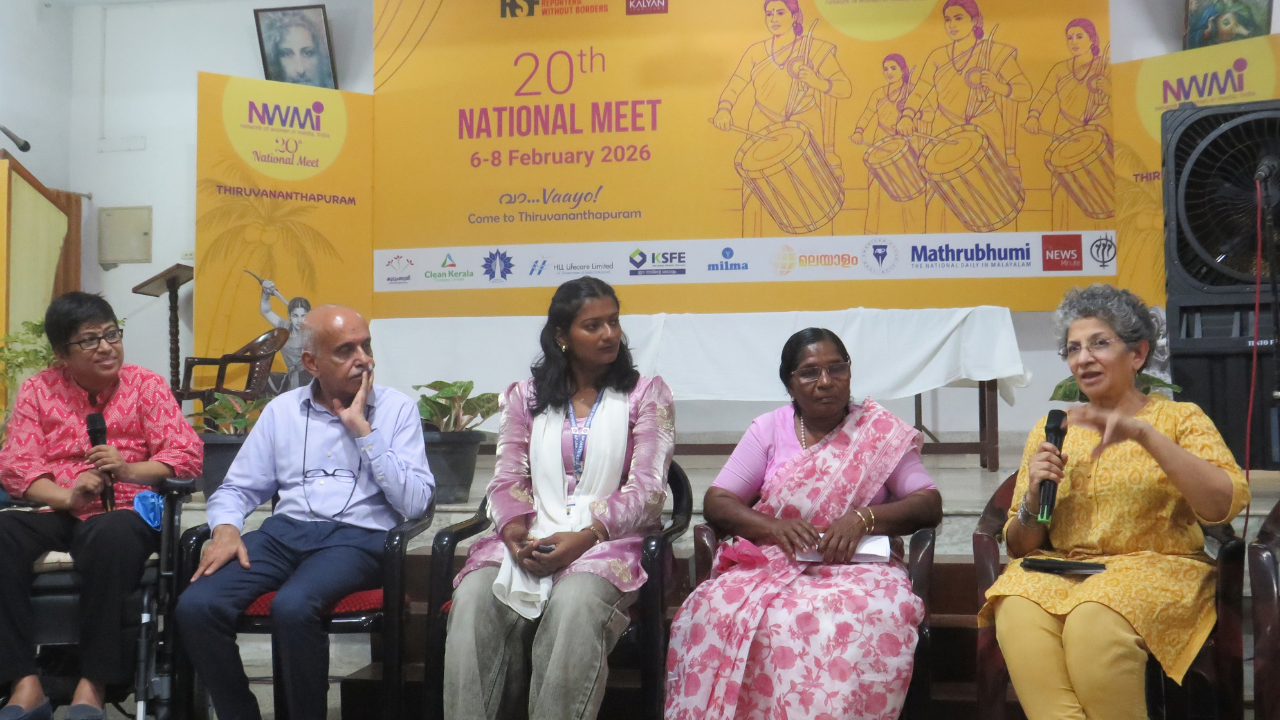
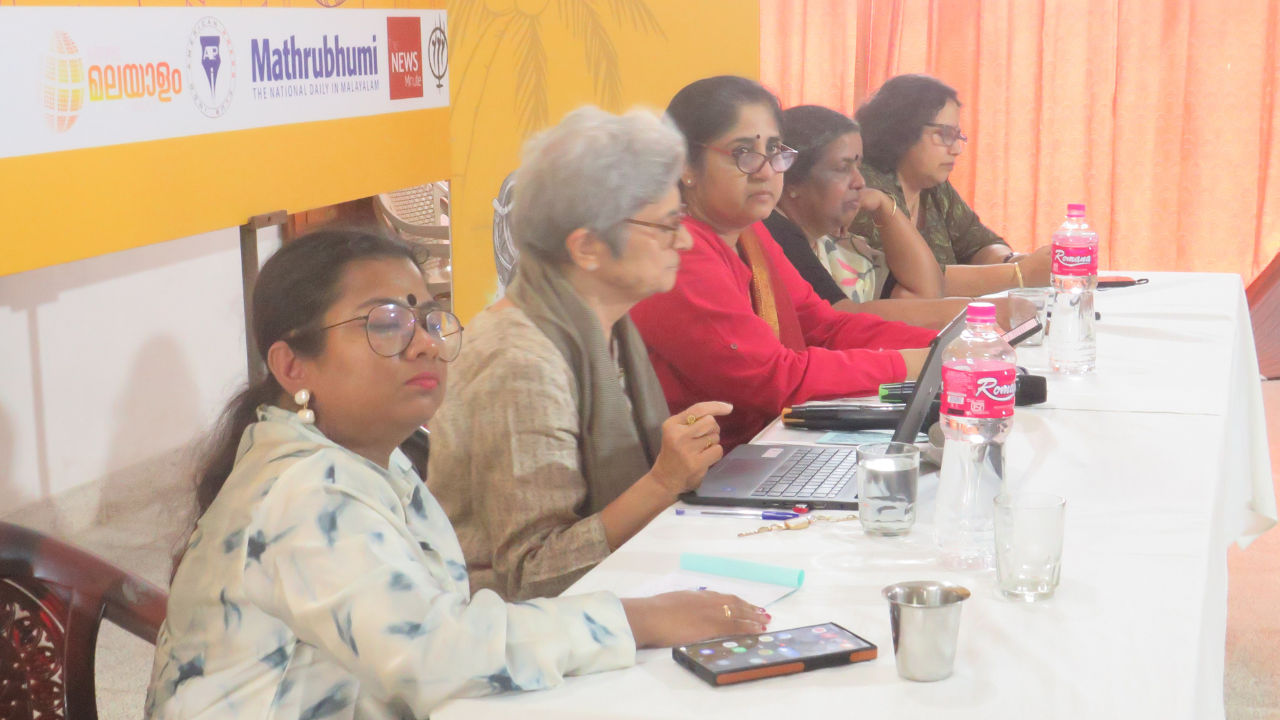
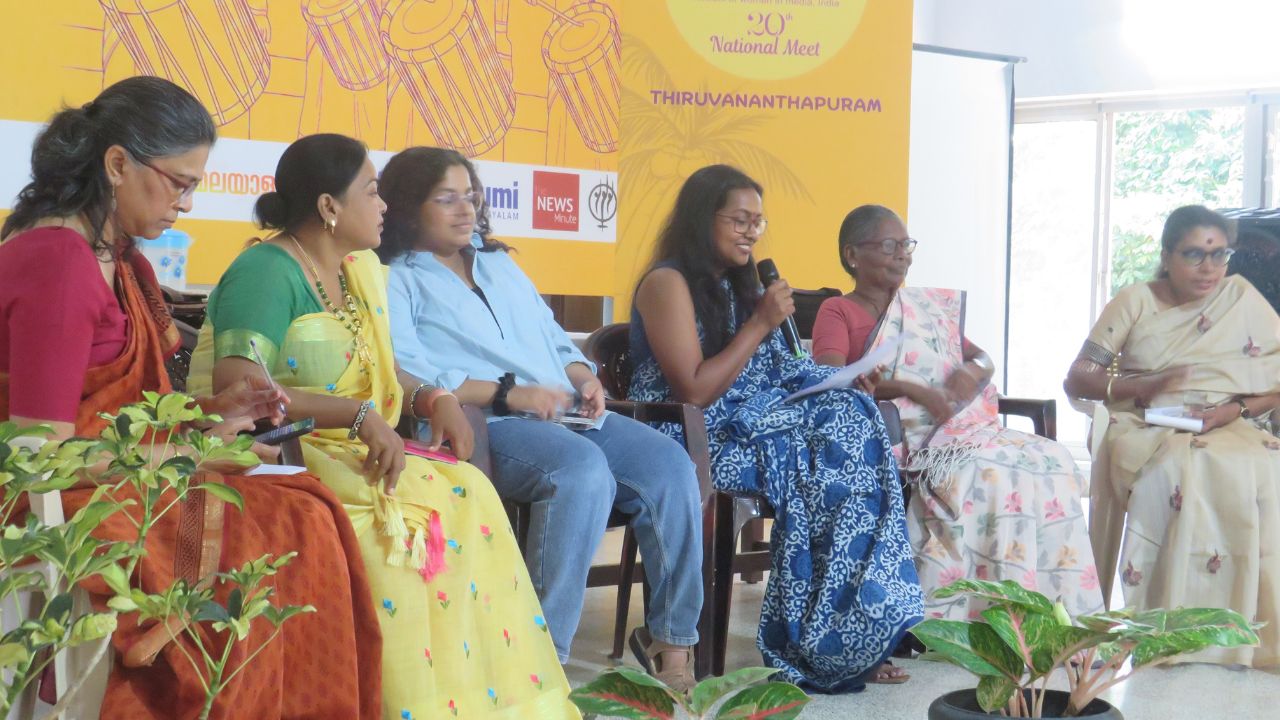
From left: Ashla Rani, Trustee and Volunteer, Pallium India, Dr MR Rajagopal, Founder-Chairman, Pallium India, Saima Mol, Student Palliative Care Worker, KP Rosamma, Vice-president, Kerala ASHA Health Workers’ Association and Sandhya Srinivasan, Independent Journalist
Moderator: Sandhya Srinivasan, Independent Journalist
Panelists:
Ashla Rani, Trustee and Volunteer, Pallium India
Dr MR Rajagopal, Founder-Chairman, Pallium India
Saima Mol, Student Palliative Care Worker
KP Rosamma, Vice-president, Kerala ASHA Health Workers’ Association
The session on palliative care began with the moderator Sandhya Srinivasan talking about how it is no longer considered as just treatment for the dying. She said Kerala has the oldest community-based care system for such patients, and highlighted the gender dimension of palliative care as well.
Ashla Rani, who first found Pallium India to help her overcome the terrible after effects of an accident that rendered her completely dependent on others, spoke about her experiences. “Existence was death for me. I even asked myself what I could do. And I realised I could still listen to people and work on a computer.” So she began to read out loud to the elderly and found a purpose within Pallium India. “My life changed completely with this. Palliative care can improve the quality of life,” she added.
Rosamma the AASHA worker spoke elaborately on the activities that she and her colleagues undertook during COVID. “”When everyone was confined to their homes, we AASHA workers used to go and give food and medicines to those receiving palliative care. Suddenly, we became popular after this.”
Saima Mol, a volunteer, explained why she had chosen to be a palliative care worker.
Dr MR Rajagoapl, Founder Chairman of Pallium India, a palliative care non-governmental organization based in Kerala, India, spoke next. Beginning on a philosophical note, he suggested that every healthy person can only be considered temporarily able-bodied. Further he added another fresh perspective to the deliberations: “It’s also violence if a person is confined to four walls and can step out only to go to the hospital.”
Speaking from experience, he said over 80% of care will be given by the family or a nurse. This is why Pallium India decided to go to the community in Kerala, he added as effective palliative care services should look not merely at a patient, but his or her entire family, he added. The focus of the organisation is on prevention and management of pain, and improving a person’s quality of life to enable him or her to live to full potential.
Even all this has but addressed only a small part of the actual need for palliative care services in the community. In Kerala, palliative care services ensure access, and there is a big role for the States in making palliative care available to all, Dr Rajagopal added.
Report by Ramya Kannan
Edited by Saraswathy Nagarajan