
Session 3: Reporting Sexual Violence on Women in the Age of ‘Men’s Rights’ and Short Attention Spans
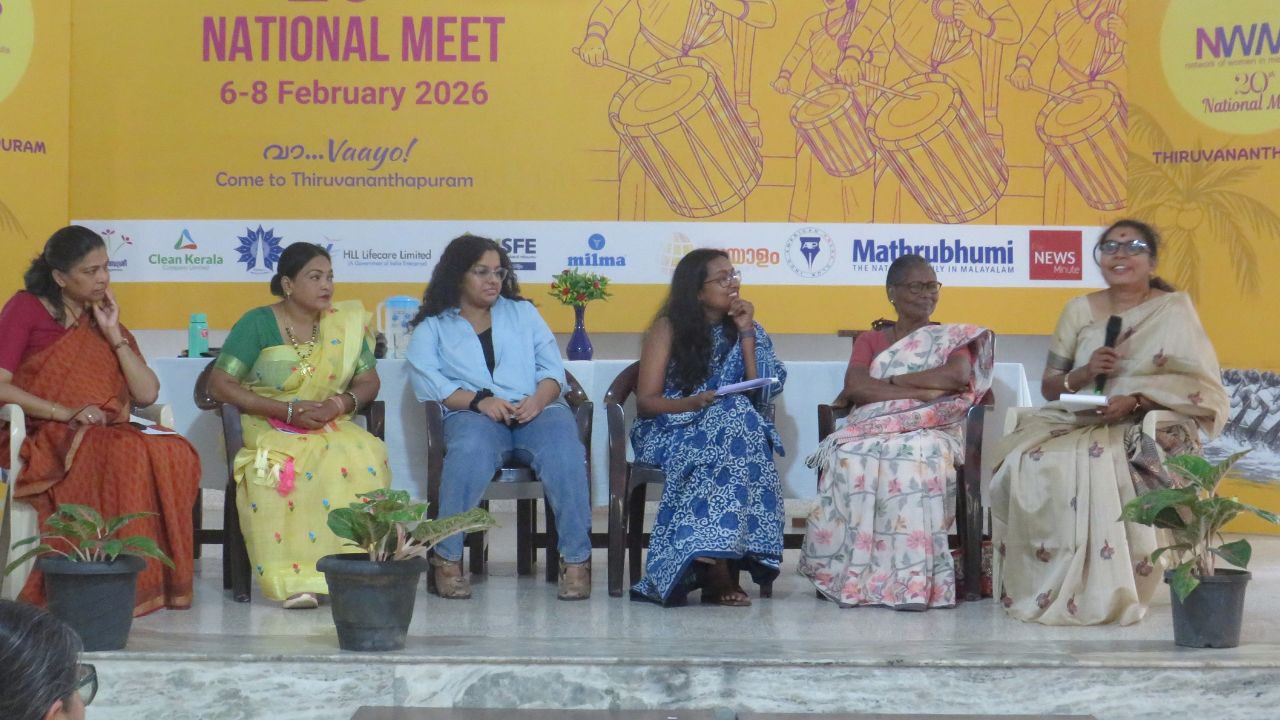
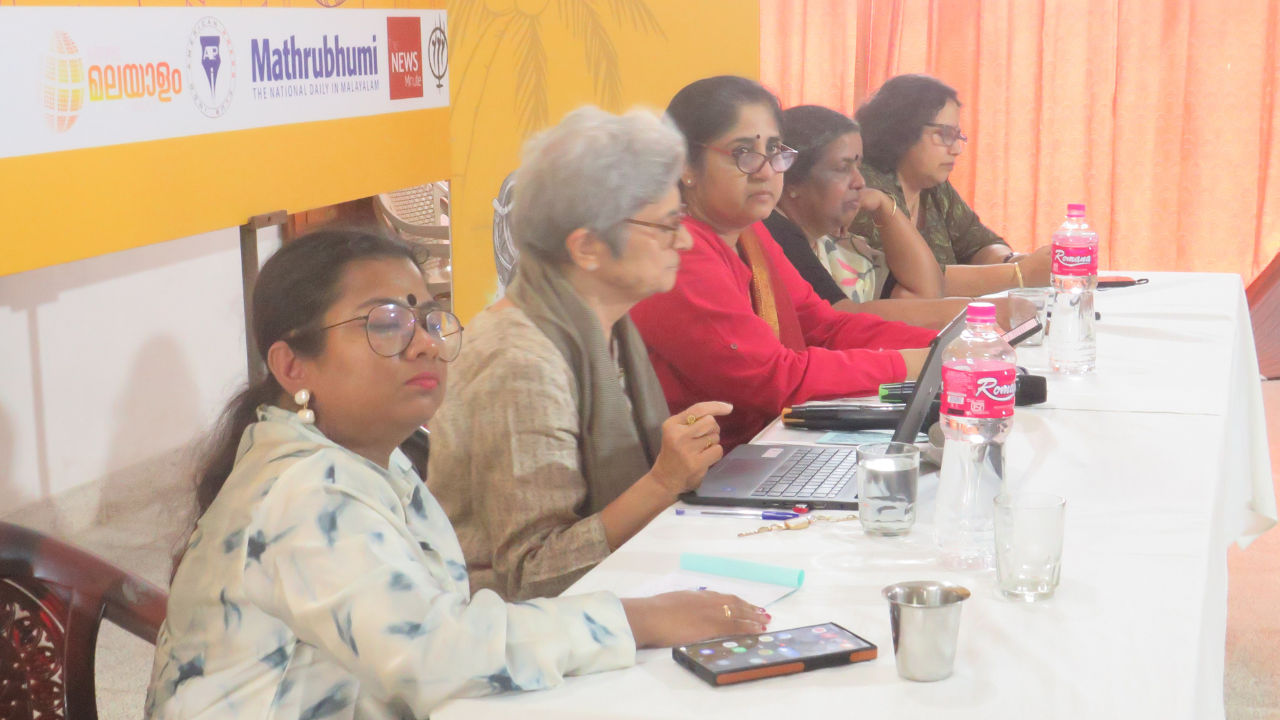
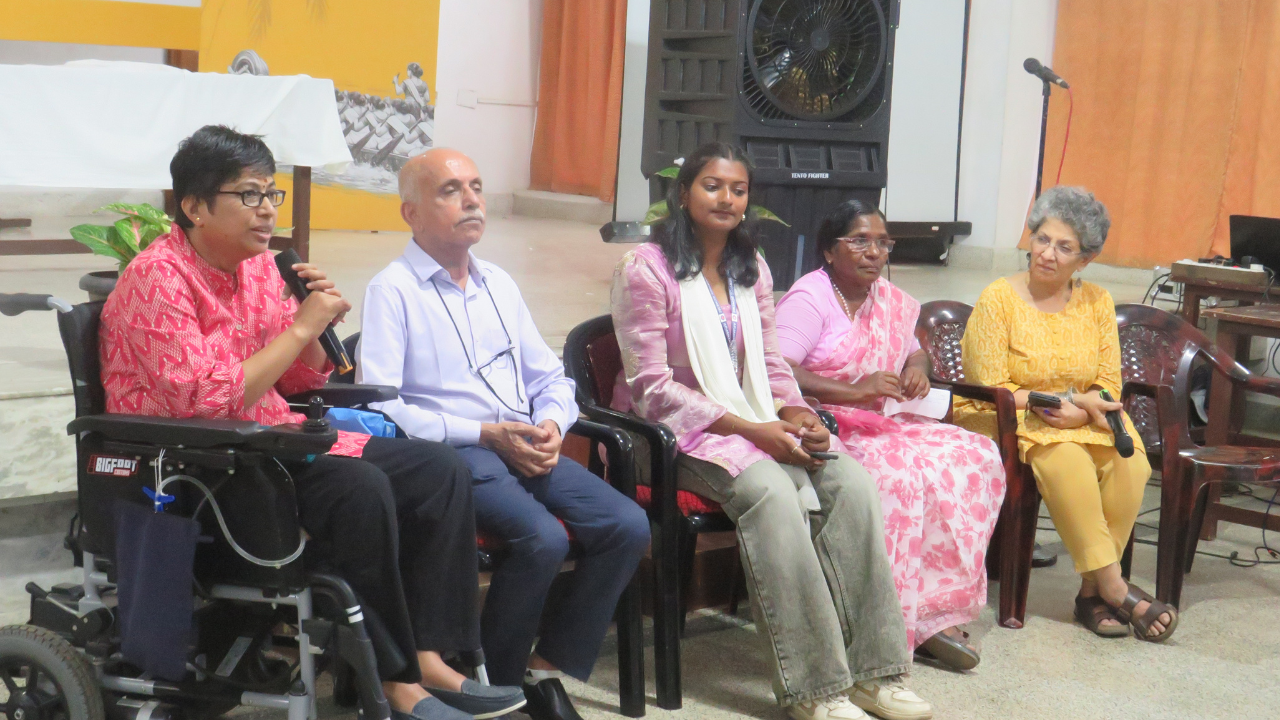
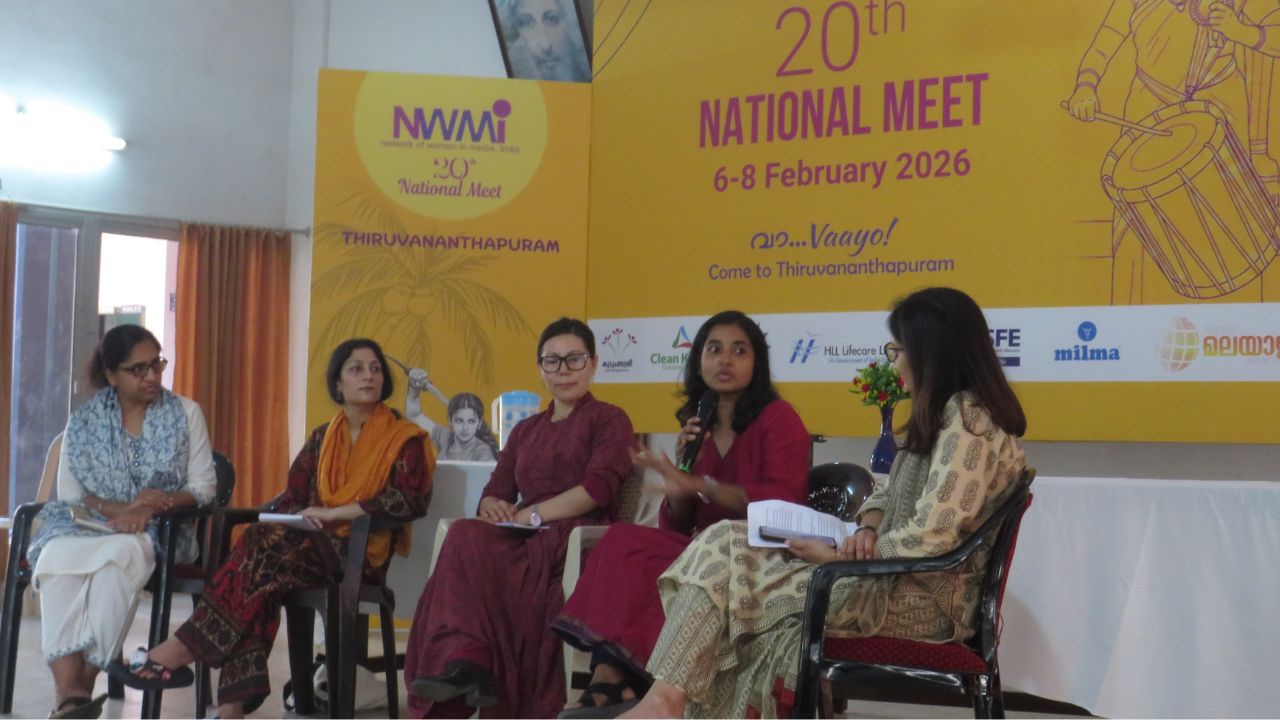
From left: Arti Jaiman (Hindi-English interpretation), Pushpa Rokde, Independent Journalist, Chhattisgarh, Lakshmi Priya, Senior Sub-Editor, The News Minute, Yamini Nair, Associate Editor, The Indian Express, Mercy Alexander, Activist, Sakhi, Sandhya Janardhanan, Lawyer and Activist, Sakhi.
Moderator: Yamini Nair, Associate Editor, The Indian Express
Panelists:
Pushpa Rokde, Independent Journalist, Chhattisgarh
Lakshmi Priya, Senior Sub-Editor, The News Minute
Mercy Alexander, Activist, Sakhi
Sandhya Janardhanan, Lawyer and Activist, Sakhi
Arti Jaiman (Hindi-English interpretation)
The session examined how the media reports violence against women. Yamini Nair pointed out how long-drawn legal procedures affect the relevance of such cases and the consequent attention span of the media. She asked whether the follow-up of the cases (of violence against women) helps survivors or makes things worse for them.
Sandhya Janardhanan responded with examples, beginning with a 1999 case where a former minister, accused of outraging the modesty of a woman Indian Forest Service (IFS) officer, saw acquittal only in 2025. She also referred to the Suryanelli case (In 1996, a 16-year-year-old from Suryanelli in Kerala was lured into captivity and abused by several men over 40 days). She emphasized how difficult it is for women to obtain justice, noting that judicial delay leads to fading memories, the sidelining of victims, and emotional detachment. In the case of the IFS officer, the survivor learned of the acquittal through the media — not through her pleader or the court — and had no opportunity to be heard. Reporting in the media, Sandhya noted, often reduces such cases to technical terms such as “accused acquitted” or “prosecution failed” without explaining the context.
Mercy Alexander, who has been working among marginalized women, was asked how the media can play a role in helping women who have been enduring domestic or sexual violence silently due to the lack of a support system. Drawing from her experience in the 1980s, she gave the example of a case from her hometown. In 1987, a man reported that his 19-year-old wife was missing. Later, she was found dead. The woman who cleaned her body saw scars all over it and a rope around her hip, raising suspicions of murder. There was no news in the media. Overriding several objections, the government ordered that the body be exhumed, and a post-mortem conducted. Finally, the husband was found guilty. Mercy criticized how the media covered the Suryanelli case, noting that it engaged in slut-shaming of the victim. She also criticised the media for interviewing Rahul Mamkoottathil, a politician who is accused in multiple sexual assault cases in Kerala.
Lakshmi Priya addressed the threat of the manosphere, describing it as a cyberspace where people are loosely connected around dating advice, lifestyle advice, and mental health advice. While calling for more media scrutiny, she also raised concerns about the kind of scrutiny being practised. She pointed out that men’s rights activism is sometimes treated as a quirky subculture to be laughed at. She cited the example of the All Kerala Men’s Association garlanding Pulsar Pulse Suri (accused in the 2017 actor assault case) and also another man accused of public masturbation inside a bus. The Association had held a march demanding the establishment of a men’s commission in Kerala. She also discussed the activities of Save Indian Family Foundation, a large men’s rights organization that handles individual cases of men accused of various misdemeanours, and offers them legal help and counselling. Lakshmi Priya stressed that men’s rights’ ideology is now so mainstream and pervasive across social media that it often goes unrecognized, and highlighted how it overlaps with right-wing economics, religion, and Hindutva-aligned ideologies.
The session also discussed the case of Deepak. He had died by suicide following social media scrutiny. A woman had filmed him allegedly harassing her on a bus and posted the clip on social media. After his death, the woman was severely trolled. Malayalam media was criticized for shifting the focus from women’s autonomy and systemic oppression to repeatedly discussing this single case and making it look as if all women were filing trivial or false cases of harassment.
The discussion also highlighted the neglect of women’s issues, noting that from February 2025 to April 2026, 19 women and 17 children had died by suicide, yet the media failed to cover these cases or address the lack of autonomy for women in domestic spaces.
Pushpa, a journalist reporting on gender violence in Bijapur district of Chhatlisgarh, a predominantly Maoist-affected area, spoke about how she exposed a story of a 15-year-old orphan who was raped by her neighbour’s brother-in-law. Initially the police were uncooperative, but Pushpa intervened in the matter with the help of the local police. Her reporting prompted action from the DC, SP, and Department of Child Welfare. The Superintendent of Police wrote to the Chief Minister requesting more women officers.
Sandhya added that men’s rights activism is now influencing judgments in courts, confusing judges, and deepening the adverse impact on women.
Report by Haritha H
Edited by Laxmi Murthy and Saraswathy Nagarajan