
Session 1: Kerala’s Gender Paradox- Progressive on Paper, Unequal in Practice?
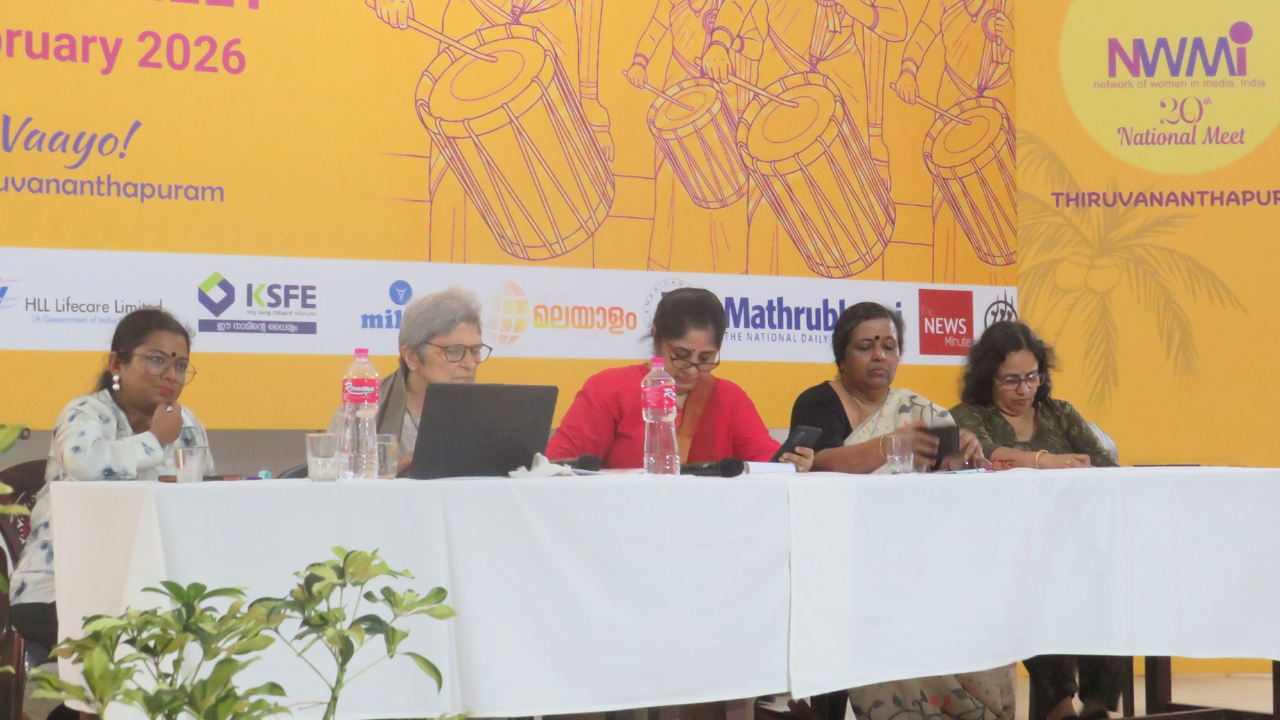
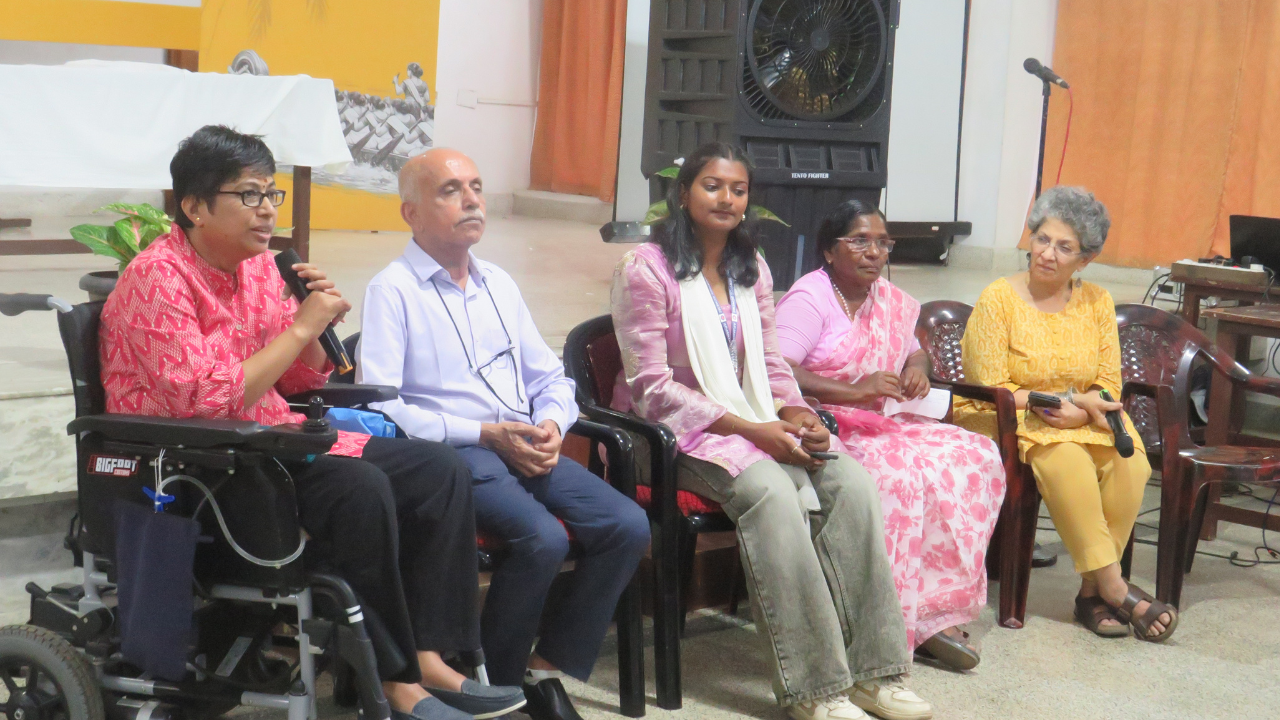
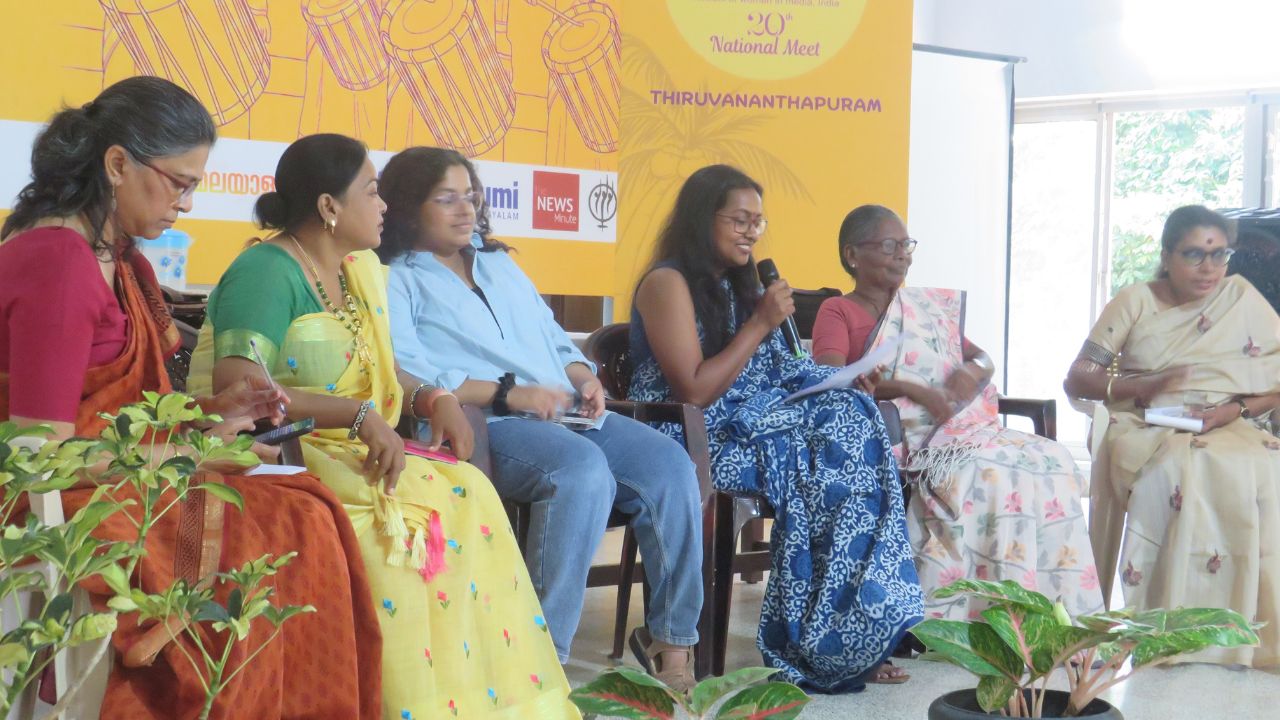
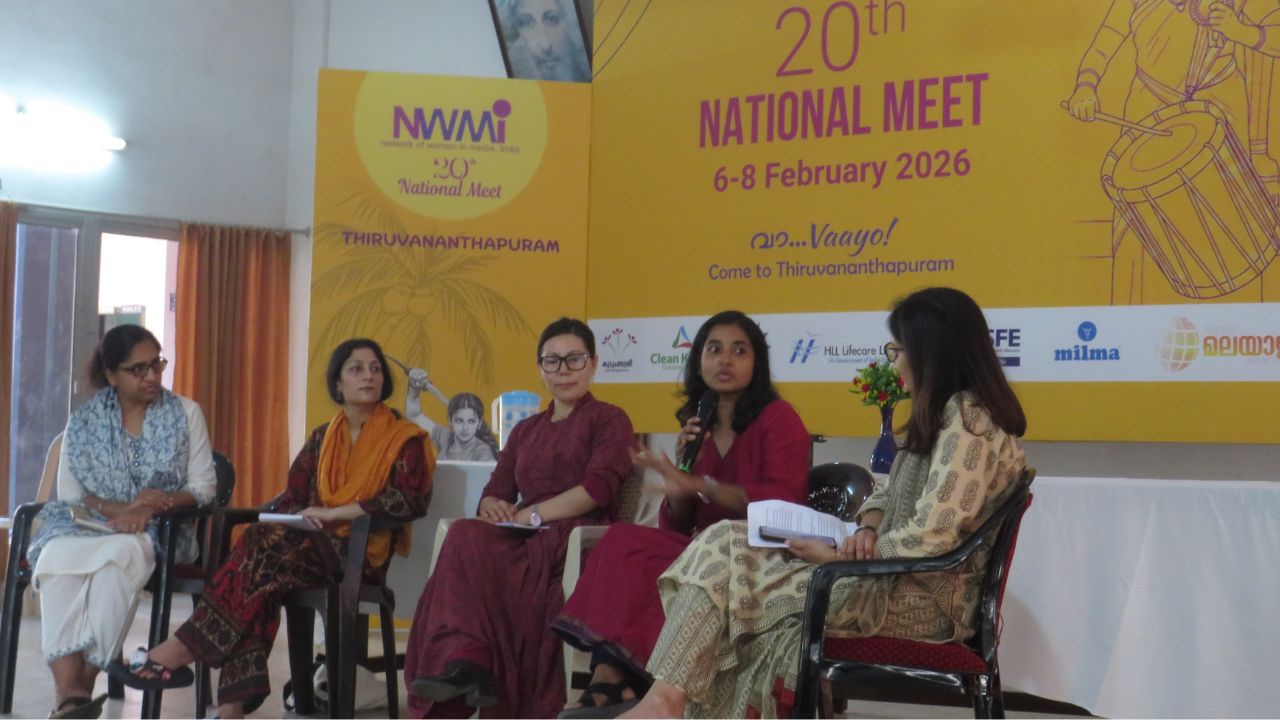
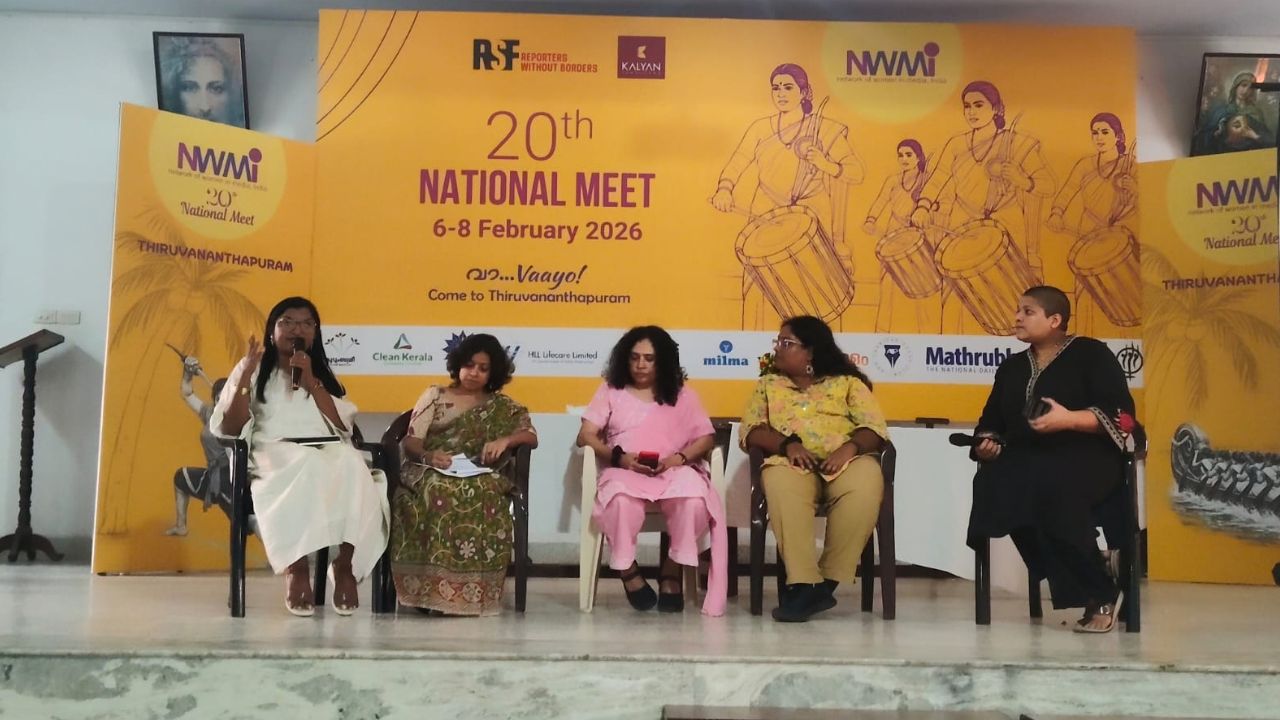
From left: Malavika Binny, Historian, Intersectional Feminist, Assistant Professor of History, Kannur University, Mridul Eapen, Honorary Fellow, Centre for Development Studies, Former Member of Kerala State Planning Board, Supriya Unni Nair, Independent Journalist, R Parvathy Devi, Independent Journalist, Author, Social Activist, and Sudha Nambudiri, Senior Journalist, The Times of India, Kochi
Moderator: Supriya Unni Nair, Independent Journalist
Panelists:
Malavika Binny, Historian, Intersectional Feminist, Assistant Professor of History, Kannur University
Mridul Eapen, Honorary Fellow, Centre for Development Studies, Former Member of Kerala State Planning Board
R Parvathy Devi, Independent Journalist, Author, Social Activist
Sudha Nambudiri, Senior Journalist, The Times of India, Kochi
The session examined Kerala’s gender paradox, linked to the larger Kerala model of high human development despite low per capita income. Mridul Eapen opened by noting that while Kerala has historically had lower gender gaps in education and health, and no major social opposition to girls’ schooling or women owning property, there has been growing unease since the 1990s due to very low female workforce participation, rising violence against women, and little political leadership or decision-making power for women. She stressed that averages hide inequalities, and that fishing communities, SC/ST, minorities, trans persons, and disabled women are outliers.
Conventional indicators such as education and health are inadequate to assess women’s status, and non-conventional indicators such as workforce participation and wages, occupational segregation, domestic violence and dowry, and control over income and decision-making are necessary. She questioned the assumption that education automatically leads to empowerment, arguing that autonomy and empowerment, meaning control, access, and decision-making, matter more than status. NFHS data from 1998 to 1999 showed Kerala was not on top in autonomy indicators, lagging in decision-making, mobility, and access to money. For the same education levels, women’s unemployment is far higher than men’s, reaching up to 50 to 60 percent among women graduates, and men exit unemployment faster than women over time. She identified the family as a key site of gender inequality, one that determines the type and level of education and prioritises collective interests over women’s autonomy.
Malavika Binny raised a major structural gap: the absence of caste-disaggregated labour data in Kerala, which means caste is made invisible. She presented survey findings from Kannur and Kozhikode covering 200 women, which showed that Hindu women’s workforce entry was around 79 percent, Christian women around 82 percent, and Muslim women around 52 percent even with postgraduate degrees. Within Hindu women, non-scheduled caste women entered the workforce at around 87 percent, OBC women at 70 to 75 percent, and SC women at only 42 percent. Caste and religion together strongly shape workforce entry even at higher education levels. She drew a distinction between access and retention, noting that entry may happen but staying and progressing does not. She introduced the concept of ‘’caste-stead’’ occupations, citing that 88 percent of construction and manual labourers are Dalit women, while Adivasi women are concentrated in agriculture, forestry, and seasonal labour, and non-scheduled caste women dominate professional, managerial, and formal roles. She also highlighted the feminisation of higher education without a corresponding feminisation of secure employment, where the majority of students are women and contract or guest teachers are mostly women, but permanent posts are mostly held by men. Dalit women face added disadvantages including informal work, low bargaining power, and weak union representation. Policy, she noted, treats caste and gender separately with no intersectional design, and women are not a monolithic category as they face different patriarchies.
Parvati Devi, presenting her paper titled ‘Red in Politics, Saffron in Culture’, argued that education and health in Kerala do not translate into political, social, or cultural power for women. She pointed to violence as exposing women’s powerlessness, highlighting domestic violence and recent suicides linked to domestic abuse where abusers are rarely punished. While state initiatives such as Pink Police, Snehida, granting of menstrual leave, and a women’s department exist, she described them as insufficient. She identified a deepening of patriarchy driven by a middle-class cultural shift marked by growing religiosity, superstition, rituals, consumerism, and wedding extravagance, with an increase in astrology, vastu, ‘remedial’ rituals, and temple- and church-centred practices. The Sabarimala protests, she noted, showed the limits of Kerala’s progressivism, with middle and upper-middle class women mobilising against gender equality. She cited Meera Nanda on the corporate-temple-state nexus being active in Kerala, and criticised the media for largely opposing women’s entry into Sabarimala, amplifying misogyny and superstition, sidelining feminist perspectives, and giving platforms to reactionary figures while ignoring feminists. Feminist movements, she said, remain weak and consist of isolated voices, and Kerala is being pushed backwards socially.
Sudha Nambudiri focused on political representation, offering a simple test: how many women political leaders can be named. She noted that of 140 assembly seats, only 11 are held by women MLAs, and of 20 Lok Sabha Members of Parliament (MPs) from Kerala, only one is a woman. Across political parties, (Left Democratic Front (LDF), United Democratic Front (UDF), and National Democratic Alliance (NDA), women’s representation remains under 16 percent. Women candidates are rarely assessed for winnability, and parties do not allow women to build political bases. Panchayats fare better due to 50 percent reservation, with many capable women leaders emerging, but there is resistance to moving women to block, district, or assembly levels. She also pointed to how language erases women, with terms like “fishermen” used instead of fisherwomen or fisherfolk. Safety remains a major concern despite Human Development Index (HDI) rankings. The gender budget stands at around 23 percent of plan allocation, meaning the money exists, but the paradox lies in the gaps between allocations and outcomes.
Report by Lakshmi Priya M
Edited by Laxmi Murthy and Saraswathy Nagarajan