
Public Meeting at the Trivandrum Club
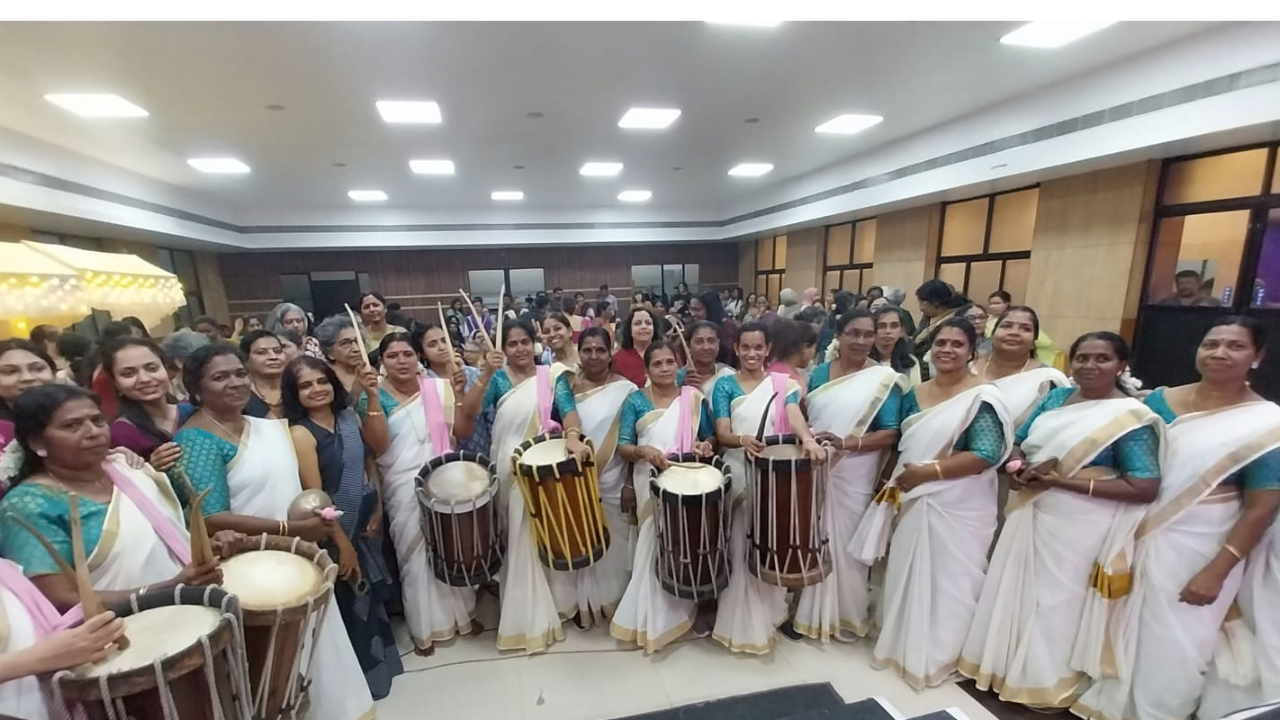
The chenda melam team with NWMI members at the public meeting.
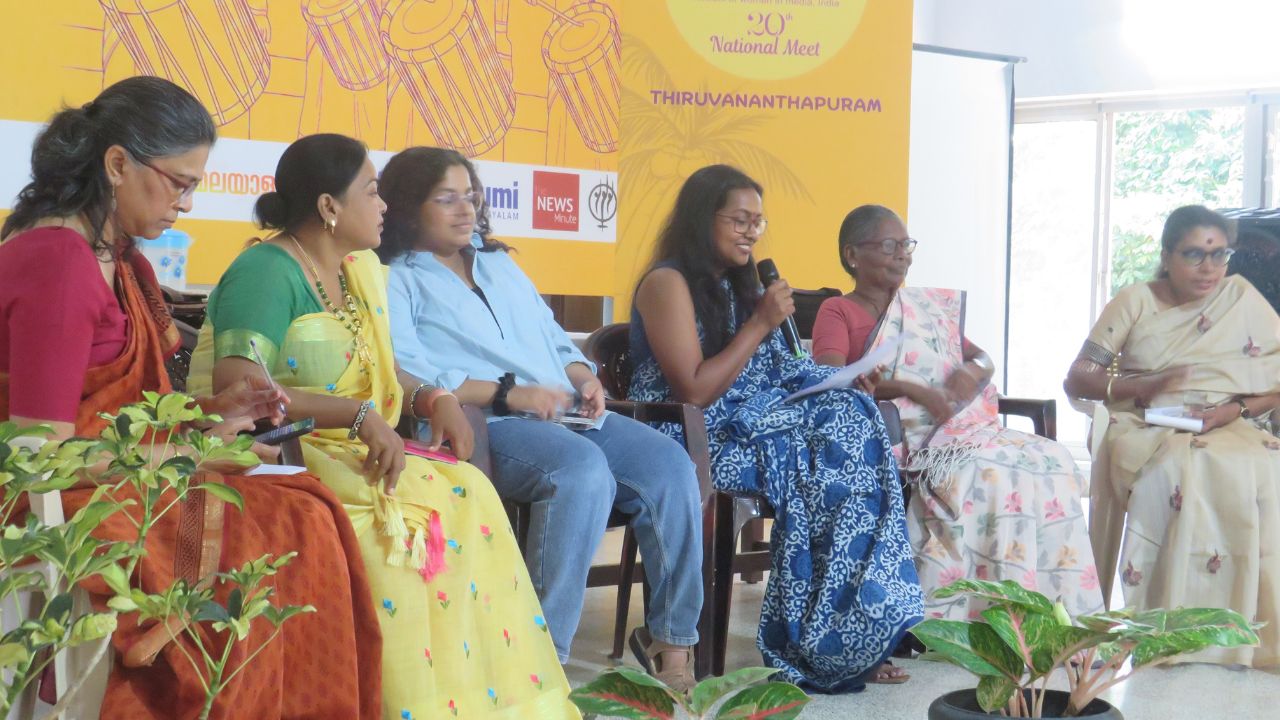
One of the highlights from the public meeting of the 20th National Meeting of NWMI in Thiruvananthapuram was a chenda melam (percussion ensemble) performed by an all-women group. It created a safe and entertaining space for women journalists of all age groups to shake a leg together, inhibitions and all forgotten. The public meeting was held at the Trivandrum Club on February 7, 2026. Saraswathy Nagarajan welcomed the gathering on behalf of the Kerala Chapter which organised the meet. She spoke about how women in media needed a space of their own. Read her full speech here.
The other highlight was the premiere of ‘Media Woman: Ammu Joseph’s Passionate Journey’, a documentary film commissioned by the Kerala Media Academy. Featuring NWMI founder member Ammu Joseph, the film is directed by Shiny Benjamin, with senior journalist Saraswathy Nagarajan, co-ordinator of the Kerala chapter of the NWMI as creative consultant. Watch the film here.
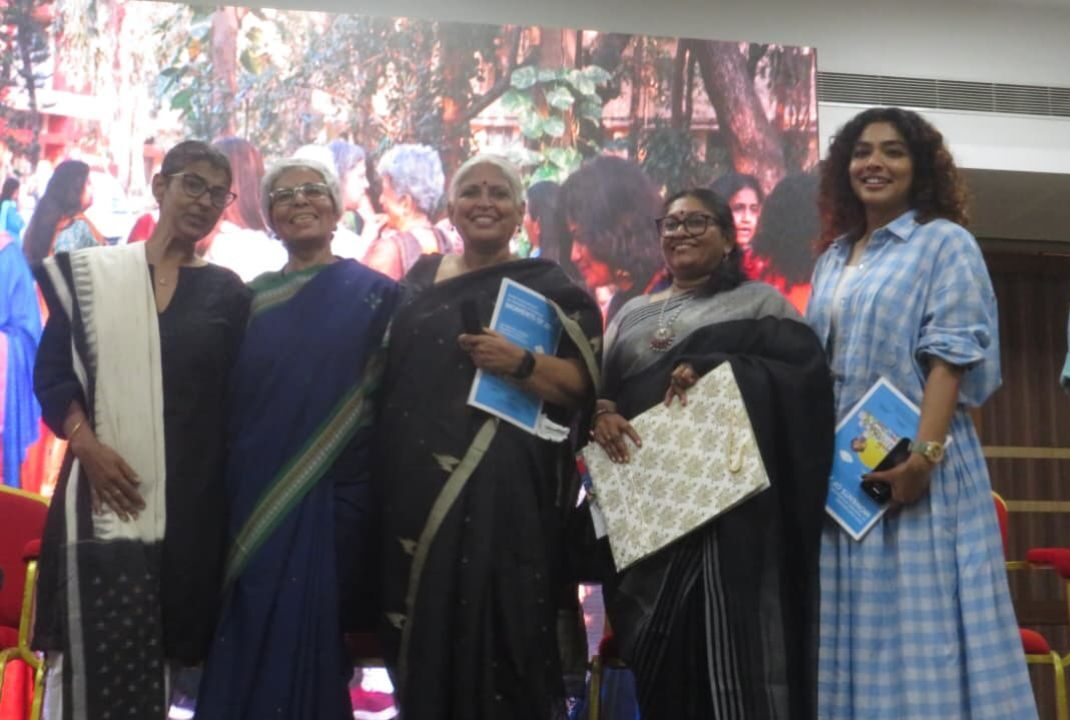
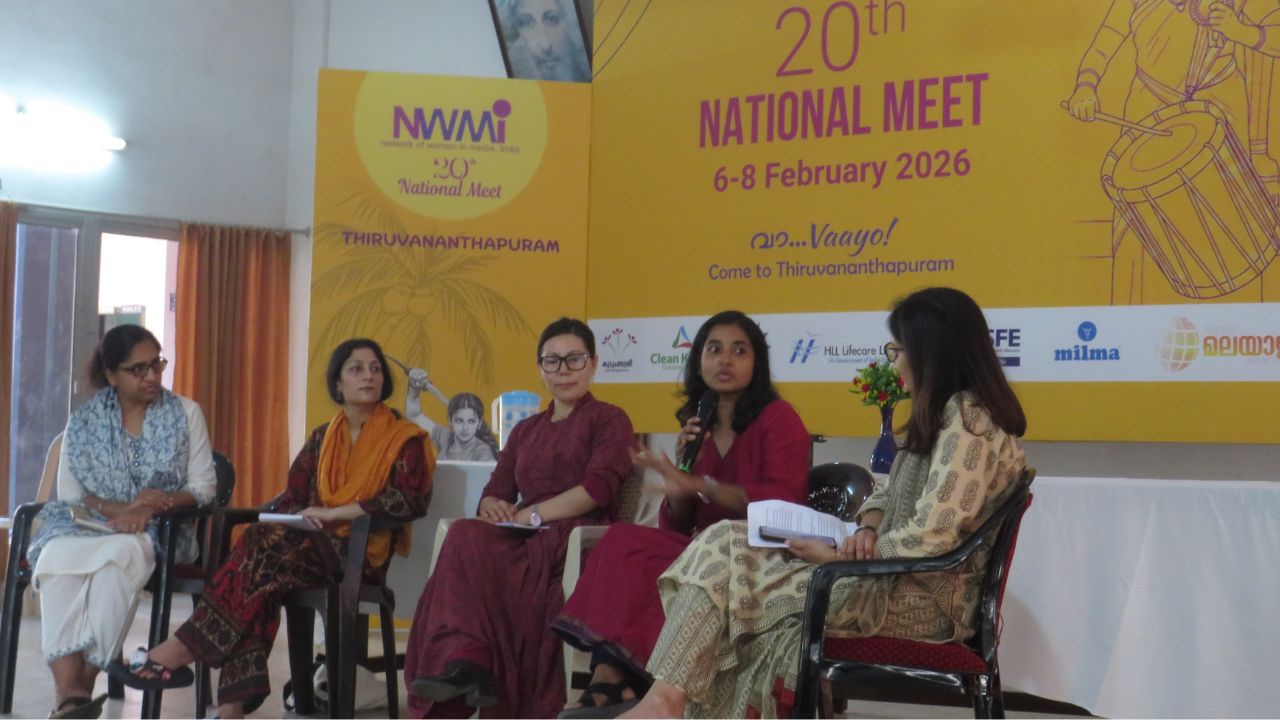
From left: Miriam Joseph, film producer and former journalist, Ammu Joseph, independent journalist and founding member, NWMI, Bina Paul, film editor and curator, KR Meera, author and former journalist, Rima Kallingal, actor, producer and dancer.
The keynote was delivered by award-winning writer K.R. Meera, first woman journalist to have worked at the Malayalam Manorama newspaper. She spoke on the meet’s theme, Media at the Crossroads: Independence vs Influence. It created a picture of the media landscape in which every journalist in the room found their place. Read her full speech here.

KR Meera
Invoking Dr B.R. Ambedkar, she said, “The more I reflect on the implications of our Fundamental Rights, the more I am awestruck by the wisdom and foresight of the architects of our Constitution. Remember, Dr. B.R. Ambedkar’s words that ‘Constitutional morality is not a natural sentiment; it has to be cultivated.’ He knew that the document alone cannot save a people. He knew that it was up to us—the journalists, the citizens, the seekers of truth—to complete the task.”
One of the takeaways from the public meeting of NWMI was the souvenir. Its theme was ‘പെൺ/Pen Power Pen Power: Media at the Crossroads’. The smart wordplay of ‘Penn’ (meaning woman in Malayalam) was only one of the many refreshing pieces of information for attendees. Read the souvenir here.

Release of the souvenir at the public meet of the 20th National Meeting of NWMI.
“Not everyone in the network is aware of the tremendous amount of backend work that has gone into keeping NWMI going and growing over the past 24 years. Most members are not aware that we have no office-bearers, secretariat, staff or funds,” says Ammu Joseph, in her article in the magazine.
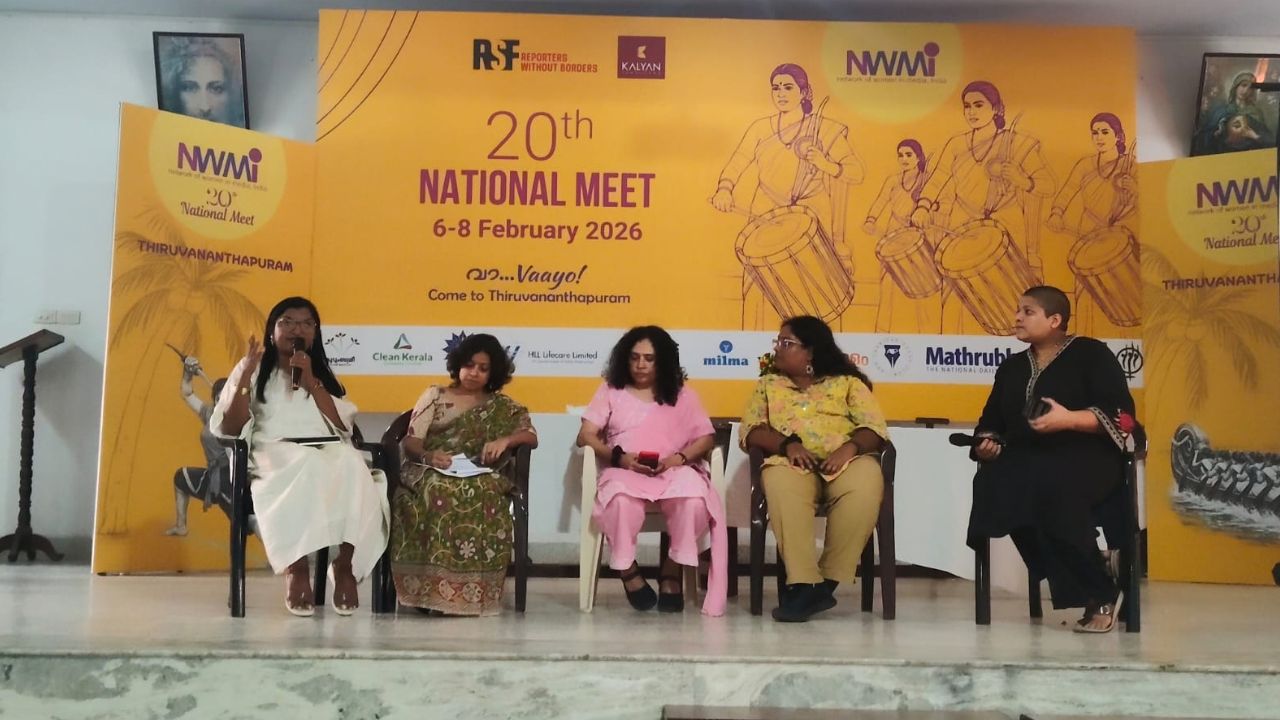
A memorable and candid panel on the life of actors who report sexual violence, after they do so, pointed out a roadmap of how far we are from holding the men in power accountable. Titled, ‘After Speaking Up: What Justice Looks Like for Women in Cinema’, the panel was moderated by Shahina KK, independent journalist. Miriam Joseph, film producer and former journalist, Bina Paul, film editor and curator and Rima Kallingal, actor, producer and dancer were the panellists who are also members of the Women in Cinema Collective (WCC), an organisation of women working in Malayalam cinema.
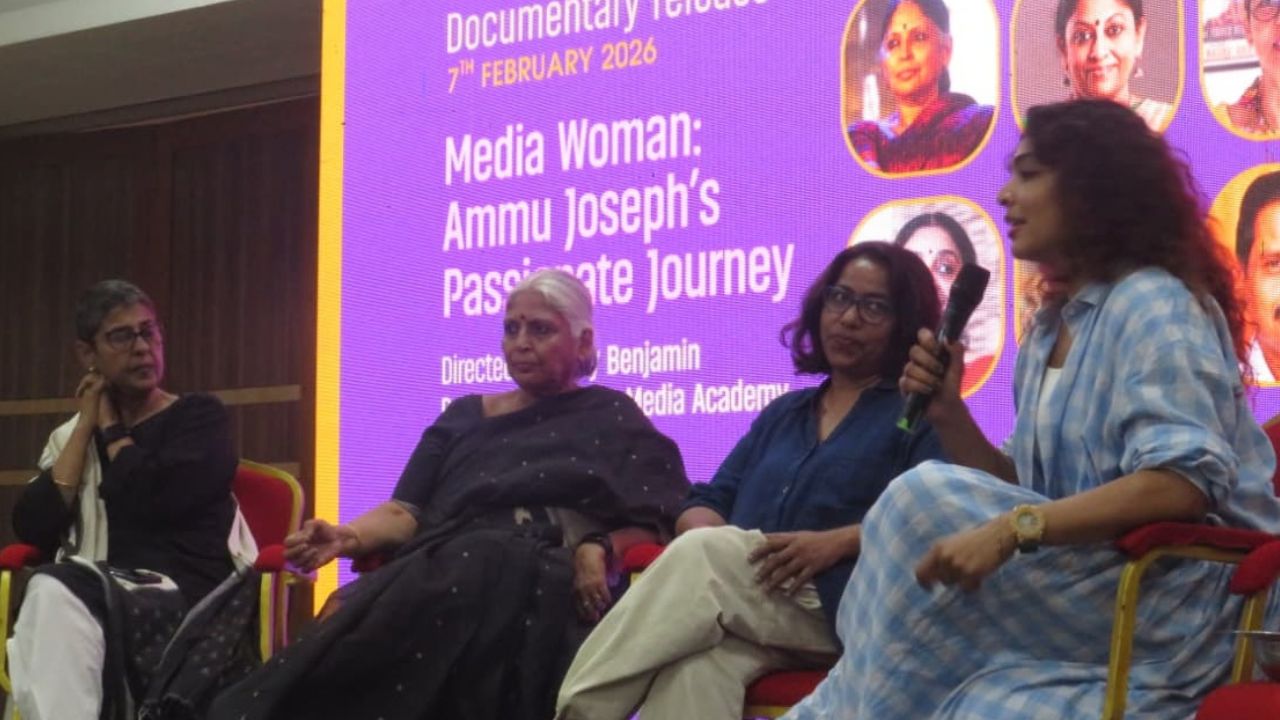
From left: Miriam Joseph, film producer and former journalist, Bina Paul, film editor and curator, Shahina KK, independent journalist and Rima Kallingal, actor, producer and dancer.
They spoke about the rampant misogyny and patriarchal attitudes that reign over Malayalam cinema and how women who spoke up against the misogyny in the film industry were marginalised. The WCC was formed after an actor was abducted and assaulted sexually in a moving vehicle. The WCC members pointed out how the actor was still fighting for justice even nine years after the incident. Women media-persons, they said, were the ones who ensured that the news about the survivor’s quest for justice and the WCC got space in news headlines. Although changes were visible in certain aspects, the WCC’s demand was for a level playing ground with basic facilities available for all working in a film unit.
Report by Shalaka Shinde
Edited by Saraswathy Nagarajan