

Tackling Gender Discrimination, Violence, Corporatisation and Changing Eco-Systems in Indian Media
20th National Meeting of the Network of Women in Media, India, (NWMI), Thiruvananthapuram on February 6 to 8, 2026
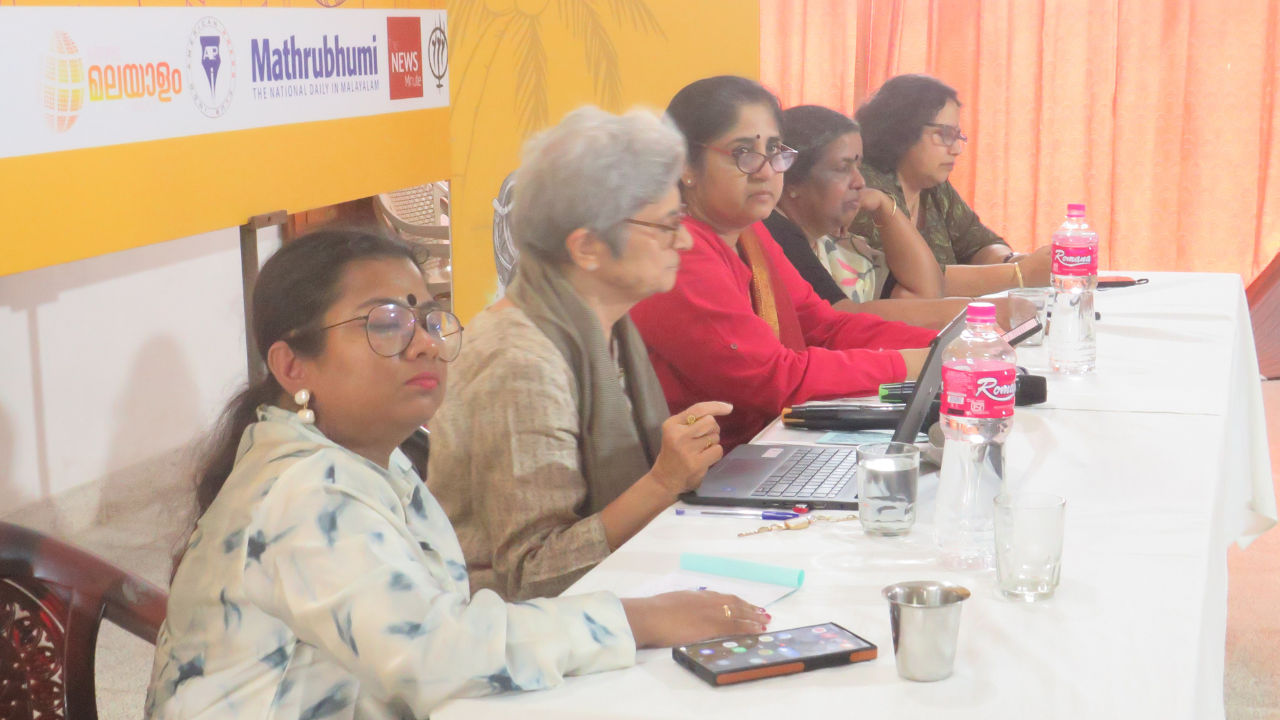
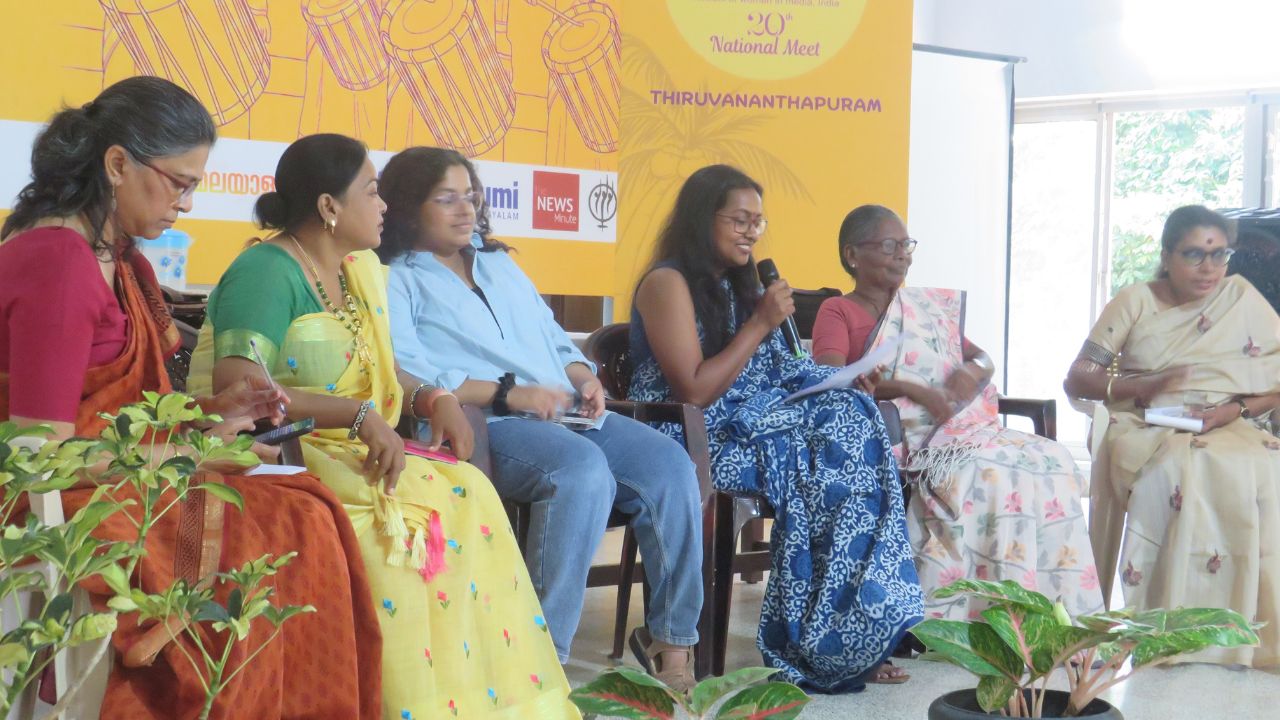
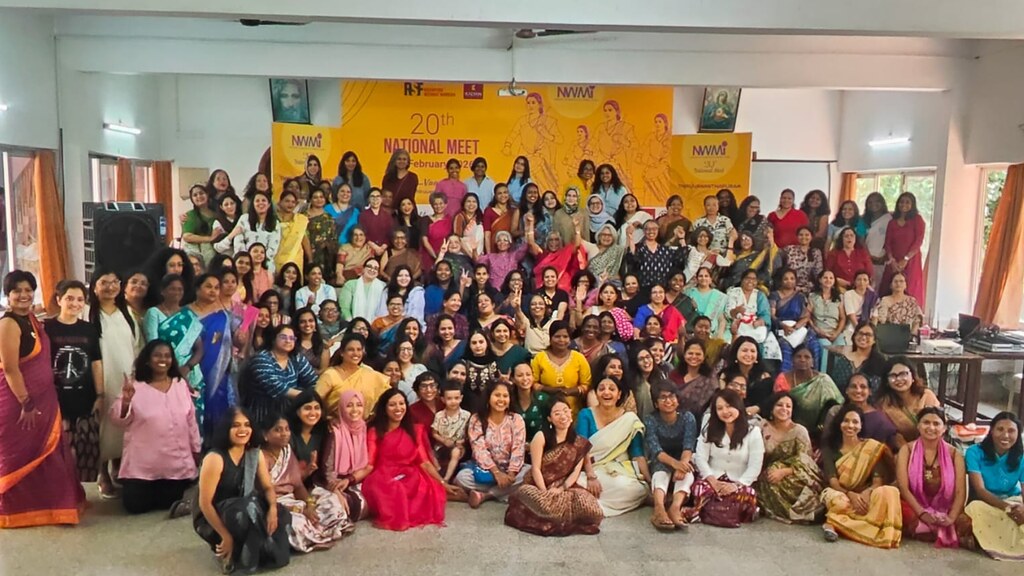
A gathering of over 150 women journalists from multiple corners of India turned into a festival of sisterhood in Thiruvananthapuram, Kerala in February this year. In keeping with its tradition of holding a national meet almost every year, the Network of Women in Media, India (NWMI) held a three-day meet from February 6 to 8, 2026. The meet was held against the backdrop of rapid technological and financial changes and ethical challenges that have impacted the media. Artificial Intelligence in newsrooms, pervasiveness of social media, cyber abuse, ‘media capture’ and the shrinking space for mediapersons came up for discussion in the days that followed. This year’s theme was Media at the Crossroads: Independence vs Influence.
The participants went home with a bag full of memories, notes, photographs, goodies, lessons, sand from the beach, and energy that will sustain them until next year.
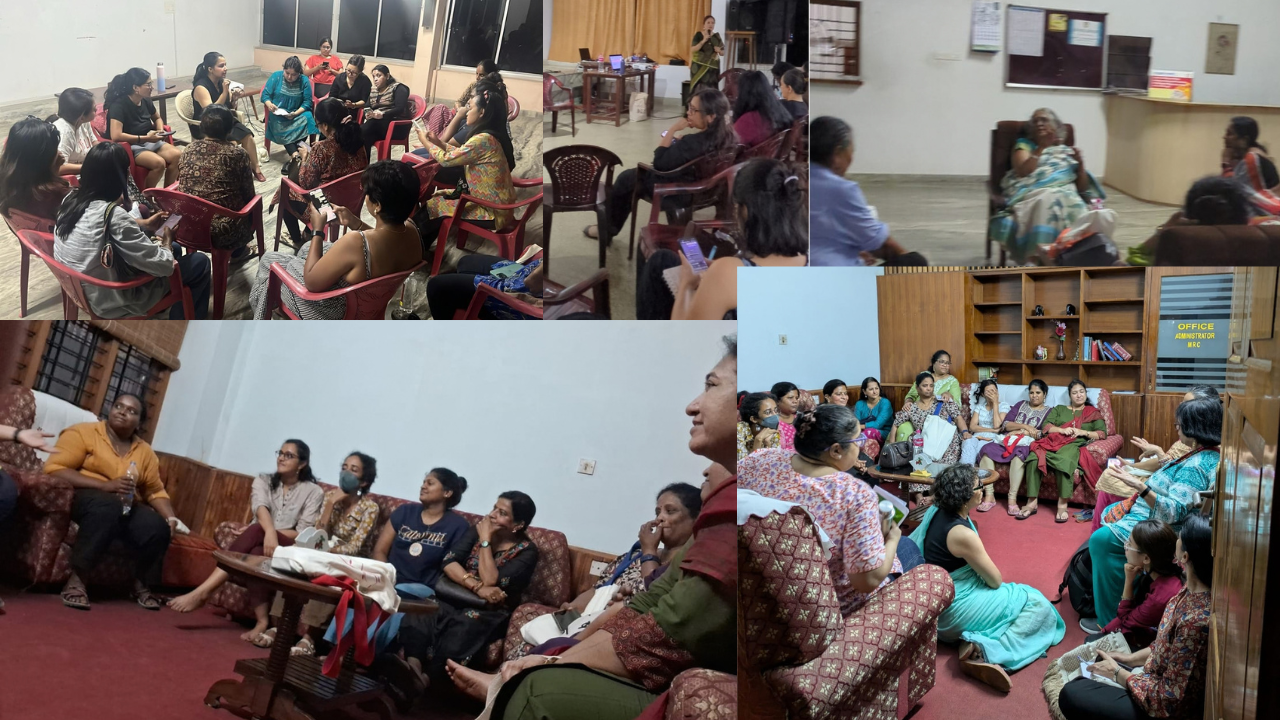
The participants learned about the challenges faced by their colleagues and the subjects they covered, their pushback against unethical practices as well as accolades received by their peers from all over India. In closed sessions attended by NWMI members, topics ranging from artificial intelligence (AI) in newsrooms, climate news coverage and palliative care in Kerala, to gender-based violence and its news coverage were discussed. The Reporters Without Borders (RSF), through The News Minute, helped in funding the three-day conference.
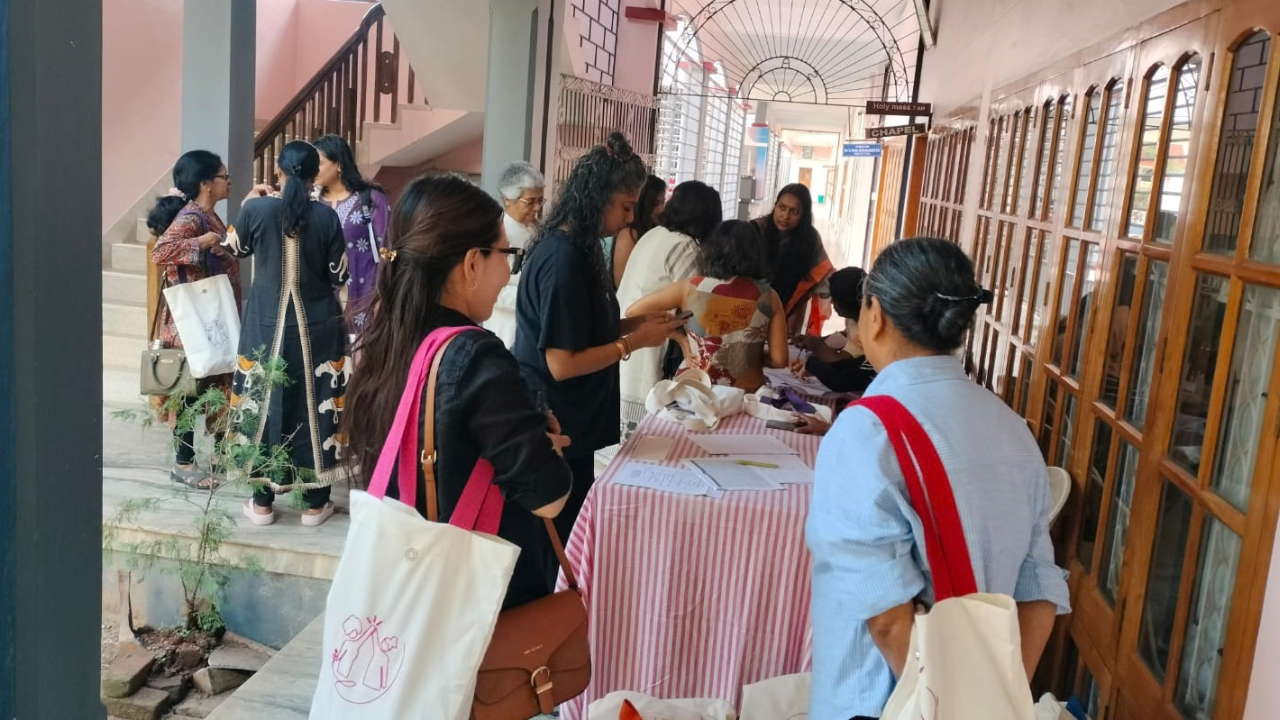
Participants at the registration desk
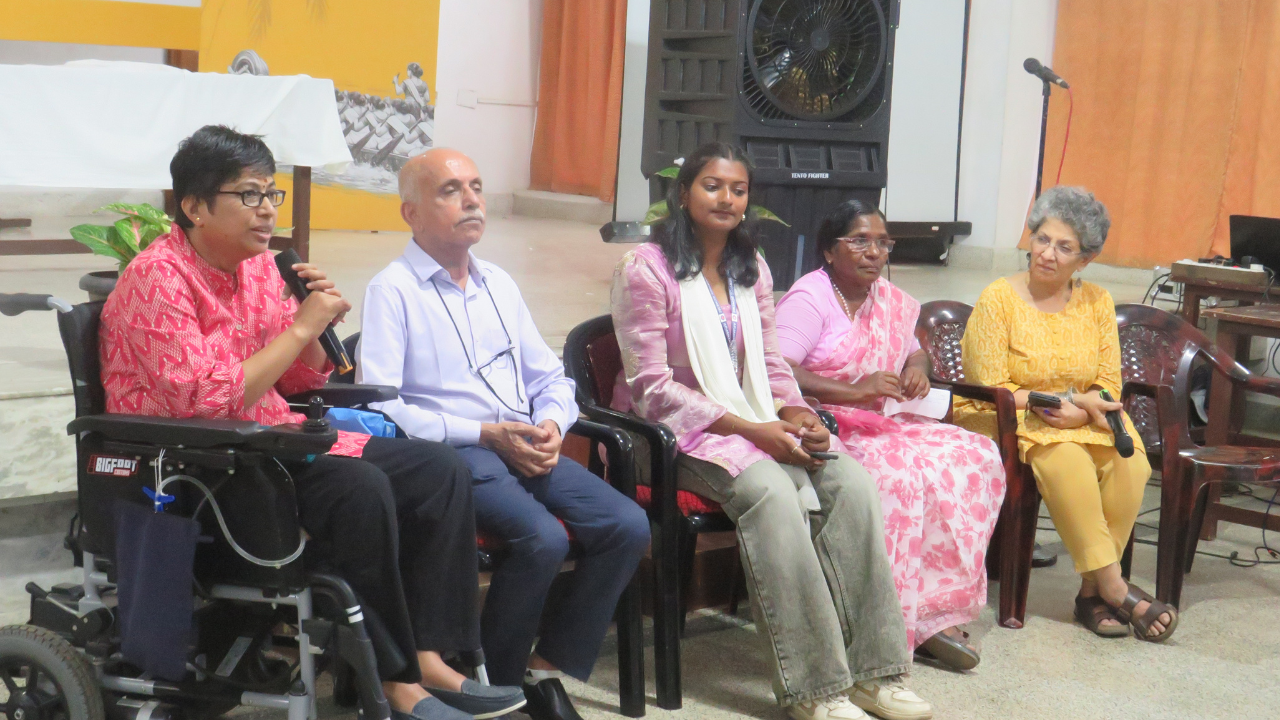
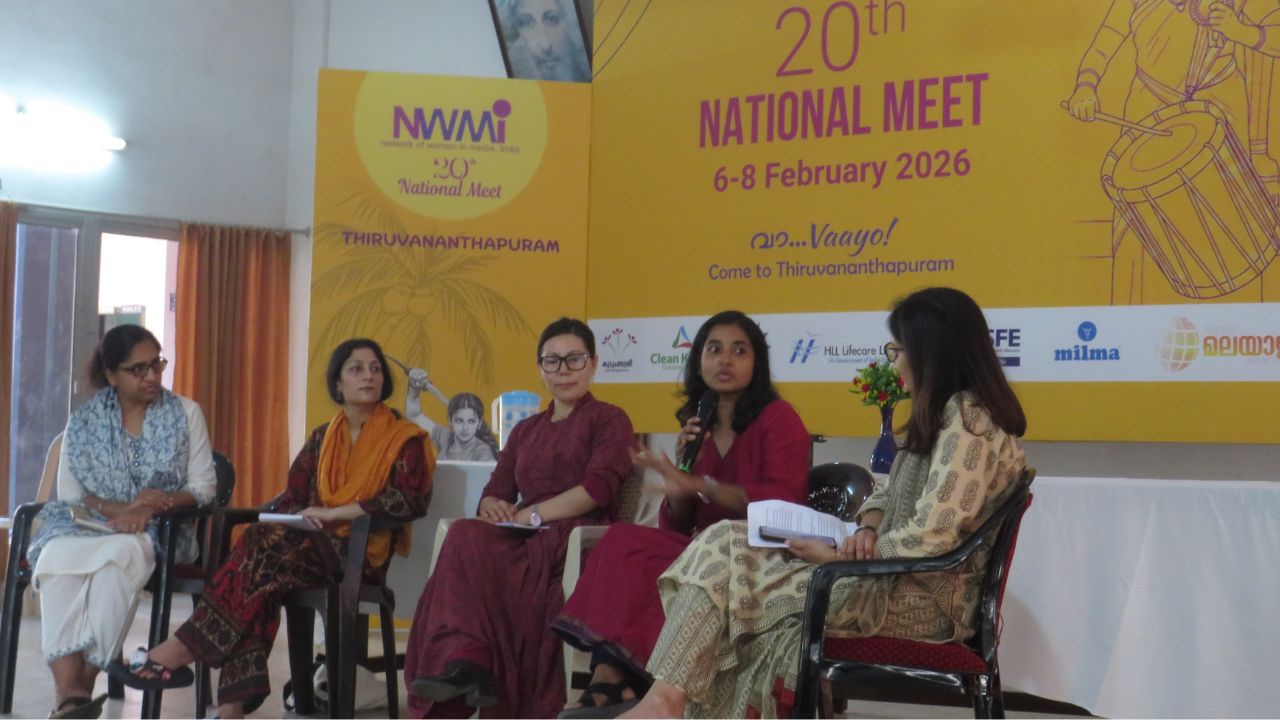
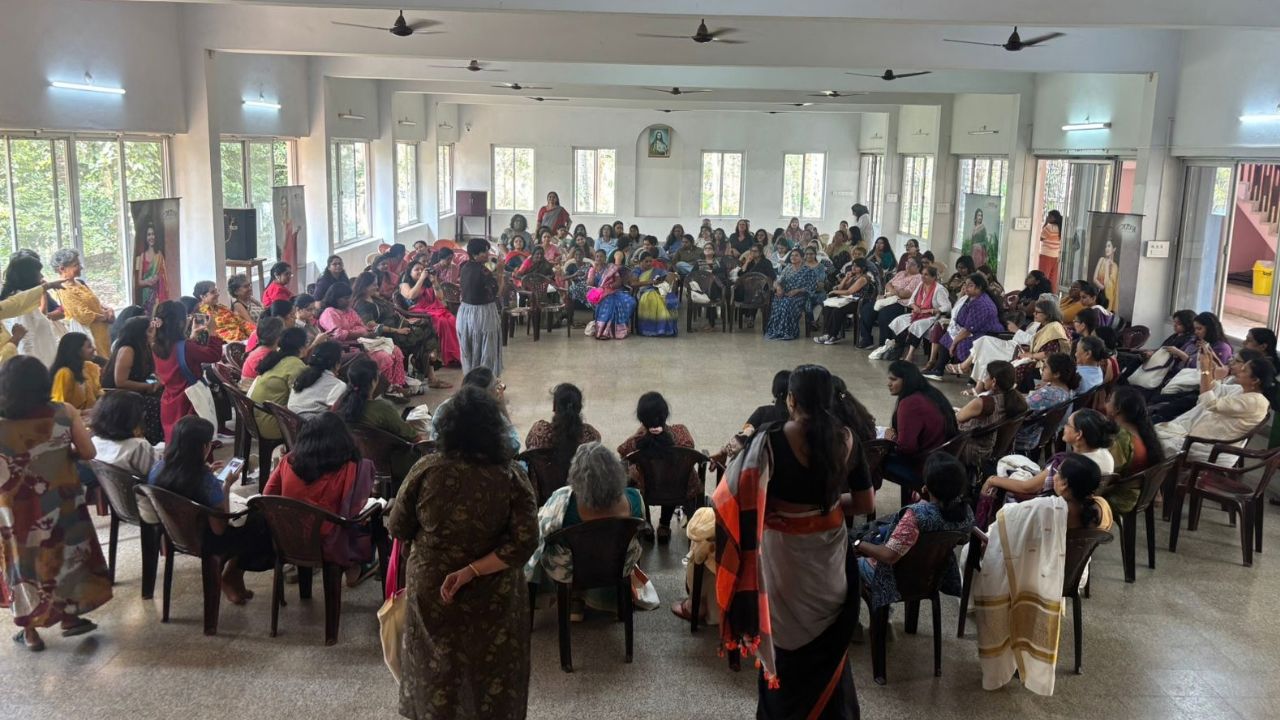
As always, the national meeting, held at the verdant Maria Rani Center in Thiruvananthapuram, began with an introduction session wherein members, old and new, introduced themselves to each other. After a hearty Kerala lunch complete with Payasam, the panel discussions began in earnest with a discussion on ‘Kerala’s Gender Paradox: Progressive on Paper, Unequal in Practice?’ It was followed by an intense session on palliative care and its myriad aspects. The first day ended with the ‘unconference’, wherein Network members themselves conducted sessions on different subjects and participants were free to choose the sessions they wanted to attend.
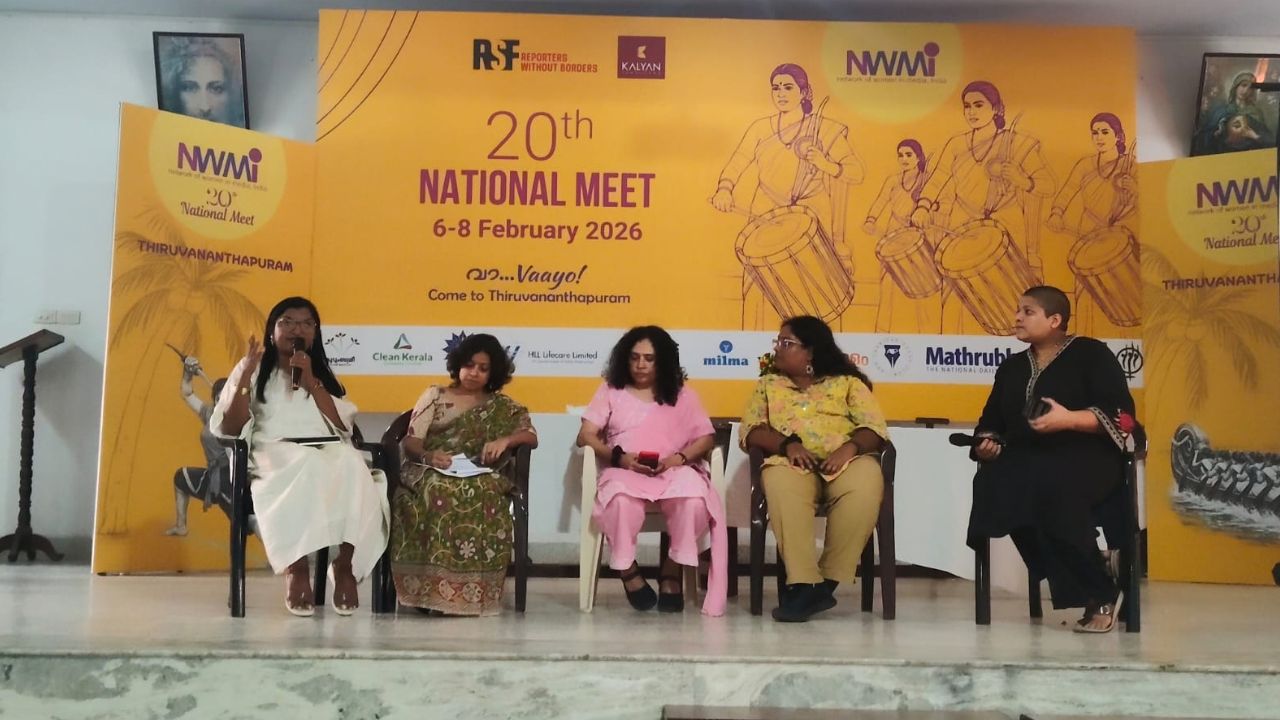
On the second day, after breakfast, the members again sat down for profound and experiential discussions on environmental reporting, AI in newsrooms, reporting on sexual violence and the judicial process that survivors experience in courts.
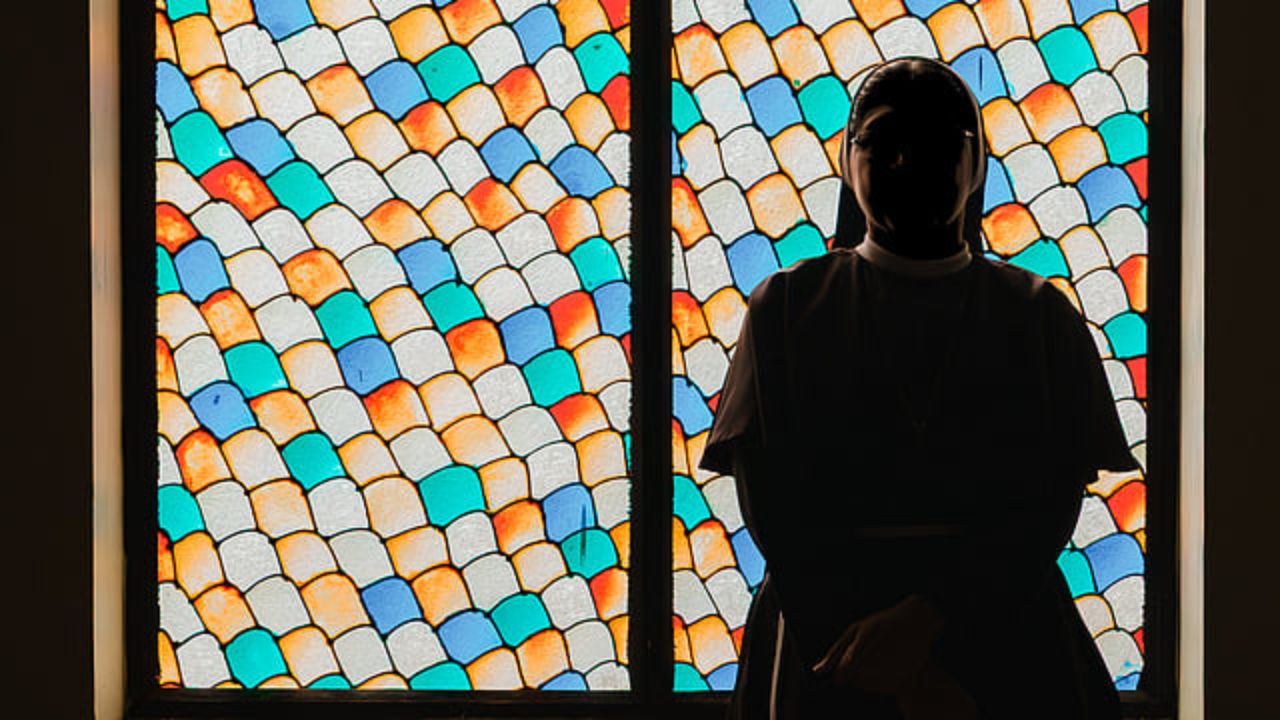
One of the most enlightening sessions of the conference was an open discussion about what survivors of sexual assault had to endure in courts. Sister Ranit, the survivor, who had filed a complaint of sexual assault against former Bishop Franco Mulakkal, spoke about her tribulations and her determination to continue the legal battle against Mulakkal.
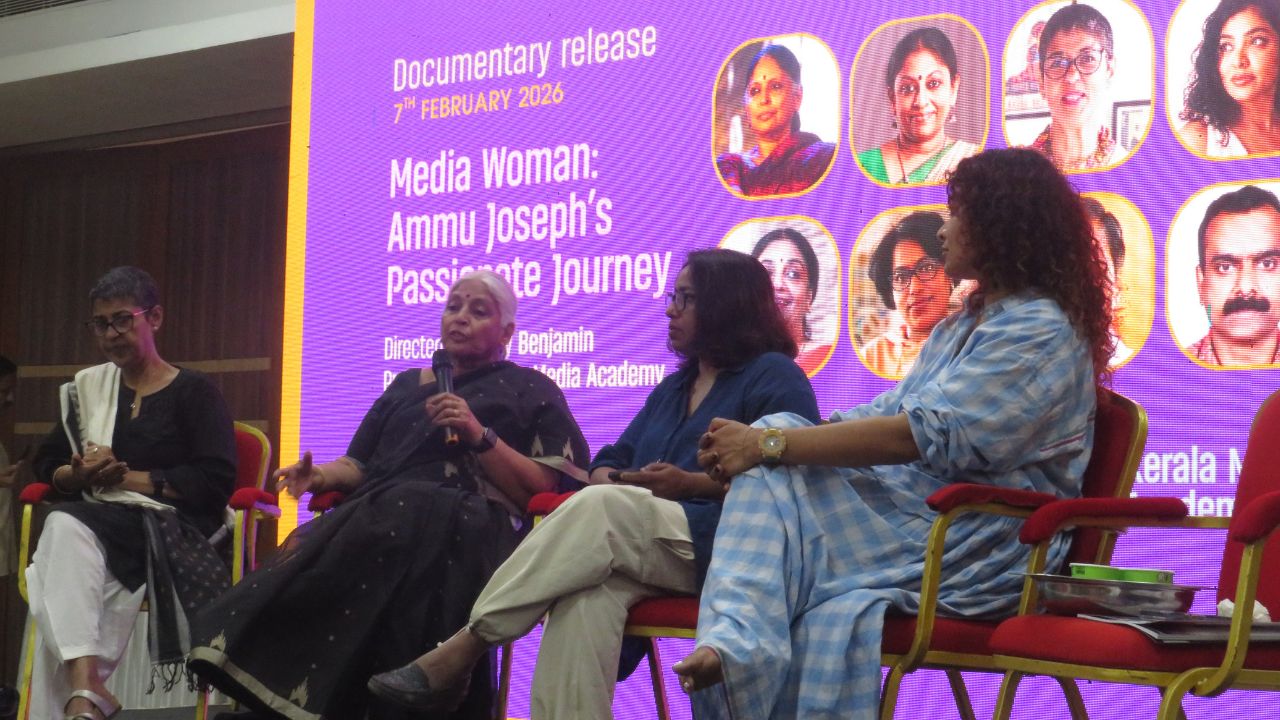
The public meeting at the Trivandrum Club began with a chenda melam, a traditional percussion ensemble of Kerala, performed by an all-women group. The artistes came from different walks of life. Many were Kudumbasree members who doubled up as Panchayat presidents and members. The event concluded with the premiere of a documentary on the life of Ammu Joseph, journalist, author, and founding member of NWMI, which was directed by National award-winning director Shiny Benjamin.
Between these two art pieces was an intense discussion on the life of women working in the cinema industry. The panellists spoke about gender discrimination and sexual misconduct at their workplaces. Film editor Bina Paul and film actor Rima Kallingal, both founding members of the Women in Cinema Collective, and film producer Miriam Joseph weighed in with their experiences during the discussion. Participants were given the NWMI souvenir brought out in connection with the meeting.
Prior to the discussion, KR Meera, novelist and keynote speaker for the evening, spoke about the current state of the media. Addressing the issue of ‘influence’ in media, especially news media, Meera said, “A single person owning 800 media companies does not simply mean owning so many companies. It means that he was shaping, controlling and manipulating our conversations, thoughts and perceptions. Today, we are his products — you and me, our understanding of life, the way we relate to the world are his making. By controlling our conversations, he influenced our governments’ policies, decided our destinies.”
She was referring to the amassing of networks, channels, and newspapers by Rupert Murdoch. But there is hope, she said, with publications such as Khabar Lahariya, The Mooknayak, The News Minute, and other women-led news organisations that are fighting the good fight.
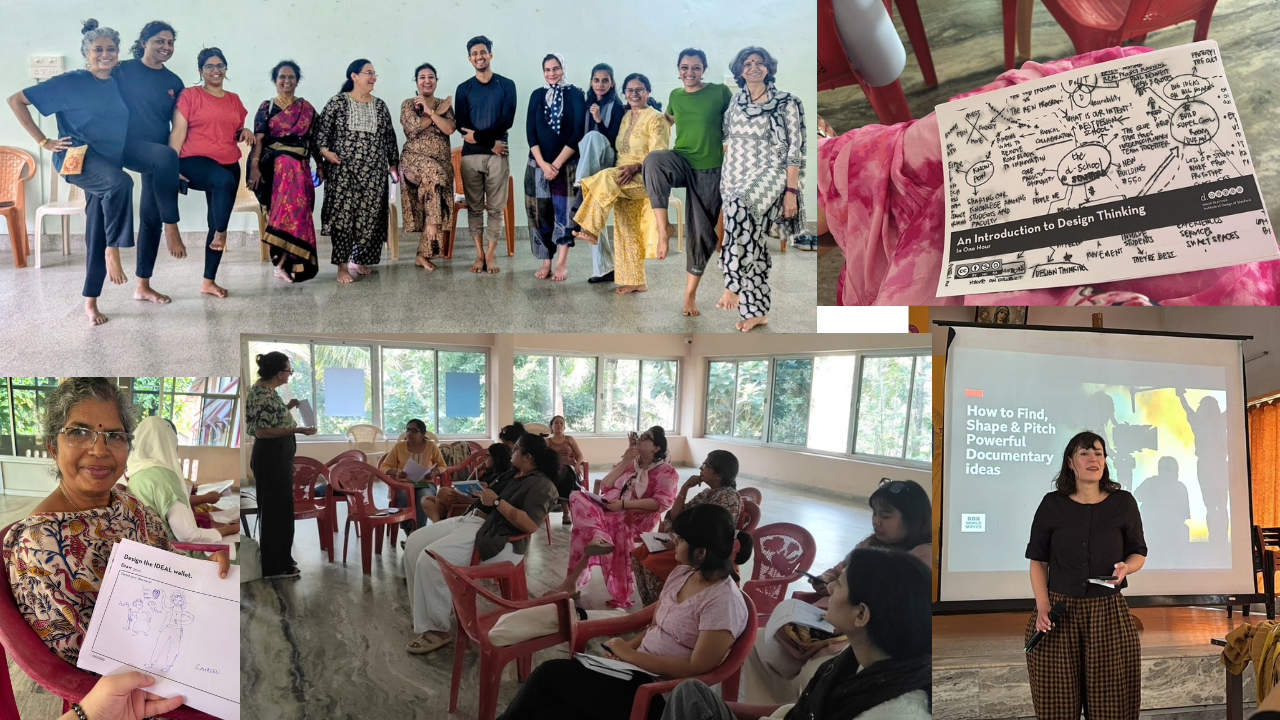
The members entered the conference venue with their identities as reporters, editors, freelance journalists, beat reporters, fact-checkers, video producers, editors-in-chief, copy editors, sub-editors, and multimedia journalists. But the ones who left the venue were old friends sharing pictures, contacts and information, and mentors sharing experience-based intelligence and tips.
While the members discussed traumatic experiences, they also indulged in their love for handmade jewellery, getting their pictures clicked and printed, enjoying local cuisine, catching up over dishwashing sessions, sampling spicy snacks from Nagaland, buying Kerala sarees, and sipping tea while dressed in their best.
The participants appreciated the takeaways that were given to the participants in cotton bags tailored and embroidered by the nuns engaged in a legal case against Mulakkal. Fridge magnets for the meeting were made by two youngsters on the autistic spectrum. Then there were pouches filled with spices, banana crisps and pain balms from Kotakkal.
NWMI released a statement at the end of the meet, sounding alarm over weakening editorial independence and calling for a gender sensitive media environment.
A group of members made their way to one of the local beaches and watched the sunset. From younger members in their 20s to the founding members of NWMI, the range of memorable experiences of those watching the sun go down was wide on the evening of February 8.
NWMI’s Esther Lalchhanchhuahi captures the essence of sisterhood at the NWMI 20th National Meeting
NWMI’s Rajeshwari Kalyanam created this video with highlights from the NWMI 20th National Meeting
GALLERY
Click here for Media Coverage Roundup
Report written and edited by Laxmi Murthy and Saraswathy Nagarajan
Texts and Visuals:
Dheeshma Puzhakkal, Haritha H, Lakshmi Priya M, Maria Teresa Raju, Ramya Kannan, Sehar Qazi, Shahin Mokashi, Shalaka Shinde
20th National Meeting NWMI Report Compiled by Shalaka Shinde
Organisers of the 20th National Meeting of NWMI:
Ammu Joseph, Anjana Sasi, Annie Philip, Anupama Venkiteswaran, Azeefa Fathima, Dhanya Rajendran, Durba Ghosh, Durga Nandini, Jisha Surya, Laxmi Murthy, Leena Reghunath, Sandhya Srinivasan, Saraswathy Nagarajan, Saritha Balan, Saritha Varma, Shahina KK, Sreeja Shyam, Sudha Nambudiri, Supriya Unni Nair, Najiya O, Neethu Chandran, Yamini Nair