

Nitish Kumar’s electoral lesson: Ignore the woman voter at your peril
What accounts for the unprecedented female voter turnout in the Bihar elections, the largest ever in its electoral history and, at 71.6%, leagues ahead of men at 62.8%? Certainly, the NDA alliance, Nitish Kumar’s Janata Dal (United) and the BJP, could not have managed a sweep of 202 out of 243 seats without a considerable chunk of the mahila vote.
Many analysts have attributed this as a direct result of the cash deposit of ₹10,000 each to 14.1 million women voters in the state ostensibly to kickstart livelihood schemes just weeks before the elections. Certainly, there are grave ethical questions about the timing of the deposits and the Election Commission’s own credibility and impartiality in allowing it to go through.
But to reduce the cash deposits to just a bribe is an over-simplification for several reasons. First, the cash had already been deposited and women were free to vote for whoever they chose, or not vote at all. Second, Tejashwi Yadav’s opposition Mahagathbandhan was promising an even larger handout of ₹30,000 if voted to power. And third, while the payment might well have been a Hail Mary, it ignores two decades of sheer hard work by Nitish Kumar in improving his state’s gender indices. Yes, Bihar continues to lag compared with the rest of India but there can be no doubt about its many gains, ranging from female literacy (from 51.5% according to National Family Health Survey 2015-16 to 55% in NFHS 2019-20) to paid employment (20% in NFHS 2015-16 to 25.6% in NFHS 2019-20).
Starting from his first term as chief minister in 2005, Nitish Kumar has implemented various schemes and government programmes designed specifically for women and girls. That first year, the state government said it would give cash to secondary school-going girls to buy bicycles. Bihar was also among the first states to take 33% reservation for women in panchayats and civic bodies to 50%. In 2013, the chief minister decided to reserve coveted government jobs in Bihar’s police force. In 2015 when he promised to bring in prohibition—despite the prognosis of financial ruin to the exchequer—female voter turnout was an enthusiastic 60.5%, the highest at the time.
Perhaps the most significant impact of nurturing women as a voter base came with the launch of Jeevika, the state’s women-led self-help groups in 2007. With savings of just ₹10 a week, women were organized in village-level groups. With their corpus of savings, they could pay off earlier, usurious loans, set up small livelihood enterprises, finance small businesses as well as their children’s education, and spend on their own medical expenses.
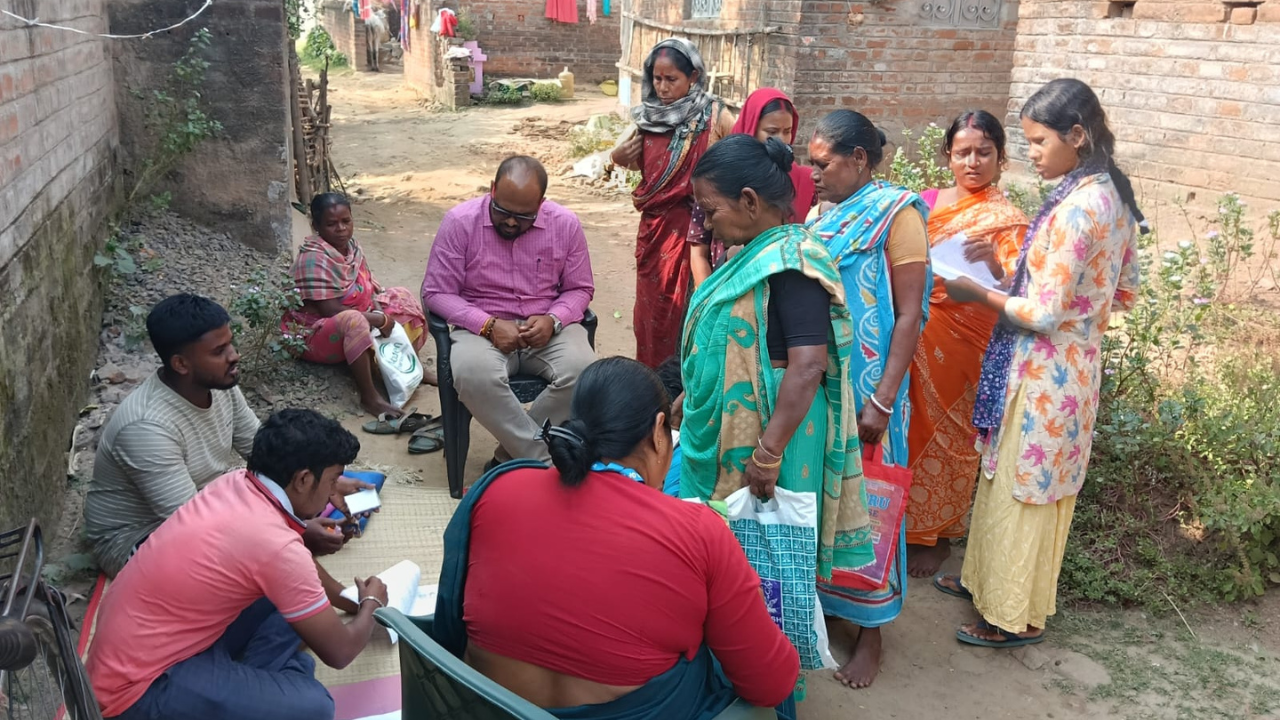
I met a group of empowered, confident women during a field visit back in 2017 for a story for IndiaSpend. These women were among the most marginalized and poorest, many from mahadalit communities. Amola Devi in Gaya had never seen the inside of a school or bank and yet was managing funds to the tune of ₹1 crore. Phulwa Devi had taken a loan of ₹1 lakh to set up her husband’s hardware store. Moonma Devi had travelled to Kerala to participate in an SHG mela where her litti-choka stall notched up sales of ₹2.32 lakh.
I don’t know how these women voted in this election or what they feel about the man who gave them a voice within their communities and their own homes. To be sure, Bihar continues to rank at the bottom of the gender indices sweepstakes. Domestic violence is unacceptably high at 42% according to NFHS 2019-20, well above the national average which is already shameful at 29.3%.
Has Nitish Kumar run out of his bag of tricks? Has empowerment as a government policy run its course? The cash handout certainly seems to hint at it. There are 11 states at present that are disbursing cash handouts in the range of ₹1,000-₹2,500 to women. Bihar has jumped on to that bandwagon.
But Nitish Kumar who has taken oath for the fifth time as chief minister has also demonstrated how a women’s vote bank can rise above caste considerations and become a loyal base. If Nitish babu has had their interest, they have more than repaid in kind. This may well be his last election, but he leaves a useful lesson for other governments: Ignore the woman voter at your peril.
Namita Bhandare is an independent journalist who writes on gender with a column in Hindustan Times as well as a weekly gender newsletter, Mind the Gap.
Edited by Shalini Umachandran
Related stories
https://www.hindustantimes.com/opinion/in-bihar-the-focus-is-on-the-woman-voter-101759595153475.html
https://www.indiaspend.com/bihars-poorest-women-changing-lives-little-help