


Journalism Under Attack
By:
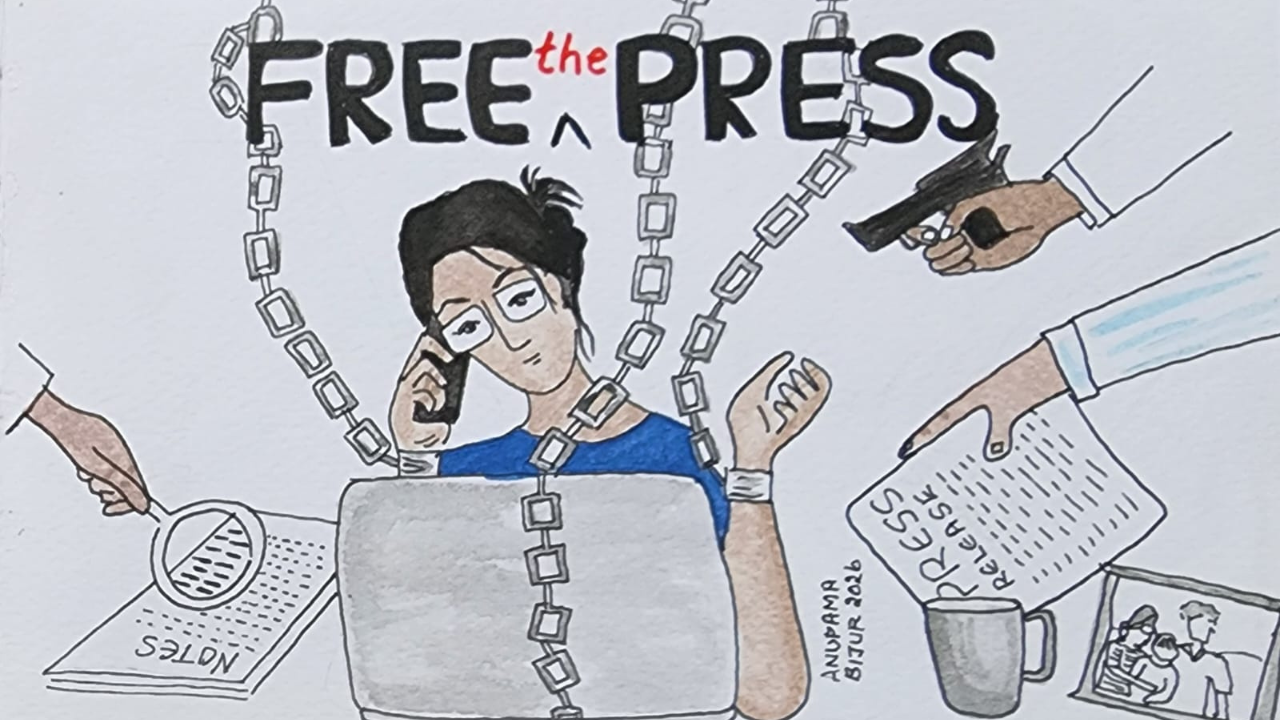
Journalists are under attack. Journalism is under attack. And so is your right to receive reliable information without bias.
August saw two brutal attacks on journalists in Gaza, killing four Al-Jazeera journalists, two freelancers and then five media persons. In the war in Gaza, nearly 200 journalists have died since 2023. In the same period, 18 journalists have been killed in the war between Russia and Ukraine. A few days ago, a reporter with Nagaland-based Hornbill TV was shot at in Manipur while covering the Zinnia flower festival.
Not all attacks on journalists have been physical. Some reporters have been harassed through long-drawn court battles, or have lost jobs as news outlets have shut down or downsized due to financial losses.
As conflicts increase in the world, and journalists set out to report on the impact of war, corruption and injustice on the lives of women and children, economies and trade, media are under attack.
Of the five main indicators that determine the RSF World Press Freedom Index, the economic indicator is at its lowest point in history, making the global state of press freedom “difficult.” Recent data from the Index reveal that in 160/180 countries assessed, media outlets achieve financial stability with “difficulty” or “not at all.” In the United States, the economic indicator for press freedom dropped by 14 places and the social indicator dropped by 28 places, indicating that the Press operates in a hostile environment. Seventy five per cent of journalists and media experts interviewed while compiling the World Press Freedom Index believe that the average media outlet struggles for economic viability in the US.
Cuts in funding, media ownership concentration, advertising revenue going to unregulated tech platforms, subsidies being diverted to pro-government outlets are just some reasons why newsrooms all over the world struggle with preserving editorial independence and ensuring economic survival.
Women journalists face even more challenges as they are additionally victims of cyber bullying, rape threats and physical violence.
As AI, algorithm-driven newsfeeds and unregulated sources for news grow, journalism is changing. A news story is more likely to be judged for its ‘likes’ than for its ‘authenticity.’
Journalists are feeling the weight of external pressures and the internal shifts of their industry. Very few people realise that journalists are people, too – who pay taxes, school fees, care for aging parents and set off into dangerous zones leaving behind worried families and children.
“When journalists are impoverished, they no longer have the means to resist the enemies of the Press — those who champion disinformation and propaganda. The media economy must urgently be restored to a state that is conducive to journalism and ensures the production of reliable information, which is inherently costly. Solutions exist and must be deployed on a large scale. The media’s financial independence is a necessary condition for ensuring free, trustworthy information that serves the public interest,” says Anne Bocandé, Editorial Director, RSF (Reporters Without Borders).
Support fair and fearless journalism. Support the protection of journalists. Protecting journalists means protecting the foundations of democracy and creating a safer and more informed future for all of us.
InkSights is a monthly art series by NWMI member Anupama Bijur viewing current affairs through a gender and news lens.
TAGS
More From the Section
Of Brands, Bralettes and Backtracking
All for One, One for All

Climate Change Hits Her Hardest


Doxing, Deepfakes and Digital Harassment

