


Chak De! India
By:
The Indian women’s cricket team winning the ICC Women’s Cricket World Cup 2025 (WC) for the first time was a watershed moment, undoubtedly. Not just for the game but for Harmanpreet’s girls who lifted the cup, for the future of women’s cricket, for the many girls it will inspire and for women’s cricket finally finding a legitimate standalone status, and not just as an adjunct to the men’s cricket team.
For those who have been following women’s cricket (or any of the other women’s sports teams) the symbolism of this victory was massive. The girls in blue hit tradition, restriction, doubt, stereotypes, sexism and more out of the park – and how. From hearing that women’s cricket does not fill stadiums to being told prime time slots are not for women’s sports, to bringing home big prize money, the largest yet in WC history, the girls in blue have rewritten the economics of the game.
The overall prize money for the WC 2025 was $13.88 million (US dollars) – a huge increase of 297 percent from 3.5 million US dollars for the last World Cup held in New Zealand in 2022. Apollo Tyres won the Team India jersey sponsorship, committing ₹579 crore for 2.5 years – one of Indian sport’s richest kit deals.
A few days ahead of the World Cup, JioHotstar dropped this ad, which was a sweet and proud narrative of men sporting blue T-shirts with names of Indian women cricket players.
Over the last few years, we have seen a shift in how sports fans in India view women in sports. A conscious and intentional support has grown for women’s teams, and so has an awareness that there’s an unfair amount of support for men’s cricket at the cost of everyone else. And this new support for women’s sports is not just a random act of kindness. Our girls in blue have proved their strength and capabilities on home turf and away (runner-up in the 2005 and 2017 World Cup), the women’s RCB team winning the cup in their second outing, while Virat’s boys waited 18 years to win the trophy, the steady rise of women cricket stars like Mithali Raj, Jhulan Goswami, Smriti Mandhana, Harmanpreet, Jemimah Rodrigues (who recently became the most searched player from the winning team) and others.
Our movies have also reflected this shift in interest for women’s cricket (Ghoomer, Dil Bole Hadippa, Mr and Mrs Mahi). Ads have reflected it, too (from Cadbury’s Kuch khas hai to the Mutual Funds Sahi Hai with Sachin Tendulkar and Dhoni).
While the Women’s Premier League, launched in 2022 by the BCCI, has given Indian players a chance to compete alongside international cricketers and improve the quality of their game, there’s more to the cash prize and pay parity than meets the eye.
Equal match fees, introduced by the BCCI in 2022, pays both men and women Rs. 15 lakh for a Test match, Rs. 6 lakh for an ODI and Rs. 3 lakh for a T20 International match. But the men earn more because they play more matches. In the last one year, the men have played 12 Tests, 11 ODIs and 19 T20 Internationals and the women zero Tests, 29 ODIs (in preparation for the World Cup) and eight T20 Internationals.
For some context, the cash award of Rs. 51 crore for the women’s team announced last week needs to be compared with Rs. 39 crore that the men’s team won after their World Cup victory in 2011 and the Rs. 125 crore cash award for the men’s team after they won the T20 World Cup in 2024.
So, as we celebrate some wins for our girls in blue, there’s more to be done. The road ahead for women’s cricket will need play parity as well as pay parity. Real progress will come when India’s women cricketers enjoy the same opportunities, visibility, and recognition as their male counterparts.
InkSights is a monthly art series by NWMI member Anupama Bijur viewing current affairs through a gender and news lens.
TAGS
More From the Section

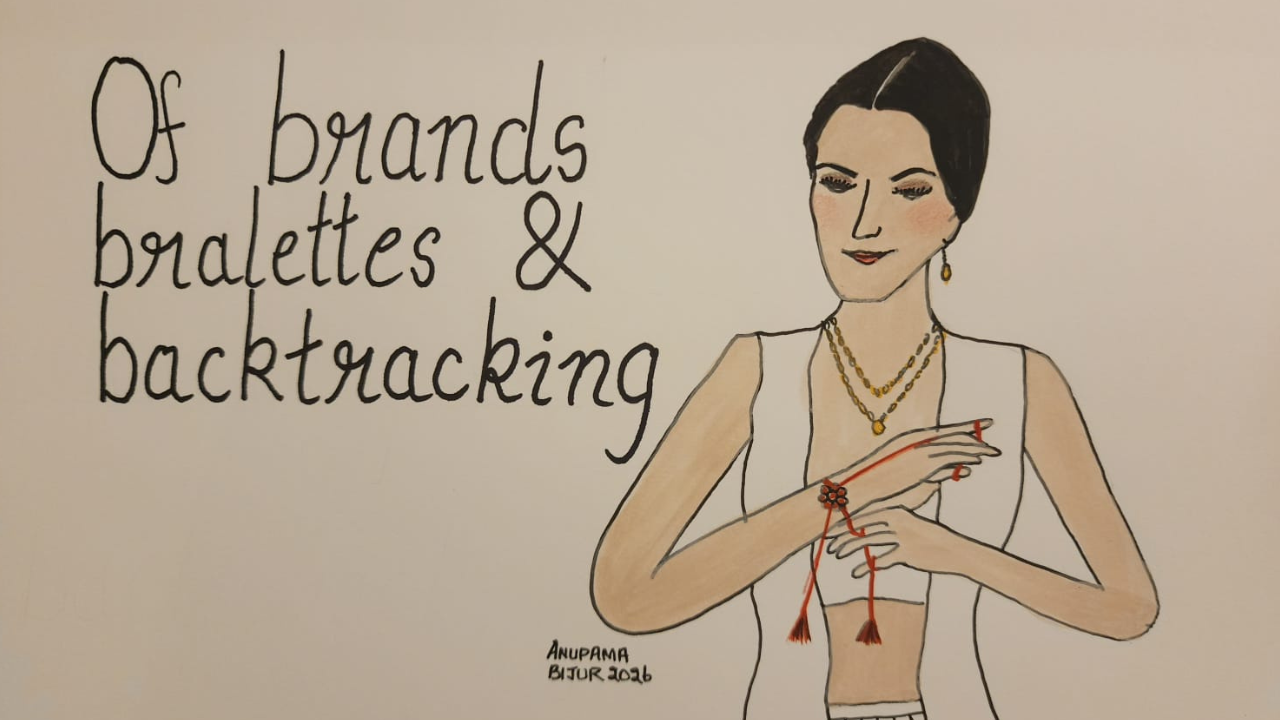
Of Brands, Bralettes and Backtracking
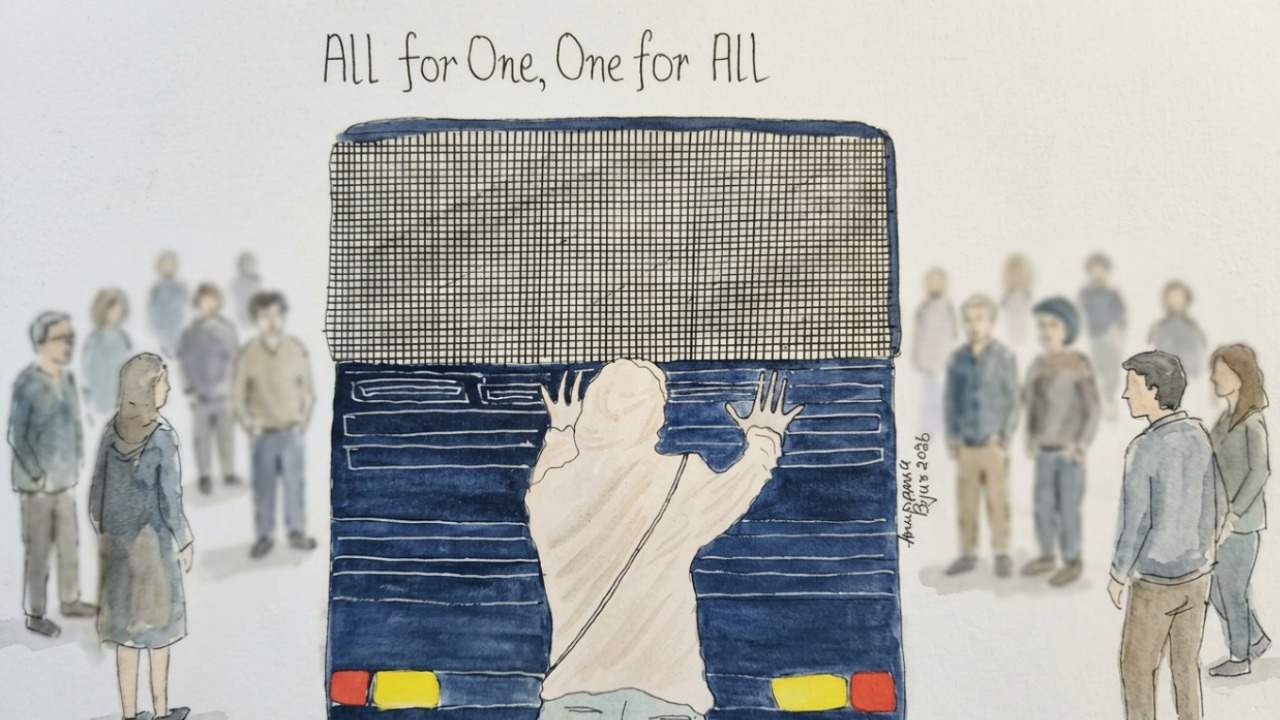
All for One, One for All

Climate Change Hits Her Hardest
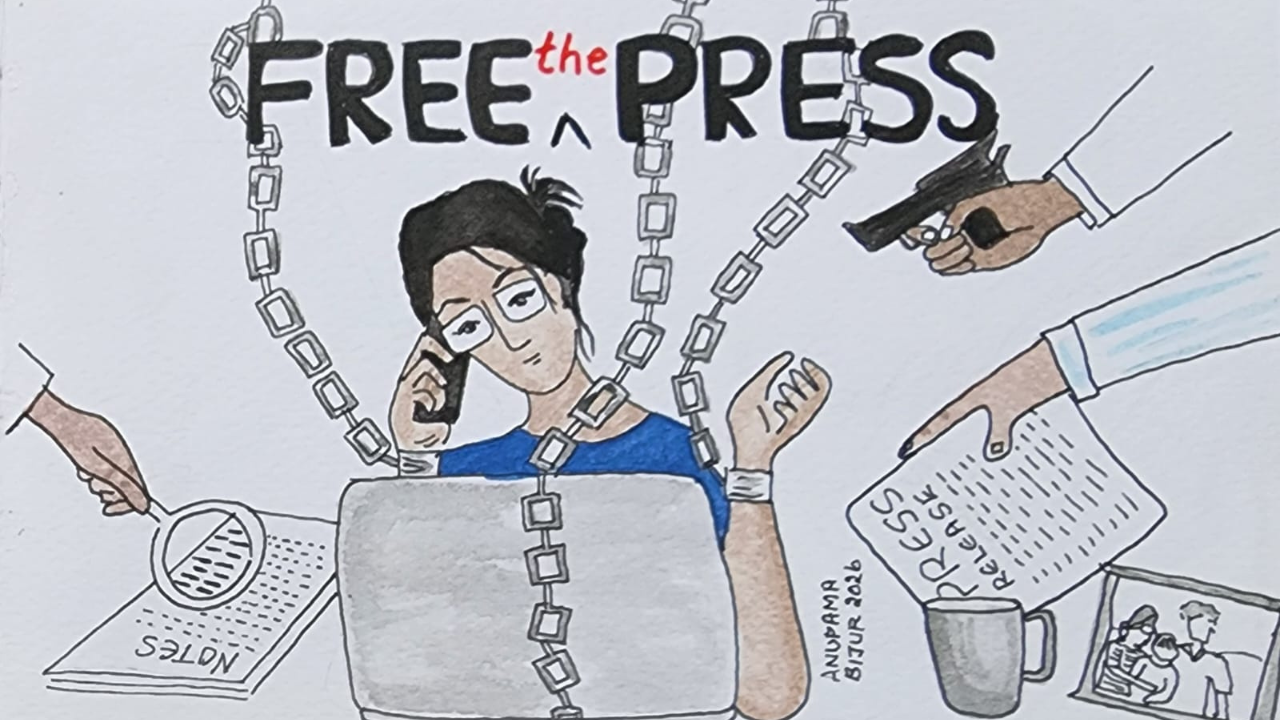


Doxing, Deepfakes and Digital Harassment
