

Session 5: Behind the Bylines-Navigating Mental Health and Well-Being in Journalism Mental Health Challenges in Journalism
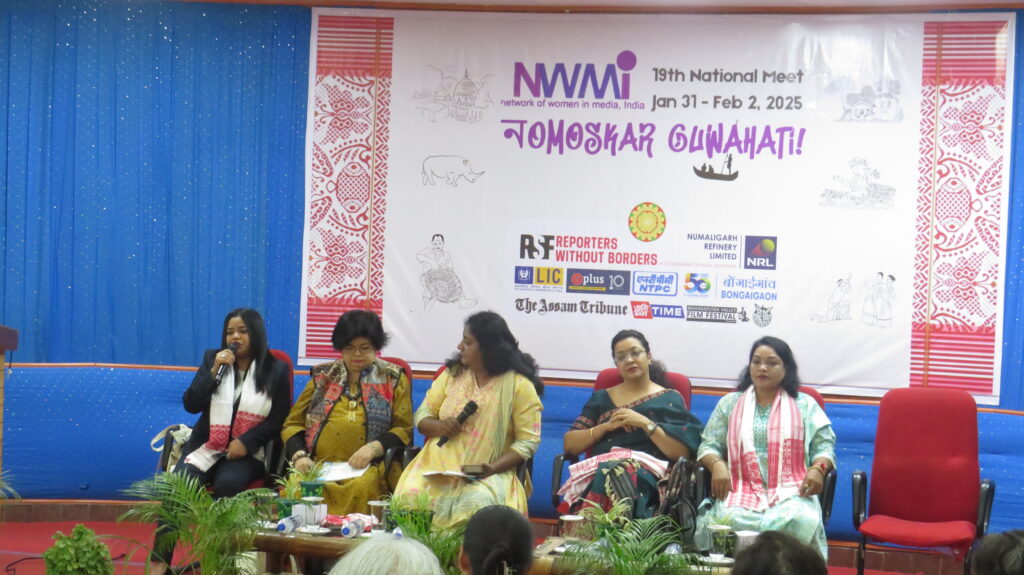
From left: Gitika Talukdar, sports journalist and photographer, Indrani Raimedhi, Features Editor, The Assam Tribune, Kavin Malar, independent journalist, Dr Mythili Hazarika, Associate Professor, Clinical Psychology, Guwahati Medical College, and Pushpa Rokde, independent journalist.
The 19th National Meet of the Network of Women in Media, India (NWMI), held in Guwahati on February 2, 2024, featured a critical panel discussion titled “Behind the Bylines: Navigating Mental Health and Well-Being in Journalism.” The session explored the unique mental health challenges faced by journalists in India’s high-pressure media landscape, with a focus on stress, workplace toxicity, harassment, and the safety of women journalists.
Moderator and Panelists
The session was moderated by Kavin Malar, an independent journalist, who opened the discussion by acknowledging how the demanding nature of journalism profoundly impacts personal well-being.
The panel comprised distinguished journalists and mental health experts:
- Gitika Talukdar – India’s first female sports photographer to cover the Olympics.
- Pushpa Rokde – Independent journalist reporting from remote tribal regions.
- Indrani Raimedhi – Features Editor, The Assam Tribune, with 37 years of experience.
- Mythili Hazarika – Associate Professor of Clinical Psychology, Guwahati Medical College.
Key discussions and insights
Breaking barriers in sports journalism – Gitika Talukdar
Gitika Talukdar shared her journey as a pioneering female sports journalist in India, which began in 2006 with a regional news channel. She described her struggle against gender bias and skepticism, particularly in a male-dominated industry. She recounted a harrowing experience when she was attacked by a mob, leaving her unable to walk for three months. Despite covering high-risk events, including bomb blasts, she remained committed to sports journalism.
“At the start, no one took me seriously because I was a woman. I had to freelance for multiple organizations just to sustain myself. But I kept going because I knew I could handle the camera just as well as anyone else.”
Reporting from the margins – Pushpa Rokde
As an independent journalist covering stories from remote tribal regions, Pushpa Rokde highlighted the extreme challenges of reporting in areas with poor connectivity and security threats due to Maoist presence. She spoke about the mental preparedness required to operate in such hostile environments:
“Where I live, journalism is extremely difficult. The area is heavily controlled by security forces and Maoists. We have to rely on trackers to move around. Covering news here requires immense mental preparedness.”
She also underscored the ethical responsibility of journalists:
“A journalist’s responsibility is not just about ‘what, where, and when’ but also about ‘how’ the audience perceives the story. The impact of our words matters.”
Three decades in journalism – Indrani Raimedhi
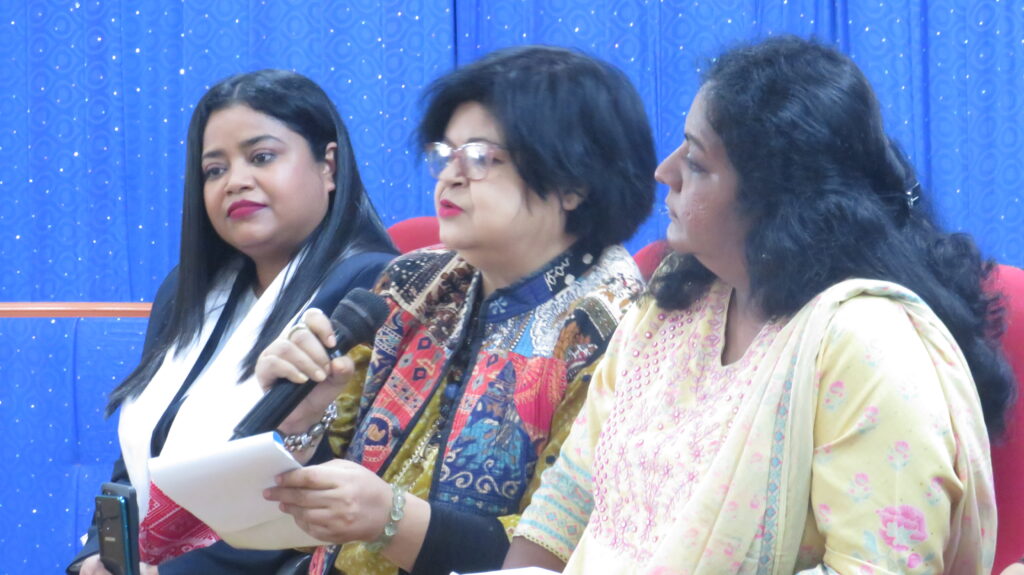
Gitika Talukdar, Indrani Raimedhi and Kavin Malar.
Indrani Raimedhi, with nearly four decades in journalism, reflected on the gender biases she faced as the first woman journalist in her editorial team in 1989.
“I’ll never forget when a gentleman once said: ‘Go home and cook.’ To them, a woman’s role was only in the kitchen. But I refused to be confined by those limitations.”
On mental health, she emphasized the importance of detachment in sustaining a long career, advising journalists to separate their professional responsibilities from personal well-being.
Mental health in journalism – Dr. Mythili Hazarika
Dr. Mythili Hazarika provided expert insights on the growing mental health crisis among journalists. With 25 years of experience in clinical psychology, she outlined key concerns:
- Journalists frequently experience trauma, stress, and burnout due to their work.
- Many are not mentally prepared for the assignments they receive.
- Shock, numbness, and trauma are often dismissed as weaknesses rather than acknowledged as psychological concerns.
- 40-80% of journalists do not speak about their mental health struggles.
- High work pressure and inadequate support systems lead to extreme stress and eventual burnout.
- Sexual harassment and workplace toxicity significantly contribute to mental distress.
She emphasized the need for journalists to adopt coping strategies, including mindfulness, stress management techniques, and seeking professional help.
“Journalists need to accept that they are human. Seeking help is not a weakness—it’s necessary.”
Audience questions and key takeaways
The interactive Q&A session addressed the pressing concerns of journalists in attendance. Key discussions included:
- Managing emotional triggers during interviews – Dr. Hazarika advised journalists to avoid dwelling on distressing statements and to focus on controlling their reactions.
- Overcoming family pressures – Gitika Talukdar shared that after a bomb blast incident, her family urged her to quit journalism. She persevered despite the challenges, lacking a strong support system or industry connections.
Conclusion and recommendations
The discussion concluded with a strong emphasis on building resilience and prioritizing mental health in the field of journalism. The panelists reinforced key recommendations:
- Media organizations must create safe and supportive work environments.
- Journalists should practice self-care, mindfulness, and stress management techniques.
- Encouraging open conversations about mental health struggles is crucial for sustaining well-being.
- A work-life balance is essential to prevent burnout and emotional exhaustion.
While journalism remains a demanding profession, acknowledging mental health challenges and implementing supportive measures will ensure a healthier, more sustainable industry for journalists.
This report was compiled as part of the Network of Women in Media, India (NWMI) initiative to foster discussions on mental well-being in journalism. The session reinforced the need for collective action and institutional reforms to protect the psychological health of media professionals.
Report by Neetu Singh
Edited by Madhavi Ravikumar


