

Session 3: Real Women, Reel Stories-Women Shaping Cinema Roles and Stories of Women in the Assamese Film Industry
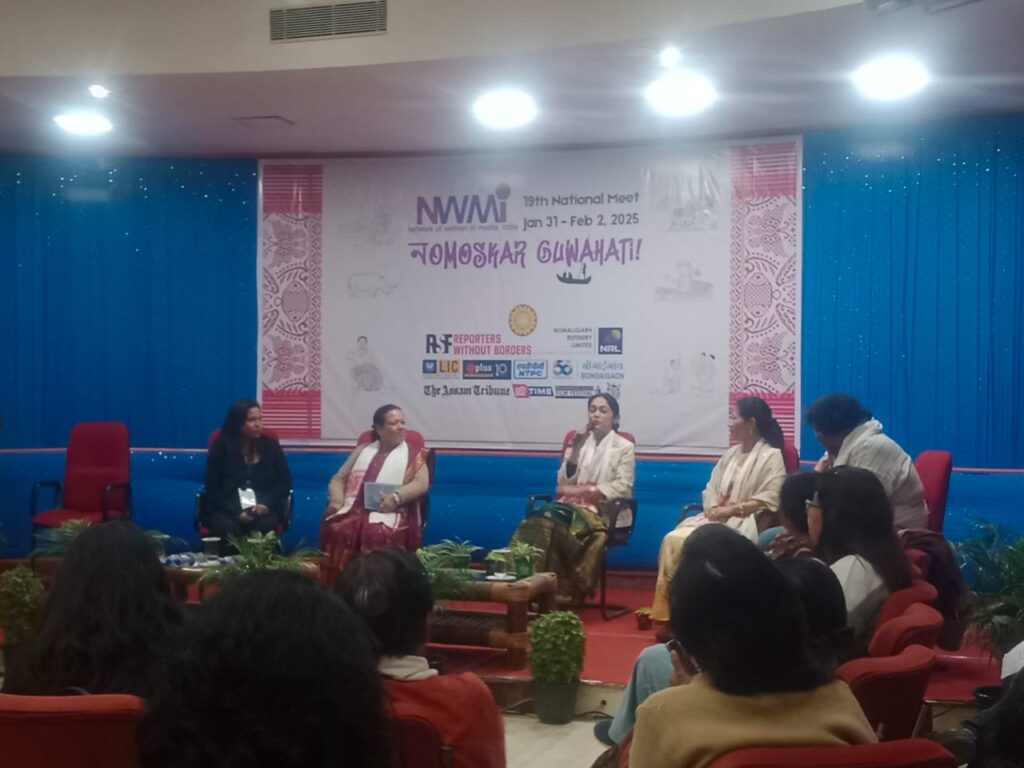
From left: Nasreen Habib, journalist at The Assam Tribune, Madhurima Baruah Sen, general secretary of the Gauhati Cine Club, Lima Das, actor, Rajni Basumatary, filmmaker, and Nadika Nadja, writer, teacher and researcher.
‘If you are not going to write it, someone else will’ Nadika Nadja emphasised this during a discussion on ‘Real women, reel stories’, held in connection with the 19th NWMI meet in Guwahati.
Assamese Cinema has always been on the margins, and women in Assamese films have been on the “margins of margins”. With that reminder, moderator Nasreen Habib, a journalist with The Assam Tribune, kicked off the session that delved into the roles and stories of women in the Assamese film industry. The panelists were actor Lima Das, filmmaker Rajni Basumatary, writer, teacher and researcher Nadika Nadja, and general secretary of the Gauhati Cine Club, Madhurima Baruah Sen. The discussion on ‘Real women, reel stories’, was organised as part of the 19th annual meet of the Network of Women in Media (NWMI) held in Guwahati from January 31 to February 2.
Das, who has an academic and dance background, could never connect to any films she watched during her childhood, she said. But as she evolved as a dancer and artist, she felt she wanted to do “one good film”. So she went to acclaimed Assamese director Bhaskar Hazarika and ended up getting her first role. “I had nothing to lose,” she recalled saying to herself.
Their film Aamis (meat) not only explores the significance of meat-eating habits in various Northeastern cultures but also presents itself as a metaphor for desire.
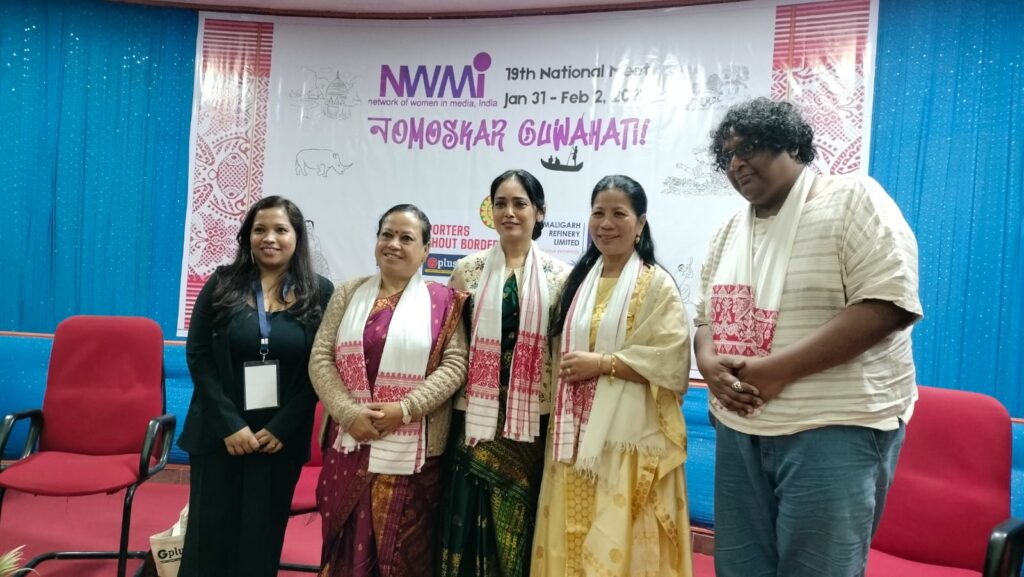
Nasreen Habib, Madhurima Baruah Sen, Lima Das, Rajni Basumatary and Nadika Nadja.
On the other hand, much of Basumatary’s work has been shaped by her and her community’s traumatic past. Hailing from the Bodo community, the filmmaker recounted stories of losing her loved ones during the conflict, which continues to be an overarching theme in her films. While her Bodo-language film Jwlwi – The Seed is set in the insurgency-hit Assam of the 90s, her all-female-character movie, Gorai Phakhri (‘Wild Swans’), explores lives of women in a patriarchal society in the conflict-hit state.
The room was filled with applause as she shared her challenges depicting patriarchy in the Bodo community, otherwise considered liberal.
But it was not too long ago when women in Assamese films were portrayed in a stereotypical manner, as hapless, oppressed women, said Baurah Sen. She talked about Joymoti, the first Assamese film in 1935, which was based on a historical character and was a “reflection of the society” at the time. However, in the next few decades the Assamese film industry would hardly see any strong or complex female characters. It was only in the 70s and 80s, she said, that filmmakers began exploring emotional depth in women.
She was particularly moved by a film by Dr Bhabendra Nath Saikia, where a married woman gets pregnant with another man as an act of revenge against her husband who had another wife.
And while women characters in cinema, in Assam and beyond, seem to have evolved over time, most commercial films still explore the idea of queerness only through tragic or comic lens, Nadja said. “We tend to focus on things we want to look at,” she said, stressing on the need to look at queer characters beyond just these two shades.
She mentioned the Tamil film 90ML where two queer people are simply having fun.
Towards the end of the session, while Das and Basumatary talked about their upcoming projects, one of the members in the audience requested the panelists for advice meant for writers.
Nadja replied: “If you are not going to write it, someone else will. And you are not going to like it. That’s the only way to write.”
Report by Romita Saluja
Edited by Saraswathy Nagarajan


