


Doxing, Deepfakes and Digital Harassment
By:
Most conversations around AI so far have been its impending threat to jobs. But a disturbing crisis is unfolding – AI-powered and technology-facilitated violence against women.
Recently, actor Girija Oak, who starred with Shah Rukh Khan in Jawan, put out a post reacting to AI-generated obscene videos of her circulating on the Internet. Oak took to Instagram to talk about the effect of such videos on her 12-year-old son. Fake and morphed photos and videos are not new, but today, with the help of AI and apps, deepfakes can be created with just a simple tool and a photo. Deepfakes are AI-generated videos, images, or audio clips that mimic a person’s likeness in a strikingly realistic way, featuring them in events that never happened.
Actors like Rashmika Mandanna and Katrina Kaif and many others from the film industry, including men, and journalists like Rana Ayyub have been victims of deepfakes and doxing. (the practice of revealing someone’s private information online without their permission.) McAfee’s recent report, ‘Most Dangerous Celebrity: Deepfake Deception List’ reveals that Shah Rukh Khan and Alia Bhatt are the top two exploited celebrities, with cybercriminals generating their deepfakes to create fake endorsements, giveaways, and drive people toward scam websites, phishing links, or malicious downloads.
A 2025 report based on cases submitted to Meri Trustline, a helpline by the Rati Foundation, shows how widespread and damaging deepfake abuse has become. Ninety-two percent of women reporting deepfake abuse are ordinary women, not celebrities. (Source: Tattle and Rati – Making it real*). In many instances, the survivor and the perpetrator have no real-world connection, says Rati’s report.
With women’s safety and dignity being at risk, many women have retreated from social media, according to a UN report, creating a severe new threat to women’s safety and dignity. There is no escaping the fake videos. The McAfee report says 90% of Indians have been exposed to fake endorsements. That’s how pervasive deepfakes have become.
According to The Guardian, India, has in recent years, become one of the most important testing grounds for AI tools. It is the world’s second-largest market for OpenAI, with the technology adopted across professions. In the light of AI’s pervasive spread, countries, including India, need specific and updated laws to protect and safeguard women from technology-facilitated abuse. Countries should also hold platforms accountable for removing abusive content, invest in tools that detect deepfakes and abusive content, step up efforts to improve digital literacy and provide support for women who are victims of such abuse.
Every year, UN Women runs the ‘16 days of activism campaign’, from November 25 (International Day of Elimination of Violence Against Women) till December 10 (Human Rights Day). In 2025, the campaign focused on ending digital violence against women and girls. And it’s a timely call to stop the AI-generated and technology- facilitated abuse of women.
Footnotes
- The RATI (Rights. Action. Technology. Inclusion.) Foundation is based out of Mumbai and works to address violence against children and women both online and offline.
- Tattle builds tools and datasets to understand and respond to inaccurate and harmful content.
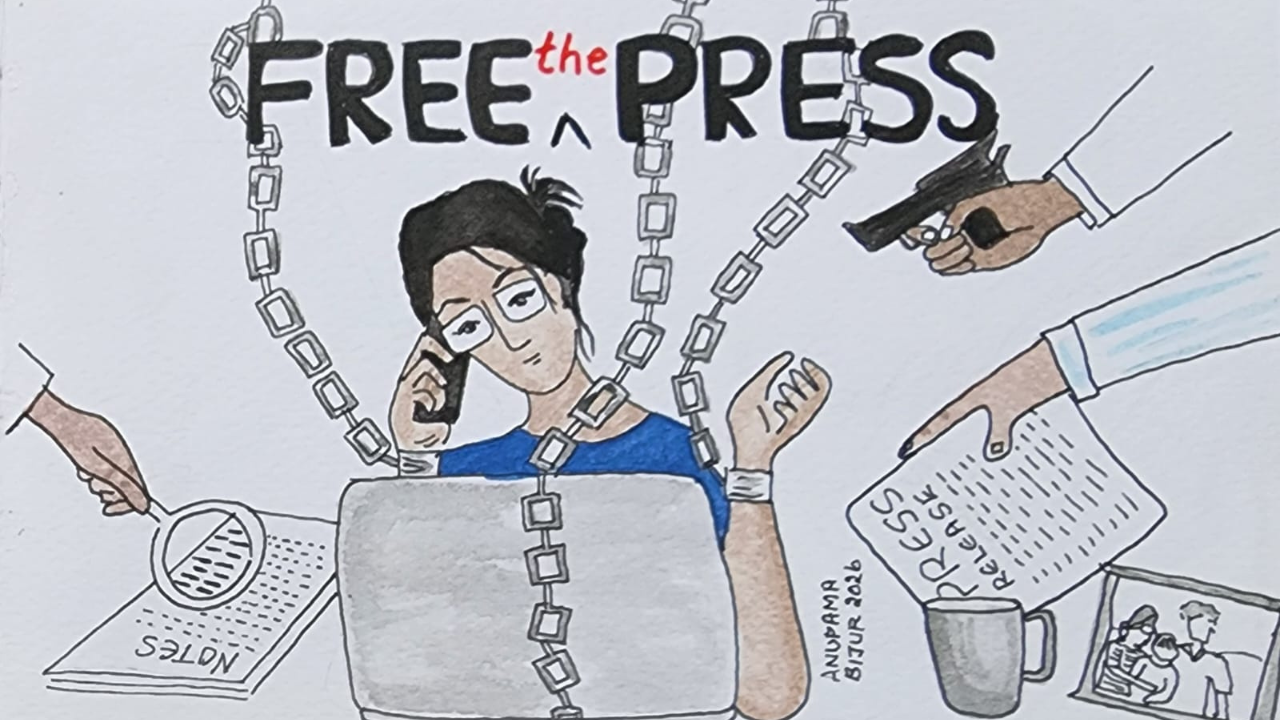
InkSights is a monthly art series by NWMI member Anupama Bijur viewing current affairs through a gender and news lens.
TAGS
More From the Section

Of Brands, Bralettes and Backtracking
All for One, One for All

Climate Change Hits Her Hardest


Doxing, Deepfakes and Digital Harassment
