

Working the Algorithm Without Losing the Story
For independent women journalists, journalism increasingly comes with a second, largely invisible job.
Alongside reporting, interviewing, researching and writing, journalists are often expected to manage social media, build a personal brand, engage audiences, respond to messages, promote their work and find ways to monetise their expertise. The pressure is not simply to publish good journalism. It is to remain visible.
This creates a difficult contradiction. The stories that matter most—investigative reporting, nuanced analysis, complex social issues and public-interest journalism—do not always fit neatly into the formats and rhythms favoured by social media platforms.
The solution is not to ignore algorithms. Nor is it to turn journalists into influencers. The goal is to understand how platforms work and develop a strategy that protects the journalism, reduces unpaid labour and makes professional visibility more sustainable.
Here are practical guidelines for doing that. These strategies have been put together from personal experiences while learning how to navigate the social media world as an independent environmental journalist and communicator.
1) Choose one primary platform
Choose one platform where your intended audience already exists and make that your primary visibility platform. Other platforms can function as secondary spaces or mirrors rather than requiring a separate content strategy.
Your choice could be X, Instagram, YouTube, Substack, LinkedIn or another platform relevant to your beat and audience.
The principle is simple: One platform for reach. One platform for archiving.
Trying to maintain an active presence everywhere can quickly become a second, unpaid job. A focused platform strategy reduces the pressure to constantly produce, adapt and repost content.
Ask yourself:
- Where are the people who actually need my journalism?
- Which platform best suits my beat?
- Where do I already have an audience or professional network?
- Which platform can I realistically maintain without compromising reporting time?
Your journalism comes first. The platform is a distribution tool—not your newsroom.
2) Replace “always posting” with publishing windows
Social media can create the illusion that journalists must be available all the time.
You don’t.
Instead of responding to the demand for constant posting, establish two or three publishing windows each week.
For example, you might decide to publish on Tuesday and Thursday evenings and use those periods to share several pieces of content connected to reporting you are already doing.
Batch your social content where possible.
A single reporting assignment might generate:
- the original story;
- a short summary;
- a key finding;
- an explainer;
- a quote or data point;
- a link to the full story.
Outside your designated publishing windows, log off.
The objective is not to disappear from the digital ecosystem. It is to stop allowing the algorithm to determine your availability.
Consistency does not require constant availability.
3) Let your beat—not your personality—be your brand
Journalists are increasingly encouraged to “build a personal brand”. But professional visibility does not have to mean constant self-promotion.
Your strongest professional identity can come from what you know and consistently report, rather than how often you perform yourself online.
Your biography and pinned post should make three things clear:
- What do you report on? Be specific about your beat or areas of expertise.
- Who is your journalism for? Identify the communities, audiences or sectors your reporting serves.
- Why does it matter? Communicate the public-interest value of your work.
Instead of building a profile around being “a journalist who talks about everything”, try establishing yourself around a recognisable area of expertise. Your beat is your niche – your brand. So, develop a profile or page around your work – say a professional portfolio for example. This builds credibility without requiring influencer-style self-branding.
4) Turn reporting into explainers, not hot takes
Algorithms often favour content that is immediate, clear and easy to understand. That does not mean journalists have to abandon nuance or turn every issue into an opinion. Instead, translate your reporting into accessible explainers.
Consider formats such as:
- “What this means”
- “What we know so far”
- “Three things to understand about…”
- Context slides
- Short video explainers
- Data points with context
- “One key fact + one implication”
- Short threads explaining a complex development
The purpose is not to simplify the journalism beyond recognition. It is to create an accessible entry point into the reporting. A strong explainer can make complicated subjects understandable while directing audiences towards deeper journalism. Clarity can improve visibility without requiring journalists to abandon professional standards.
5) Build a sustainable monetisation pathway
For independent journalists, sustainability requires thinking about how audiences, expertise and journalism can translate into legitimate income.
A useful model is: Platform → Discovery → Relationship → Income
For example:
Social platform
↓
People discover your work
↓
Newsletter / website / WhatsApp community
↓
You build a direct relationship with your audience
↓
Paid journalism / commissions / teaching / speaking / research
↓
Income
This reduces dependence on any single platform.
Potential ethical income streams include:
- Paid research and reporting
- Commissioned journalism
- Fellowships and grants
- Paid speaking engagements
- Moderation and facilitation
- Teaching and training
- Workshops
- Consulting for NGOs and research organisations, with appropriate disclosure
- Membership-based newsletters
The key is to establish clear boundaries between journalism and paid work. Monetisation should strengthen professional independence—not create ethical drift.
6) Have a clear disclosure policy
If you undertake paid research, consulting, speaking, training or other professional work, transparency matters. Develop a simple disclosure statement that tells audiences what kinds of paid work you accept and how you manage potential conflicts of interest.
For example:
“I accept funding for reporting, research collaborations and speaking engagements. All paid partnerships are disclosed. I do not promote products or political messaging.”
Adapt the wording to your own professional circumstances and editorial commitments. Pin the statement to your profile or make it accessible through your biography. A clear policy does two things: it establishes expectations with your audience and makes your own boundaries easier to maintain.
7) Identify the unpaid work you are no longer going to do
One of the biggest challenges facing independent journalists is the expansion of invisible labour. Reporting may be paid. But the work surrounding it often isn’t.
This can include:
- Responding to every social media comment
- Treating Direct Messages as an alternative newsroom (meaning journalists can end up using their DMs as an informal reporting, sourcing, audience-engagement and editorial channel)
- Providing free emotional labour
- Constantly monitoring abuse
- Reposting content across multiple platforms
- Being permanently available to audiences
Take an inventory of your digital workload. Then ask: Which task can I stop doing—or do differently?
Possible alternatives include:
- Automated replies
- Limited comment moderation
- Clear contact instructions
- Designated response periods
- Muting keywords
- Blocking persistent abusers
- Moving substantive conversations to email
Not every message requires a response. Not every comment requires engagement. And not every journalist needs to personally manage every aspect of their digital presence.
8) Create a platform safety plan before you need it
Online abuse is not an abstract risk for journalists. Having to respond to abuse in the middle of a reporting cycle adds another layer of emotional and professional labour.
Prepare a safety plan in advance.
Your plan could include:
- Block lists – Maintain lists of accounts that have previously harassed or targeted you.
- Muted keywords – Identify terms that frequently trigger abusive or distressing content and mute them where appropriate.
- Reporting templates – Keep ready-to-use templates for reporting harassment or abusive content.
- A trusted contact – Identify one trusted colleague or person who can monitor or flag serious abuse when you are unable or unwilling to do so.
The objective is to avoid making decisions about safety while already under attack.
9) Stop treating visibility as an individual competition
Independent journalism can be isolating, but visibility does not always have to be an individual task. Journalists can create small networks that amplify reporting rather than personalities.
Consider forming circles of three to five journalists who can:
- Cross-post each other’s work
- Share relevant reporting
- Recommend colleagues for opportunities
- Tag beats and topics rather than simply tagging personalities
- Share calls for pitches, fellowships and commissions
- Support one another during online attacks
The principle should be: Amplify reporting, not personalities. Collective visibility can reduce the pressure on each journalist to individually feed the algorithm every day. It can also strengthen the wider independent media ecosystem.
10) Map your burnout before it becomes a crisis
Not all digital work affects us in the same way.
A useful exercise is to map your tasks into three categories:
- RED— Drains energy
Tasks that leave you exhausted, anxious or emotionally depleted.
- YELLOW— Necessary but heavy
Tasks that need to be done but require significant effort.
- GREEN— Meaningful
Tasks that energise you or make you feel connected to the purpose of your journalism.
Look at your weekly workload through this lens.
Then ask:
- Can a red task be eliminated?
- Can a yellow task be batched, automated or shared?
- Can more time be protected for green tasks?
- Which activities are actually contributing to my journalism?
- Which ones exist primarily because I feel pressured by the platform?
This is not about becoming more productive. It is about making sure that the work that matters does not get crowded out by the work that is merely visible.
A 30-day reset for independent journalists
You don’t need to transform your entire digital presence overnight.
Start with three decisions.
- One behaviour I will stop
For example: checking social media continuously throughout the day.
- One strategic shift I will try
For example: choosing one primary platform and batching content twice a week.
- One boundary I will communicate
For example: stating that professional enquiries should come through email rather than DMs.
Review these decisions after 30 days.
Ask what reduced your workload, what improved your visibility and what actually helped your journalism reach the people who matter.
The algorithm should serve the story
Algorithms will continue to shape what audiences see and what journalists are encouraged to produce, but journalists do not have to accept every platform demand as a professional obligation. The challenge is to develop a digital strategy that works with the realities of platforms while remaining grounded in journalistic values.
That means:
• Choose strategically rather than being everywhere.
• Publish consistently rather than constantly.
• Build authority rather than perform personality.
• Explain rather than chase hot takes.
• Monetise ethically rather than compromise editorial independence.
• Set boundaries rather than remain permanently available.
• Build collective visibility rather than carrying the entire burden alone.
• And most importantly remember: The story is the work. The algorithm is only the distribution system.
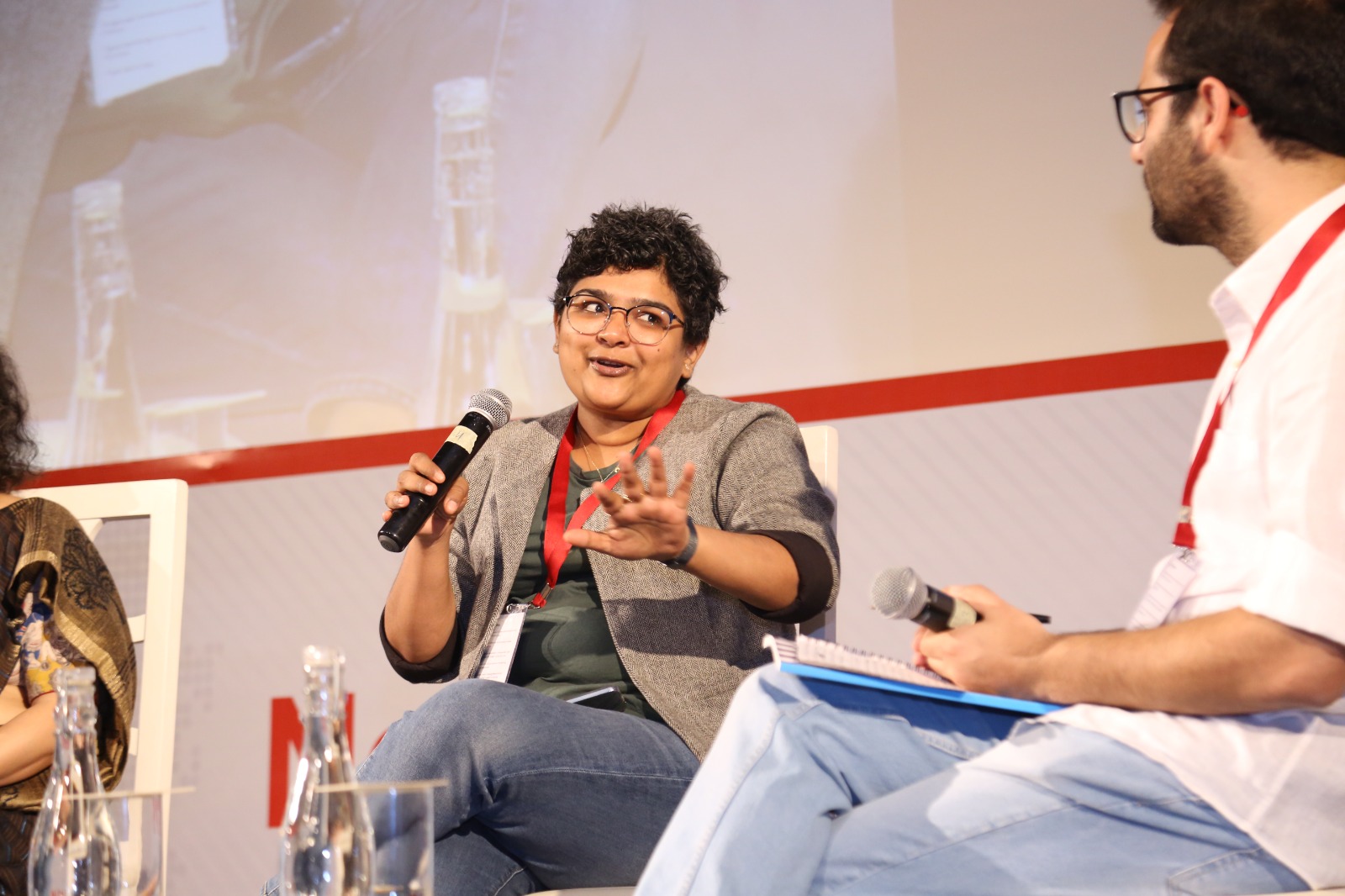
This guide was presented during the 20th National Meeting of NWMI in Thiruvananthapuram in February 2026.
Sangeetha Rajeesh is a multimedia and strategic communications specialist, journalist and educator, with a focus on climate, gender, science and social justice.
Edited by Nisha Susan