Deepening Our Democracy: Gen Z Protests & the Future of Democratic Movements in India
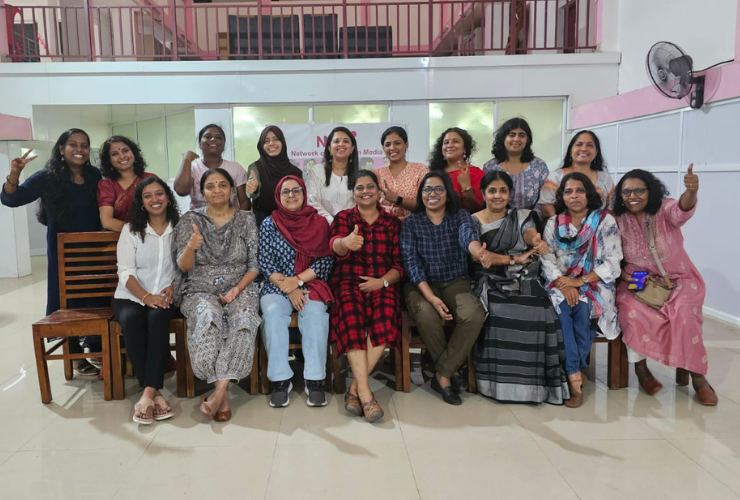
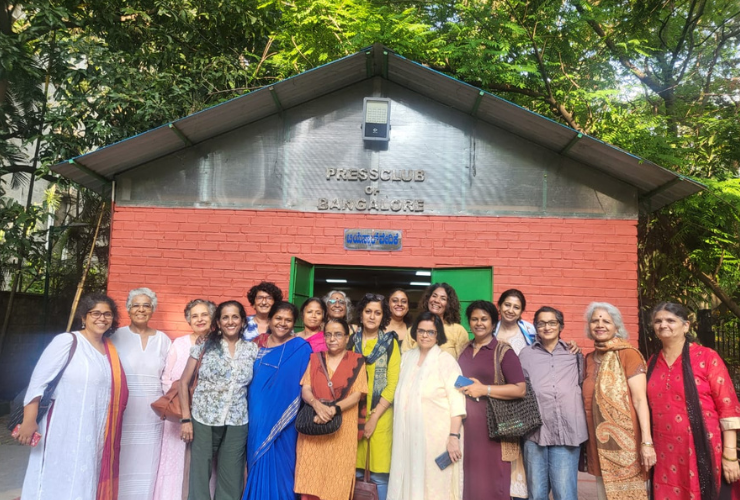
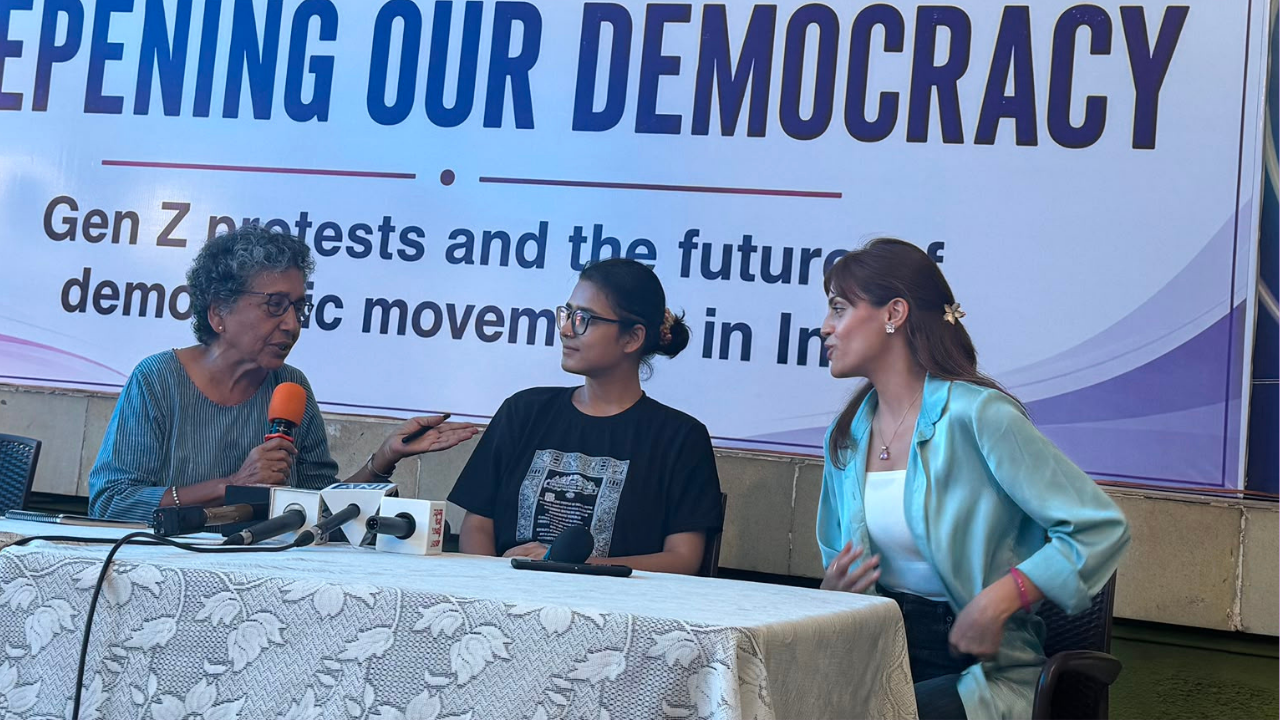
Follow Gen-Z! They may not have all the answers yet, but they are fearless in their resolution. That’s the feeling most of us came away with after attending a conversation with two Gen-Z’s who recently captured our collective imagination – Neha Bora, Delhi-based student activist & President of All India Students’ Association, who recently fasted at Jantar Mantar against the NEET paper leaks, and Rhiya Ahir, actor and model whose arm raised in front of a Mumbai police van during a student protest at Shivaji Park made front page news. The Network of Women in Media in India (NWMI)’s Mumbai chapter along with the Mumbai Press Club organised a discussion titled, ‘Deepening Our Democracy: Gen Z Protests & the Future of Democratic Movements in India’ on 25 August 2026 at the Mumbai Press Club. The discussion was hosted by NWMI member and veteran journalist Kalpana Sharma.
Three articulate, inspiring women came together. Kalpana Sharma from the boomer generation has been a witness with her writings and work of several decades- from the days of Emergency, Bhopal gas tragedy, marching with women for changes in rape law following the Mathura rape case and much more. Neha Bohra who shot into the limelight with Jantar Mantar protests, but was initiated into political thought with her involvement with a theatre troupe and who expands her concerns not just for NEET exams but the inequalities in education. And Rhea Ahir who quite simply rose to the occasion and challenged the police when they were forcibly taking students away in a van. She brings her own experiences of theatre as a young child with Nadira Zaheer Babbar and a sassiness that refuses to let hostile male anchors bully her. “I still don’t know all the verses of Vande Mataram”. Riposte to the perennially angry uncle whose tantrums in the TV studio have worn thin.
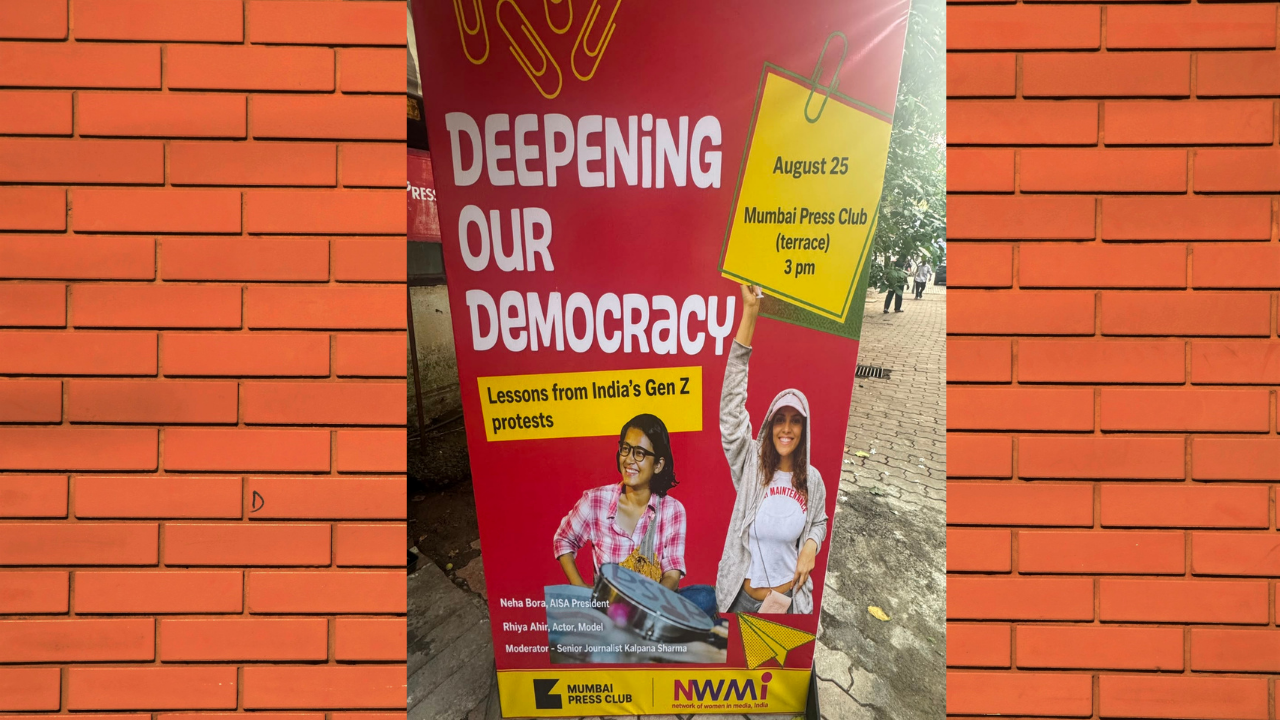
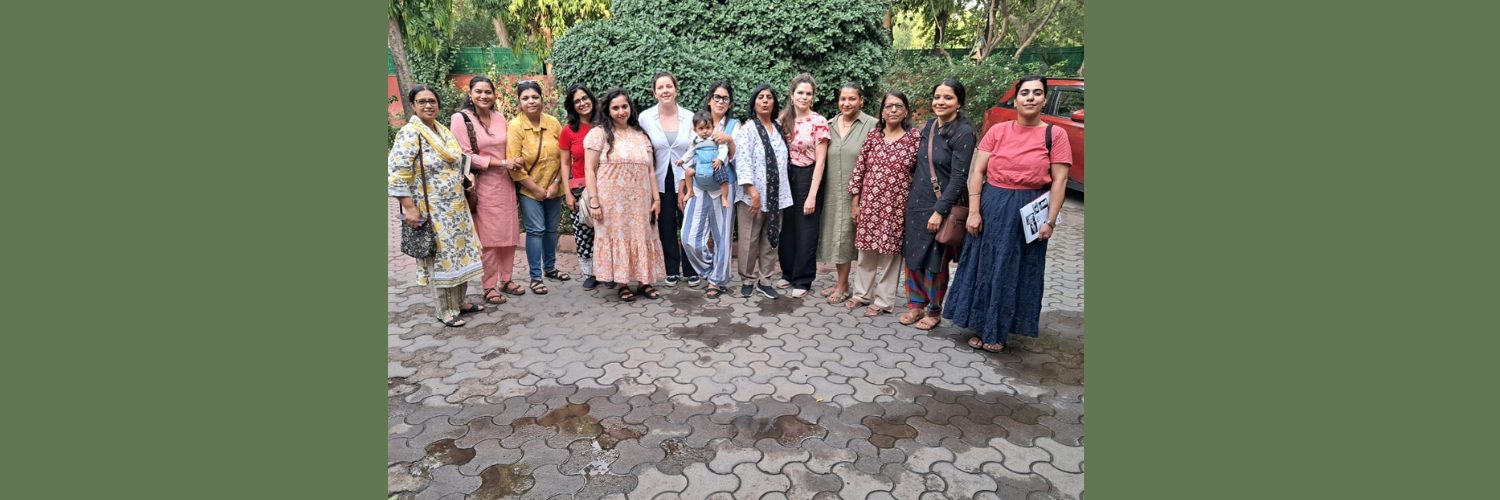
Photo by Karen Rebelo
The discussion covered education, conditions of schools, power, community, and inequality, election lists revision, art as politics and the challenge of expanding our democracy. As Neha Bora said, in a country that is so deeply unequal on so many fronts, education is an important tool to ensure that power is distributed more evenly among various citizens. In reply to questions, she and Rhiya Ahir spoke about using one’s voice and privilege to speak up and to work towards a state-citizen relationship based on respect and accountability.
Inputs from Freny Manecksha and Karen Rebelo